Nematocysts: The Explosive Stinging Mechanism of Cnidarians
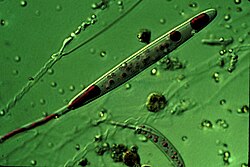
In the depths of the ocean, corals, sea anemones, and jellyfish employ one of nature's most efficient biological weapons: the cnidocyte. These specialized cells contain a powerful secretory organelle known as a cnidocyst (or nematocyst), capable of delivering a high-velocity sting to subdue prey or deter predators. The presence of these unique cells is the defining characteristic of the phylum Cnidaria.
Because cnidocytes are single-use cells, the organism must continuously replace them to maintain its defensive and predatory capabilities. This process involves a complex cycle of development and a mechanical discharge system that operates at speeds nearly incomprehensible to the human eye.
Key Facts
- Extreme Acceleration: Nematocyst discharge can reach accelerations of up to 5,410,000 g.
- Rapid Timing: The entire ejection process can occur in as little as 700 nanoseconds.
- High Pressure: The impact pressure at the stylet tip is estimated to exceed 7 GPa, comparable to technical bullets.
- Single-Use: Once fired, a cnidocyte cannot be reused and must be replaced by the animal.
- Diverse Types: There are over 30 types of cnidae, categorized primarily into piercing, adhesive, and ensnaring varieties.
Structure and Function
A mature cnidocyte consists of a bulb-shaped capsule containing a hollow, coiled tubule. Immature versions of these cells are called cnidoblasts or nematoblasts. On the exterior of the cell sits the cnidocil, a hair-like mechano-chemical receptor that acts as a trigger.
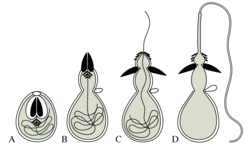
When the cnidocil is activated, the tubule shaft is ejected with immense force. In piercing types, this tubule penetrates the target organism, injecting toxic fluids to immobilize the prey. While the nematocyst is the primary delivery system, research in sea anemones like Nematostella vectensis suggests an alternative route: neurotoxins (such as Nv1) may be secreted by nearby gland cells into the extracellular medium after the nematocysts have already pierced the prey's skin.
Capsule Composition
The capsule is constructed from specialized proteins unique to Cnidarians. Minicollagens—short proteins with collagen-triple helix sequences—form the rigid inner shell. The outer wall is composed of NOWA (Nematocyst Outer Wall Antigen) proteins. The tubule shaft itself is built from chondroitin, Nemato Galectin, and minicollagen Ncol-15, while piercing varieties utilize a protein called spinalin to create the spines at the base of the shaft.
The Discharge Mechanism
The firing of a nematocyst is a masterpiece of biological engineering driven by osmotic pressure. The capsule stores a high concentration of calcium ions. When the trigger is activated, these ions are released into the cell's cytoplasm, creating a steep concentration gradient across the plasma membrane.
This gradient causes water to rush into the cell rapidly. The resulting pressure forces the coiled tubule—which is stored in an "inside out" state—to evert (right itself) and shoot through the operculum (the capsule tip). This explosive eversion allows the stylet to impale the target almost instantaneously.
Fluid Dynamics and Impact
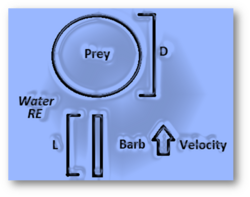
Computational fluid dynamics and observational studies show that the maximum acceleration occurs at the very beginning of the discharge, with velocity decreasing as the tubule extends. With an ejected mass of approximately 1 nanogram and a stylet tip radius of 15 ± 8 nm, the resulting pressure is immense. Researchers note that the static traits of a nematocyst, such as its volume, do not always correlate with its dynamic performance, meaning tubule length isn't always a reliable indicator of prey size.
Types of Cnidae
Depending on the species and the cell's location, cnidae serve different purposes. They are generally grouped into three functional categories:
- Nematocysts (Penetrant/Piercing): The largest and most complex type. They pierce the skin or exoskeleton of prey to inject hypnotoxin, which paralyzes or kills the victim.
- Ptychocysts (Glutinant/Adhesive): These provide a sticky surface used by burrowing anemones to adhere to prey or help construct their protective tubes.
- Spirocysts (Volvent/Ensnaring): The smallest variety, these fire a smooth, elastic, lasso-like thread that coils tightly around the prey.
Development and Renewal
Because they are single-use, cnidarians have evolved various ways to regenerate these cells:
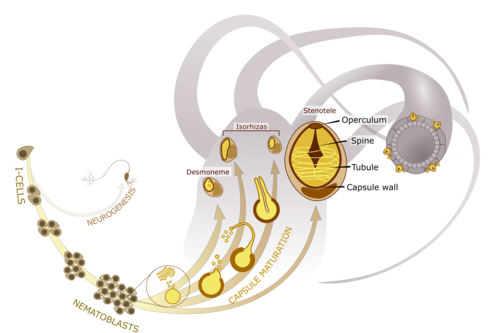
- Hydra polyps: Stem cells called interstitial cells (I-cells) undergo mitosis without cytokinesis, creating "nests" of 8 to 64 nematoblasts that eventually separate into individual cells.
- Clytia hemisphaerica (Jellyfish): Nematogenesis occurs at the base of the tentacles and the manubrium, moving toward the tips via a "conveyor belt" system.
- Nematostella vectensis (Sea Anemone): Cells develop from epithelial progenitors throughout the animal, regulated by the transcription factor ZNF845 (CnZNF1).
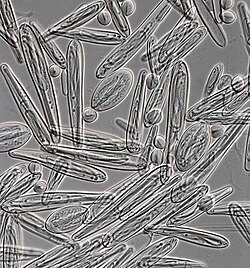
Summary of Cnidocyte Characteristics
| Type | Common Name | Primary Function | Mechanism |
|---|---|---|---|
| Nematocyst | Penetrant | Killing/Paralyzing | Piercing and venom injection |
| Ptychocyst | Glutinant | Adhesion | Sticky surface attachment |
| Spirocyst | Volvent | Capture | Coiling/Lassoing prey |
Frequently Asked Questions
Why don't cnidarians sting themselves?
In many species, cnidocytes are organized into "batteries" connected to neurons and supporting cells. These supporting cells use chemosensors that work with the cnidocil to ensure the cell only fires when a specific combination of mechanical and chemical stimuli (like those found in prey cuticle) is present.
What is kleptocnidy?
Kleptocnidy is a process used by certain sea slugs, such as aeolid nudibranchs. They eat cnidarians and, instead of digesting the nematocysts, store them in specialized sacs called cnidosacs at the tips of their cerata to use for their own defense.
Are all jelly-like sea creatures venomous?
No. For example, animals in the phylum Ctenophora (comb jellies or sea-gooseberries) are transparent and jelly-like but lack nematocysts entirely, making them harmless to humans.
How fast is a nematocyst discharge?
The discharge is incredibly rapid, occurring in as little as 700 nanoseconds with accelerations reaching up to 5,410,000 g, making it one of the fastest mechanical processes in the biological world.