Necochea: Argentina's Premier Port and Coastal Destination
Located on the Atlantic Coast in the southwest of Buenos Aires Province, Necochea is a vibrant city that seamlessly blends industrial importance with seaside leisure. Situated at the mouth of the Quequén Grande River, it lies 528 km (328 mi) from Buenos Aires and 120 km (75 mi) southwest of Mar del Plata. With a population of 90,000 as of the 2010 census, Necochea serves as the administrative seat for the Necochea Partido.
The city is inextricably linked to the neighboring Port of Quequén. Located on the eastern bank of the Quequén Grande River, this port stands as one of Argentina's most critical maritime hubs, serving as the primary gateway for agricultural exports from the southeast of Buenos Aires Province.
Key Facts
- Founded: October 12, 1881, by National Guard commander Ángel Murga.
- Geography: Coastal city at the mouth of the Quequén Grande River.
- Economy: Driven by the Port of Quequén and a robust domestic tourism industry.
- Nature: Home to Miguel Lillo Park, Argentina's only public maritime forest nature reserve.
- Climate: Very warm oceanic climate (Cfb) with rainfall distributed throughout the year.
History and Development
The region was first charted in 1748 by Jesuit clergymen Thomas Falkner and José Cardiel. However, the formal settlement of Necochea began in 1881 as a defensive outpost against Malón raids. The city was named after General Mariano Necochea, a key figure in the Argentine War of Independence. The settlement was established on a seaside estate owned by Eustoquio Díaz Vélez, jr., whose father had also been prominent in the struggle for independence.
Infrastructure growth accelerated in the late 19th and early 20th centuries. A Buenos Aires Great Southern Railway station opened in 1894, and the Díaz Vélez family launched the Villa Díaz Vélez resort in 1902. By 1911, surrounding communities were incorporated into the town.
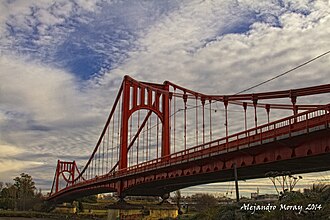
A major milestone in accessibility occurred in 1929 with the inauguration of the Hipólito Yrigoyen Bridge, a suspension bridge that allowed motorists to enter the city. This was one of only two such bridges in Argentina at the time.
The economic landscape shifted significantly with the 1922 opening of Port Quequén. This transformed the area into a leading railhead for Argentine agriculture, with freight handling growing from one million tons in 1954 to over three million tons by 1991.
Tourism and Local Attractions
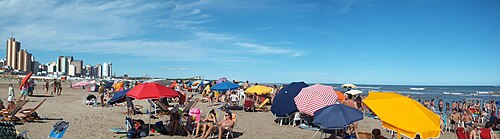
Throughout the 20th century, Necochea evolved into a major domestic tourism hub. By 2011, the city boasted over 50,000 registered hotel rooms, with summer occupancy rates exceeding 95%. The city's municipal beaches extend for 72 kilometers (45 mi) and reach depths of up to 200 meters (660 ft).
One of the city's crown jewels is the 640-hectare (1600 acre) Miguel Lillo Park, established in 1979. As the only public maritime forest nature reserve in the country, it features a swan's lake and a tourist railway. The park also houses the Regional Historical Museum since 1981, located in a Spanish Colonial Revival house that once belonged to the Díaz Vélez estate.
Landmarks and Culture
Visitors to Necochea can explore a variety of unique sites:
- Cueva del Tigre: Seashore grottoes named after a 19th-century gaucho.
- Port Quequén: Featuring a lighthouse (1921), two breakwaters (1908), and a South American sea lion reserve.
- Religious and Social Sites: The Parish of Our Lady of Lourdes (1957) and the Necochea Golf Club (1955).
- Fishermen's Pier: A landmark established in 1970.
The city is also known for its vibrant festivals. The National Festival of Children's Shows has been held every January 6 (Epiphany Day) at Miguel Lillo Park since 1962. Additionally, the Festival of Cultures celebrates the diverse immigrant heritage of the region, including Italian, Spanish, German, Danish, Middle Eastern, and Chilean contributions.
Climate Profile
Necochea is classified under the Köppen system as having a Cfb climate, or a very warm oceanic climate. This is characterized by mild winters and warm to hot summers. Unlike subtropical regions, Necochea experiences cool summer nights and rainfall that is spread relatively evenly across the year.
| Month | Mean Max Temp (°C) | Mean Min Temp (°C) | Daily Mean Temp (°C) | Precipitation (mm) |
|---|---|---|---|---|
| January | 27.6 | 13.7 | 20.9 | 85 |
| April | 21.0 | 9.0 | 14.7 | 83 |
| July | 13.1 | 3.6 | 8.2 | 57 |
| October | 19.3 | 7.2 | 13.3 | 75 |
| Yearly Avg | 20.2 | 8.2 | 14.2 | 830 |
Frequently Asked Questions
What is the significance of the Port of Quequén?
The Port of Quequén is one of Argentina's most important ports, serving as the primary export gateway for agricultural production from the southeast of Buenos Aires Province.
What makes Miguel Lillo Park unique?
It is the only public maritime forest nature reserve in Argentina, spanning 640 hectares and featuring a tourist railway and a swan's lake.
When is the best time to visit for festivals?
January is an ideal time, as it hosts the National Festival of Children's Shows on January 6 and the Festival of Cultures at the end of the month.
What is the climate like in Necochea?
The city has a very warm oceanic climate (Cfb) with mild winters (averaging 8°C) and warm summers (averaging 21°C), with rainfall occurring throughout the year.
Who was the city named after?
The city was named in honor of General Mariano Necochea, a military commander during the Argentine War of Independence.