Nazca Culture: Art, Religion, and the Mystery of Ancient Peru
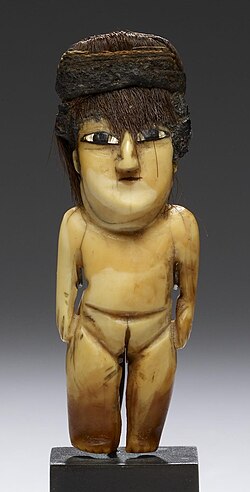
Flourishing between 100 BCE and 800 CE, the Nazca culture (also spelled Nasca) was a sophisticated archaeological society that thrived along the arid southern coast of Peru. Settled within the Ica Valley and the river valleys of the Rio Grande de Nazca drainage, the Nazca people transformed a harsh desert environment into a center of artistic and technological innovation.
Deeply influenced by the preceding Paracas culture—renowned for their intricate textiles—the Nazca expanded these traditions to create some of the most striking ceramics, textiles, and geoglyphs in the ancient world.
Key Facts
- Timeline: 100 BCE to 800 CE (Early Intermediate Period).
- Location: Southern coast of Peru (modern-day Ica Department).
- Key Site: Cahuachi, a major non-urban ceremonial center.
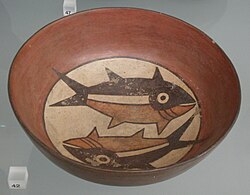
- Artistic Legacy: Polychrome pottery with up to 12 colors and complex backstrap-loom textiles.
- Religious Focus: Agriculture and fertility, often involving shamanic rituals and nature gods.
- Cause of Decline: Likely a combination of El Niño flooding and deforestation of Prosopis pallida trees.
Historical Timeline and Evolution
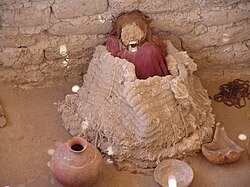
The development of Nazca society is categorized into several distinct phases that reflect changes in style, social organization, and environmental pressures:
- Proto Nazca (Phase 1, 100 BCE – 1 CE): The foundational period showing strong Paracas influence.
- Early Nazca (Phases 2–4, 1 – 450 CE): Known as the Monumental phases, characterized by increased realism in art.
- Middle Nazca (Phase 5, 450 – 550 CE): A transitional period where militaristic motifs appeared, likely due to drought-induced conflict.
- Late Nazca (Phases 6–7, 550 – 750 CE): The "proliferous" stage, featuring abstract, multiplied elements and influence from the Moche culture.
By 750 CE, the civilization had completely fallen. Researchers believe that the removal of Prosopis pallida trees—an ecological keystone species that prevents wind and river erosion—left the landscape vulnerable. When El Niño events triggered massive flooding, the lack of tree cover exacerbated the destruction, leaving irrigation systems useless.
Society and the Ceremonial Center of Cahuachi
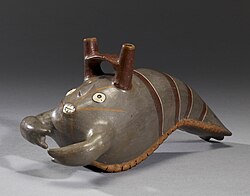
Much of what is known about Nazca social structure comes from excavations at Cahuachi. Unlike a typical city, Cahuachi was a non-urban ceremonial center. This is evidenced by the pottery found on-site: 70% was fine, polychrome (multi-colored) pottery, while only 30% was utilitarian. In a residential urban center, the ratio of plain, everyday pottery would typically be much higher.
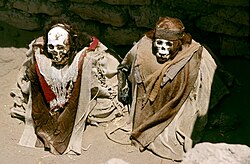
The people of Cahuachi sustained themselves on a diet of fish and the "Three Sisters" of agriculture: maize, squash, and beans, supplemented by peanuts. However, Cahuachi was eventually abandoned toward the end of Nazca Phase 3 or early Phase 4, a collapse most scholars attribute to a pan-Andean drought.
Religion and Shamanic Practices
Living in an extreme desert, the Nazca focused their spiritual lives on fertility and agriculture. Their pantheon included nature gods such as the killer whale, the mythical spotted cat, the serpentine creature, and a prevalent anthropomorphic mythical being.
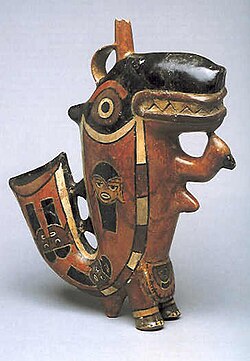
Religious ceremonies often involved shamans who used hallucinogenic substances to induce visions. These included extractions from the San Pedro cactus (Echinopsis pachanoi) and ground seeds from the Anadenanthera plant, which were inhaled through pipes. These practices are frequently depicted in Nazca pottery, though physical archaeological evidence of the plants remains limited.
The Ritual of Trophy Heads
A distinct and grim aspect of Nazca culture was the collection of "trophy heads." Archaeologist Max Uhle first identified these as warfare trophies. These mummified heads—a practice unique to the Nazca and Paracas—featured a hole drilled into the forehead for a carrying rope, broken skull bases, and thorns used to seal the mouth.
Arts and Technological Mastery
Polychrome Pottery
The Nazca are world-renowned for their pottery, which utilized at least 12 distinct colors. They transitioned from the Paracas method of post-fire resin painting to pre-fire slip painting, allowing for more durable and vibrant designs.
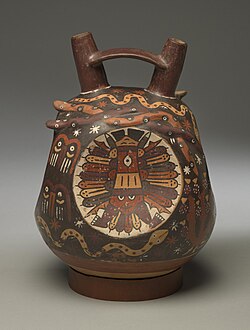
Pottery styles evolved from the realistic depictions of plants and animals in the early phases to the "proliferous" style of the late phases, where motifs were adorned with rays and tassels, creating a sense of infinite multiplication.
Complex Textiles
Woven primarily by women using backstrap looms, Nazca textiles were crafted from spun cotton and camelid wool. The arid climate of the Peruvian coast has preserved these works remarkably well.
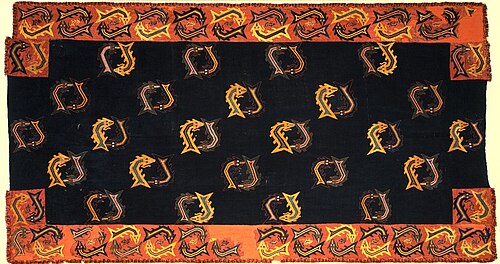
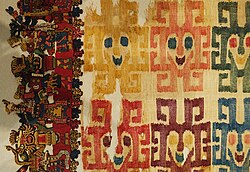
One of the most famous examples is the "Paracas Textile" (or BMT), a mantle featuring a fine gauze weave and 32 repeating rayed heads. Its complex three-dimensional edging, created via the cross-knit looping method, depicts warriors, shamans, and llamas. Some researchers suggest this mantle served as a calendar for tracking rituals or as a field for divination.
Summary of Nazca Cultural Characteristics
| Feature | Description |
|---|---|
| Primary Period | 100 BCE – 800 CE |
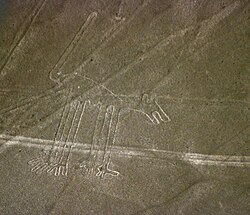
| Key Art Forms | Polychrome ceramics, backstrap-loom textiles, geoglyphs |
| Dietary Staples | Maize, squash, beans, peanuts, and fish |
| Religious Focus | Agricultural fertility and nature deities |
| Major Site | Cahuachi (Ceremonial Center) |
| Successor Culture | Wari culture (c. 650 CE) |
Frequently Asked Questions
What caused the decline of the Nazca civilization?
The decline is attributed to a combination of environmental factors. An El Niño event likely triggered destructive flooding, which was worsened by the Nazca's own deforestation of Prosopis pallida trees. The loss of these trees led to severe erosion and the failure of their irrigation systems.
Was Cahuachi a city?
No, archaeologists believe Cahuachi was a non-urban ceremonial center rather than a residential city. This is based on the high proportion of fine, polychrome pottery compared to the low amount of utilitarian pottery found at the site.
What are "trophy heads" in Nazca culture?
Trophy heads were severed human heads that were mummified and modified for display. They typically featured a hole in the forehead for a rope and thorns in the mouth, and are believed to have been trophies of warfare or used in shamanic rituals.
How did Nazca pottery differ from Paracas pottery?
The primary difference was the painting technique. While the Paracas used post-fire resin painting, the Nazca developed pre-fire slip painting, which allowed them to use a wider palette of colors (at least 12) and produce a larger volume of ceramics.
What role did shamans play in Nazca society?
Shamans acted as spiritual intermediaries, using hallucinogenic plants like the San Pedro cactus and Anadenanthera seeds to induce visions. These practices were central to their religious ceremonies aimed at ensuring agricultural fertility.