Naval Ratings and Rates: Comparing Royal Navy and US Navy Systems
In the world of maritime military terminology, the terms rate and rating are fundamental to understanding the hierarchy of a crew. While they may sound identical to a layperson, these terms define the professional identity, seniority, and specialization of junior enlisted sailors—those serving below the rank of warrant officer.
Depending on the nation and the specific naval tradition, these terms can vary significantly in meaning. From the historic "bluejackets" of the United States to the structured grades of the Royal Navy, the system of rating ensures that every sailor's competence and role are clearly recognized.
Key Facts
- Rating generally refers to a junior enlisted sailor below the rank of warrant officer.
- In the Royal Navy, "rate" is a generic term for all ranks below warrant officer, while "rating" is used in specific rank titles.
- In the US Navy, "rate" refers to pay grade (seniority), whereas "rating" refers to the occupational specialty.
- The term bluejacket is a US-specific term for enlisted sailors below chief petty officer, originating from historical clothing.
- Royal Navy ratings are categorized into four major groupings: Able, Leading, Petty Officer, and Chief Petty Officer.
The Royal Navy Rating System
In the Royal Navy (RN) and other Commonwealth navies, the terms rate and rating are often used interchangeably. Broadly, they describe enlisted sailors who rank below commissioned officers and warrant officers. This group includes both junior sailors and senior non-commissioned leaders like petty officers.
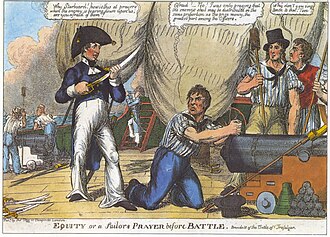
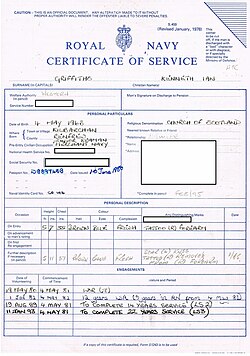
Historically, the term "rating" stems from nautical bookkeeping, where a seaman's class or grade was recorded in the ship's logs. The progression of authority was based on demonstrated competence, moving from a landsman to an ordinary seaman, then to an able seaman, and eventually to a petty officer.
Today, the Royal Navy utilizes a structured system of groupings to define these roles, often aligned with NATO rank codes to ensure interoperability with allied forces.

| Rank Group | Rank | Abbreviation | NATO Code | Arm Insignia |
|---|---|---|---|---|
| Warrant Officers | Warrant Officer 1 | WO1 | OR-9 | No insignia |
| Warrant Officers | Warrant Officer 2 | WO2 | OR-8 | No insignia |
| Senior Ratings | Chief Petty Officer | CPO | OR-7 | Shoulder insignia |
| Senior Ratings | Petty Officer | PO | OR-5/OR-6 | Shoulder insignia |
| Junior Ratings | Leading Rating | LH | OR-4 | Shoulder insignia |
| Junior Ratings | Able Rating | AB | OR-2 | Shoulder insignia |
US Navy and US Coast Guard Terminology
The United States Navy (USN) and United States Coast Guard use a distinct system where "rate" and "rating" have very specific, different meanings. In this context, a rate is the sailor's pay grade, which indicates their relative seniority. A rating, however, refers to their specific occupational field or job specialty.
Because of this distinction, US sailors are typically addressed by a combination of both. For example, a sailor with the rate of Petty Officer 1st Class (E-6) working as a boatswain's mate is addressed as a "Boatswain's Mate 1st Class" (BM1).
For those in pay grades E-4 through E-6, the simple title "Petty Officer" is acceptable. Those in E-7, E-8, and E-9 are addressed as "Chief," "Senior Chief," or "Master Chief." Sailors at E-3 and below may be referred to by their rate and rating (e.g., Gunner's Mate Seaman Apprentice or GMSA). Those without a specific occupational rating are known as "non-rates" and are addressed as "Seaman" or by their surname.
The term bluejacket is also used in the US to describe enlisted sailors below the rank of chief petty officer. This term originates from the blue jackets worn by junior sailors prior to 1886, particularly when they served as infantry during shore deployments.
Frequently Asked Questions
What is the difference between a rate and a rating in the US Navy?
In the US Navy, a rate refers to the sailor's pay grade and seniority level, while a rating refers to their specific job or occupational specialty.
Who is considered a "bluejacket"?
A bluejacket is a term used in the United States Navy to refer to enlisted sailors who rank below a chief petty officer.
How does the Royal Navy define a "rating"?
In the Royal Navy, a rating is an enlisted sailor ranked below warrant officers and commissioned officers, though the term can include petty officers and chief petty officers.
What are "non-rates" in the US Navy?
Non-rates are enlisted sailors who have not yet earned a specific occupational rating; they are typically addressed as "Seaman" or by their last name.
What is the historical origin of the term "rating" in the Royal Navy?
The term comes from general nautical usage, referring to the specific class or grade of a seaman as it was recorded in the ship's official books.