Native Argentines: History, Demographics, and Cultural Heritage
Native Argentines, also referred to as Indigenous Argentines, are individuals with predominant or total ancestry from one of the 39 Indigenous groups officially recognized by the national government. While Argentina is often perceived through the lens of its massive European immigration, the Indigenous presence is a foundational element of the nation's identity, stretching back thousands of years.
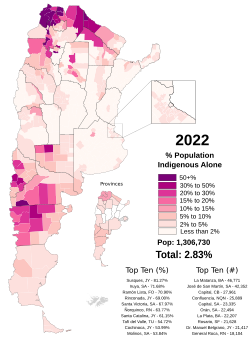
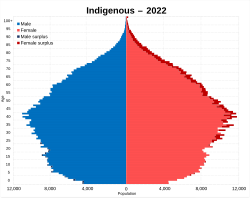
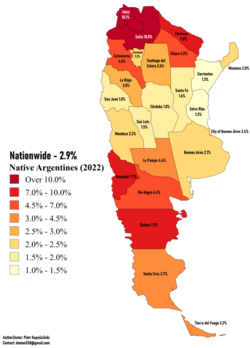
According to the 2022 census conducted by the National Institute of Statistics and Censuses (INDEC), approximately 1,306,730 people self-identify as Indigenous or first-generation descendants, representing 2.83% of the total population.
Key Facts
- Total Population: 1,306,730 people (2.83% of the population) as of 2022.
- Recognized Groups: 39 officially recognized Indigenous groups.
- Highest Concentration: Jujuy (10.07%) and Salta (9.96%) provinces.
- Genetic Legacy: A 2011 study found over 56% of sampled Argentines have at least one Indigenous ancestor.
- Major Groups: Mapuche, Guaraní, Toba, and Diaguita are among the most populous.
Ancient Roots and Pre-Columbian History
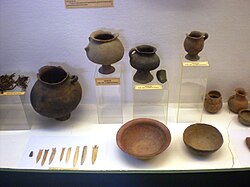
The history of Indigenous peoples in Argentina is among the oldest in the Americas. Evidence from the Piedra Museo archaeological site in Santa Cruz Province dates back to 11,000 BC. Similarly, the Cueva de las Manos, also located in Santa Cruz, is over 10,000 years old.
These sites are scientifically significant because they challenge the Clovis First hypothesis—the long-held assumption that the Clovis culture was the first to settle the Western Hemisphere—by providing evidence of much earlier human habitation in the Southern Hemisphere.
European Invasion and the Shift in Demographics
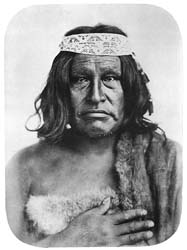
The 19th century brought drastic changes to the Indigenous landscape. Between 1820 and 1850, the Aonikenk people were conquered and expelled from their lands by Mapuche armies, leading to the "Araucanization" of northern Patagonia and the southeast Pampas by 1870.
During the Generation of 1880, the Argentine government aggressively encouraged European immigration to occupy territories. This era fostered a national narrative that "Argentines descend from ships," as the country became the second-largest recipient of immigrants globally, trailing only the United States. This expansion was often violent; the Conquest of the Desert in the 1870s, a military campaign against displaced tribes, resulted in over 1,300 Indigenous deaths and a subsequent period of state-promoted "invisibilization" of Indigenous cultures.
Modern Demographics and Self-Identification
Tracking the Indigenous population has evolved as self-identification becomes more common. The 2001 census was the first government effort to include a specific question on Indigenous identity. Since then, the number of people identifying as Indigenous has grown steadily.
| Year | Population | Percentage of Total Population |
|---|---|---|
| 1778 | 41,517 | 22.33% |
| 2001 | 600,329 | 1.66% |
| 2010 | 955,032 | 2.38% |
| 2022 | 1,306,730 | 2.83% |
The National Institute for Indigenous Affairs (INAI), under the Ministry of Justice and Human Rights, manages Indigenous policy and land rights. As of 2018, INAI registered 1,653 communities, with 1,456 holding legal ownership of their territories.
Genetic Contribution and Regional Variation
While self-identification numbers are relatively low, genetic studies reveal a much deeper Indigenous influence across the general population. A 2011 University of Buenos Aires study indicated that 56% of sampled Argentines have at least one Indigenous ancestor in one parental lineage, and 11% have them in both.
Genetic ancestry varies significantly by region:
- Northwest: The highest Indigenous genetic contribution, with some studies showing an average of 66% to 69% Indigenous ancestry.
- Northeast: Average Indigenous ancestry around 31% to 43%.
- South (Patagonia): Average Indigenous ancestry around 40% to 45%.
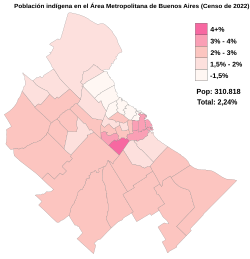
- Central (Buenos Aires/Urban): The lowest Indigenous contribution, averaging around 17% to 22% due to massive European immigration.
Indigenous Groups and Distribution
The distribution of Indigenous peoples is concentrated in specific geographic zones, with the Northwest and Patagonia being the most prominent.
Regional Groupings
- Northeast: Includes the Toba, Wichí, Guaraní, and Mocoví.
- Northwest: Includes the Kolla, Diaguita, and Omaguaca.
- Central: Includes the Huarpe, Comechingón, and Rankulche.
- South: Includes the Mapuche, Tehuelche, Selkʼnam, and Yahgan.
The Mapuche and Guaraní remain among the most populous groups in the 2022 census, with 145,783 and 135,232 people respectively.
Frequently Asked Questions
What percentage of Argentines identify as Indigenous?
According to the 2022 census, approximately 2.83% of the population (1,306,730 people) self-identify as Indigenous or first-generation descendants.
Which provinces have the highest proportion of Indigenous people?
Jujuy has the highest percentage at 10.07%, followed closely by Salta at 9.96% and Chubut at 7.92%.
How does genetic ancestry differ from self-identification?
While only a small percentage of the population self-identifies as Indigenous, genetic studies show a much wider impact, with over 56% of sampled Argentines possessing at least one Indigenous ancestor.
What was the "Conquest of the Desert"?
The Conquest of the Desert was a military campaign in the 1870s aimed at expanding European settlement into the Pampas and Patagonia, resulting in the deaths of over 1,300 Indigenous people and the displacement of many tribes.
Which Indigenous languages are still spoken in Argentina?
Several Indigenous languages persist alongside Spanish, including Guaraní, Qom, Wichí, Quechua, and Mapuche.