Nassau Inn: A Historic Landmark of Princeton, New Jersey
Located in the heart of downtown Princeton, the Nassau Inn is more than just a full-service hotel; it is a living piece of American history. Situated at 10 Palmer Square, this iconic establishment has served as a hub for travelers, political figures, and intellectuals for centuries, maintaining a close relationship with the nearby Princeton University.
Key Facts
- Established: Originally opened in 1769 in a building dating back to 1756.
- Current Location: Moved to Palmer Square in 1938.
- Historic Status: A contributing property of the Princeton Historic District.
- Capacity: 188 guest rooms and 14 meeting rooms.
- Famous Feature: The Yankee Doodle Tap Room featuring a Norman Rockwell mural.
- Literary Connection: Featured in F. Scott Fitzgerald's This Side of Paradise.
A Journey Through History
The Colonial Era and the American Revolution
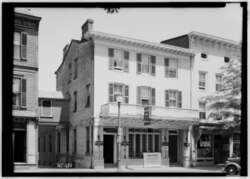
The origins of the inn date back to 1756, when the original structure was built as the home of Judge Thomas Leonard. Following Leonard's death in 1769, Christopher Beekman converted the residence into a hotel known as the College Inn. Because it was positioned on the King's Highway—the primary route between New York City and Philadelphia—it became a vital stop for colonial figures such as Thomas Paine, Robert Morris, and Paul Revere.
The inn played a silent but significant role during the American Revolution. It endured British occupation in 1776 and later hosted members of the Continental Congress during their 1783 meetings at Nassau Hall. Local history suggests that the inn's ballroom may have even served as the Court of Chancery during this period.
19th Century Evolution
At the turn of the 19th century, management passed to John Gifford, who renamed the establishment the Nassau Inn (occasionally the Nassau Hotel) and added a sign depicting Nassau Hall. The property expanded in 1846 when architect Charles Steadman constructed the Mansion House on the east side of the original building. By the 1880s, these two structures were merged into a single cohesive facility.
The Palmer Square Redevelopment
The 1930s brought a radical transformation to the inn. Edgar Palmer, a prominent Princeton University donor, envisioned an urban redevelopment project inspired by New York's Rockefeller Center. This led to the creation of Palmer Square between 1936 and 1939.
To make room for this planned development, the original inn was demolished in 1937. The current building opened in 1938, utilizing rustic materials including shale stone, argillite (a fine-grained sedimentary rock), wood timber, and a Ludowici shingle tile roof. The site of the original inn is now Tiger Park, marked by a statue of Edgar Palmer.
Modern Amenities and Culture
Today, the Nassau Inn is a premier destination for both leisure and business. It features 188 guest rooms and over 10,000 square feet of meeting space across 14 banquet rooms. The hotel is particularly popular for weddings, offering an outdoor patio for ceremonies, and welcomes approximately 120,000 guests annually.
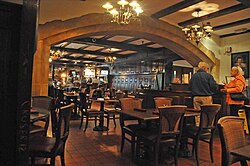
One of the most celebrated aspects of the inn is the Yankee Doodle Tap Room. This restaurant and lounge, complete with a cozy fireplace, is home to a famous mural by Norman Rockwell depicting the character Yankee Doodle.
Summary of Hotel Specifications
| Feature | Detail |
|---|---|
| Address | 10 Palmer Square, Princeton, NJ |
| Guest Rooms | 188 |
| Meeting Space | 14 rooms (10,000 sq ft) |
| Floor Count | 6 |
| Parking | Hulfish and Chamber Street Garages |
| Pet Policy | Allowed (cleaning fee applies) |
Frequently Asked Questions
Where is the original site of the Nassau Inn located?
The original inn was located at 52 Nassau Street. After its demolition in 1937, the site became Tiger Park, which now features a statue of Edgar Palmer.
Who painted the mural in the Yankee Doodle Tap Room?
The mural depicting Yankee Doodle was painted by the renowned American artist Norman Rockwell.
Is the Nassau Inn pet-friendly?
Yes, the hotel allows pets, although a cleaning fee is required.
What is the historical significance of the inn's location?
Because it was situated on the King's Highway between New York City and Philadelphia, it served as a critical meeting point for colonial leaders and Founding Fathers during the 18th century.
Does the hotel have facilities for events?
Yes, the Nassau Inn has 14 banquet rooms totaling over 10,000 square feet of space and an outdoor patio frequently used for wedding ceremonies.