NASDA: The Foundation of Japan's Space Exploration
Before the world knew the Japan Aerospace Exploration Agency (JAXA), Japan's journey into the cosmos was led by the National Space Development Agency, commonly known as NASDA (Uchū Kaihatsu Jigyōdan). Established on October 1, 1969, NASDA served as the primary engine for Japan's aerospace ambitions for over three decades, focusing exclusively on peaceful purposes.
Operating under the National Space Development Agency Law and guided by the Space Development Program enacted by the Minister of Education, Culture, Sports, Science and Technology (MEXT), NASDA was tasked with the critical responsibilities of developing, launching, and tracking satellites and launch vehicles.
Key Facts
- Established: October 1, 1969.
- Dissolved: October 1, 2003.
- Primary Mission: Peaceful development of satellites and launch vehicles.
- Successor: JAXA (Japan Aerospace Exploration Agency).
- Key Achievement: Development of the H-II, Japan's first fully indigenous liquid fuel rocket.
Technological Evolution and Leadership
NASDA's early efforts in rocket technology relied on a blend of international cooperation and domestic innovation. The agency's first generation of launch vehicles—the N-I, N-II, and H-I—were developed using licensed technology from the United States, drawing heavily from the Delta rocket family.
A pivotal shift occurred with the creation of the H-II, which marked a milestone in Japanese engineering as the first liquid fuel rocket to be fully developed within Japan. This transition from licensed technology to indigenous capability solidified Japan's standing as a global space power.
The agency's early leadership was equally distinguished. From 1969 to 1977, NASDA was led by Hideo Shima, the chief engineer renowned for his work on the original Shinkansen "bullet train" project, bringing a legacy of high-speed precision to the space program.
International Collaboration and Legacy
NASDA played a vital role in fostering international partnerships, most notably with the United States. In 1992, through a cooperative Japanese-American mission partially funded by Japan via NASDA, a NASDA astronaut was launched into Earth orbit aboard the Space Shuttle as part of the SL-J mission.
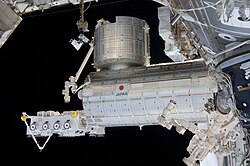
The agency also laid the groundwork for Japan's long-term presence in space. NASDA initiated the development of the Japanese Experiment Module (the laboratory attached to the International Space Station) and the HOPE-X project. Both of these ambitious endeavors were later inherited and completed by JAXA.
The Transition to JAXA
On October 1, 2003, the landscape of Japanese space exploration changed. To streamline operations and integrate research, NASDA merged with two other entities: the Institute of Space and Astronautical Science (ISAS) and the National Aerospace Laboratory of Japan (NAL). This merger created a single Independent Administrative Institution known as the Japan Aerospace Exploration Agency (JAXA).
| Attribute | Details |
|---|---|
| Full Name | National Space Development Agency of Japan |
| Active Period | 1969 – 2003 |
| Legal Mandate | Peaceful purposes only |
| Key Rockets | N-I, N-II, H-I, H-II |
| Superseding Agency | JAXA |
Frequently Asked Questions
What was the primary purpose of NASDA?
NASDA was established to develop, launch, and track satellites and launch vehicles for peaceful purposes under the guidance of the Japanese government.
How did NASDA differ from JAXA?
NASDA was a precursor to JAXA. In 2003, NASDA merged with the National Aerospace Laboratory of Japan (NAL) and the Institute of Space and Astronautical Science (ISAS) to form JAXA.
Which rocket was the first to be fully developed in Japan?
The H-II was the first liquid fuel rocket to be fully developed in Japan, moving beyond the licensed U.S. technology used in the N-I, N-II, and H-I rockets.
Who was the first Chief of NASDA?
Hideo Shima, the chief engineer of the original Shinkansen bullet train project, served as the Chief of NASDA from 1969 to 1977.
What contributions did NASDA make to the International Space Station?
NASDA began the initial work on the Japanese Experiment Module (Kibō), which was later completed and managed by JAXA.