Muslim Brotherhood in Syria: History, Conflict, and Political Evolution
The Muslim Brotherhood in Syria is a right-wing political and religious organization that has played a tumultuous role in the country's modern history. Founded in the mid-1940s, the group emerged as a significant force opposing secularism and various Western-aligned ideologies, including capitalism, liberalism, and communism. Over the decades, the Brotherhood has transitioned from a legal political participant to a banned underground movement, and eventually to a key player in the exiled opposition during the Syrian Civil War.
Key Facts
- Founded: 1945 (though some sources suggest the 1930s) by Mustafa al-Siba'i and Muhammad al-Mubarak al-Tayyib.
- Core Ideology: Right-wing political Islam; strongly opposes Pan-Arabism, socialism, and secularism.
- Major Conflict: Led a significant insurgency against the Ba'ath Party from 1976 to 1982.
- Turning Point: The 1982 Hama massacre effectively broke the group's active political power inside Syria.
- Current Status: Operates primarily as an organized political entity in exile, with historical headquarters in Damascus and later Idlib.
Origins and Early Political Activity
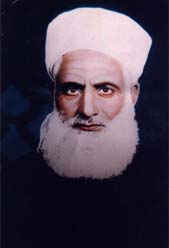
The roots of the movement trace back to the late 1930s, when young Syrians returning from university in Cairo brought the ideas of Hassan al-Banna, the founder of the Egyptian Muslim Brotherhood, to their homeland. These students established associations known as Shabab Muhammad (Muhammad's Youth), which evolved into the Syrian Muslim Brotherhood. The organization was formally established around 1945, shortly before Syria gained independence from France.
In the early years of independence, the Brotherhood operated as part of the legal political opposition. This period of legitimacy peaked during the 1961 parliamentary elections, where the party successfully won ten seats. However, this era of participation ended abruptly following the 1963 coup by the secularist, pan-Arabist Ba'ath Party.
The Rise of Conflict and the Ba'athist Era
Following the 1963 coup, the new administration restricted political freedoms and concentrated power within the military, often favoring the Alawite minority. This marginalized the Sunni majority and led to the outlawing of the Muslim Brotherhood in 1964, a move that triggered the group's radicalization. Throughout the 1960s and 70s, mass demonstrations and strikes, particularly in Hama, were met with military force.
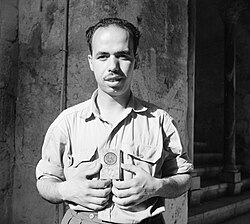
The tension escalated further in 1971 when General Hafez al-Assad seized power. By 1976, the conflict shifted toward an armed struggle. The Brotherhood claimed responsibility for various assassinations targeting government officials and Alawites, viewing the secular Ba'athist regime as an existential threat to Islamic governance.
The 1976–1982 Islamist Insurgency
The insurgency reached a violent peak in the late 1970s. A pivotal event occurred on June 16, 1979, when the Brotherhood attacked cadets at the Aleppo Artillery School, resulting in 83 deaths. The government responded with severe repression, and by July 7, 1980, a law was passed making membership in the Muslim Brotherhood a capital offense.
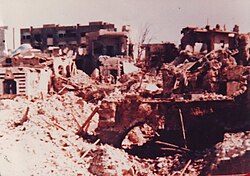
The conflict culminated in February 1982 during the Hama uprising. After the Brotherhood took control of the city of Hama, the Syrian military launched a massive offensive, bombing the city and killing between 10,000 and 30,000 people. This event, known as the Hama Massacre, decimated the Brotherhood's infrastructure and ended its capacity as an active political force within Syrian borders for decades.
Post-Hama Era and the 2011 Uprising
For years, the Brotherhood remained suppressed. In the mid-1990s, Hafez al-Assad released some prisoners, and after Bashar al-Assad took power in 2000, there was a brief window of perceived openness. In 2001, the Brotherhood issued a statement from London rejecting political violence and calling for a democratic state. By 2006, leader Ali Sadreddine Bayanouni clarified that the group sought a "civil, democratic state" rather than an Islamic republic.
When the Syrian uprising began in March 2011, it was primarily a secular, youth-led movement. Because the younger generation had grown up without a visible Brotherhood presence, the group initially struggled to influence the grassroots protests. However, in the diaspora, the Brotherhood became a dominant force within the Syrian National Council (SNC) and later the National Coalition for Syrian Revolutionary and Opposition Forces.
Role in the Syrian Civil War
During the civil war, the Brotherhood attempted to regain relevance by forming alliances with rebel factions and establishing the Waad Party in 2014. Reports also indicated the formation of the "Armed Men of the Muslim Brotherhood" militia and the Durou al-Thawra Commission (Shields of the Revolution Council), which operated several fighting units, primarily in Idlib and Hama. Despite these efforts, the group was often overshadowed by more radical Islamist factions on the ground.
Summary of Organizational Leadership
| Role/Period | Name | Key Significance |
|---|---|---|
| Founder (1945–1961) | Mustafa al-Siba'i | Established the movement based on Hassan al-Banna's ideas. |
| General Leader (1996–2010) | Ali Sadreddine Al-Bayanouni | Advocated for a civil, democratic state. |
| Current Leader (2014–Present) | Mohammad Walid | Leading the organization during the civil war era. |
| Deputy Leader | Mohammad Farouk Tayfour | Vice President of the Syrian National Council. |
| Shura Council Head | Mohammad Hatem al-Tabshi | Oversees the consultative council. |
Frequently Asked Questions
When was the Muslim Brotherhood in Syria founded?
While some sources suggest the 1930s, the organization is generally recognized as being founded in 1945 by Mustafa al-Siba'i and Muhammad al-Mubarak al-Tayyib.
What was the significance of the Hama Massacre of 1982?
The Hama Massacre was the military response to a Brotherhood-led insurrection. The resulting death toll of 10,000 to 30,000 people effectively destroyed the Brotherhood's ability to operate as a political or militant force inside Syria for nearly thirty years.
Does the Syrian Muslim Brotherhood want a theocracy?
In later years, specifically around 2006, leader Ali Sadreddine Bayanouni stated that the group desired a "civil, democratic state" rather than an Islamic republic.
How did the Brotherhood participate in the 2011 Syrian uprising?
The group had limited influence over the initial youth-led grassroots protests inside Syria but became a powerful force among the expatriated opposition, holding seats in the Syrian National Council.
Who is the current leader of the Syrian Muslim Brotherhood?
The current General Leader is Mohammad Walid, who has held the position since 2014.