Amin al-Hafiz: The Rise and Fall of a Ba'athist Leader
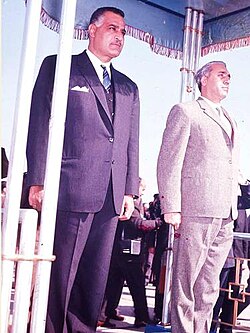
Amin al-Hafiz (1921–2009) was a pivotal figure in 20th-century Syrian politics, serving as a general, a high-ranking member of the Ba'ath Party, and the 15th President of Syria. His tenure was marked by a drive toward socialist reform and a commitment to pan-Arabism—the ideology seeking to unify the countries of the Arab world.
Key Facts
- Presidency: Served as President of Syria from July 27, 1963, to February 23, 1966.
- Political Affiliation: Member of the Arab Socialist Ba'ath Party.
- Military Rank: General of the Army.
- Major Policy: Signed the Ramadan Socialist Decrees in 1965, nationalizing over 100 large enterprises.
- Downfall: Overthrown in a 1966 coup led by Salah Jadid.
Early Life and Military Foundations
Born in 1921 to a Sunni Arab family in Aleppo, al-Hafiz was the son of a police officer. His early years were shaped by the French mandate of Syria, during which he participated in youth protests against colonial authorities. His commitment to national service led him to volunteer for the 1948 Arab–Israeli War at the age of 27.
Al-Hafiz's military career progressed through various political upheavals. In 1954, he joined the uprising against Adib Shishakli, subsequently commanding the Eastern Front at Deir ez-Zor and leading the Homs academy. After a period of service in Cairo, he returned to Damascus in September 1961 following Syria's break with Egypt.
The Ascent to Power
Al-Hafiz's path to the presidency was paved by the military committee and its leader, Muhammad Umran. Despite being exiled to Buenos Aires as a military attaché by the Qudsi regime in December 1961, he was recalled to Syria following the successful coup d'état on March 8. This event brought the radical, pan-Arab Ba'ath Party to the forefront of Syrian governance through the National Council of the Revolutionary Command (NCRC).
As President, al-Hafiz shifted Syria's geopolitical orientation toward the Eastern Bloc and implemented sweeping socialist reforms. The most significant of these were the Ramadan Socialist Decrees of January 1965, which nationalized more than 100 large enterprises to restructure the national economy.
Factional Conflict and Downfall
The stability of al-Hafiz's regime was undermined by internal rivalry within the Ba'ath Party. A divide emerged between the "nationalist" (qawmi) faction, led by al-Hafiz and focused on pan-Arab unity, and the "regionalist" (qutri) faction, led by Chief of Staff Salah Jadid, who prioritized a "Greater Syria" and held more radical left-wing views.
On February 23, 1966, this tension culminated in a coup d'état. The movement was supported by officers from religious minorities, specifically the Alawites and Druze, contrasting with al-Hafiz's Sunni background. Despite a warning telegram from Egyptian President Gamal Abdel Nasser, the coup succeeded after a three-hour shootout that left al-Hafiz and two of his children wounded.
Exile, Return, and Legacy
Following the coup, al-Hafiz was imprisoned in Mezzeh prison before being exiled to Lebanon in 1967 and later to Baghdad. Although he was sentenced to death in absentia by Damascus courts in 1971, he found sanctuary in Iraq under Saddam Hussein, who treated him and Ba'ath founder Michel Aflaq with high honor.
After the 2003 Iraq War and the fall of Saddam Hussein, al-Hafiz returned to Syria. He died in his hometown of Aleppo on December 17, 2009, at approximately 88 years of age, and was honored with a state-sponsored funeral.
| Role | Period | Key Detail |
|---|---|---|
| President of Syria | 1963–1966 | 15th President; implemented socialist reforms |
| Prime Minister of Syria | 1963–1964, 1964–1965 | Served two separate terms |
| Regional Secretary | 1964–1965 | Led the Syrian Regional Branch of the Ba'ath Party |
| Military Service | 1938–1966 | Attained rank of General of the Army |
Frequently Asked Questions
What were the Ramadan Socialist Decrees?
The Ramadan Socialist Decrees were a series of economic policies signed by Amin al-Hafiz in January 1965 that resulted in the nationalization of more than 100 large enterprises in Syria.
Why was Amin al-Hafiz overthrown in 1966?
He was overthrown due to a factional split within the Ba'ath Party between his pan-Arab "nationalist" faction and Salah Jadid's more radical, left-wing "regionalist" faction.
Which military conflicts did Amin al-Hafiz participate in?
Al-Hafiz volunteered to fight in the 1948 Arab–Israeli War and was involved in the 1954 uprising against Adib Shishakli.
Where did Amin al-Hafiz spend his years in exile?
After being ousted from power, he lived in Lebanon starting in 1967 and later moved to Baghdad, Iraq, where he remained until 2003.
How is Amin al-Hafiz represented in modern media?
He is portrayed by actor Waleed Zuaiter in the Netflix series The Spy.