Mount Equinox: A History of Development and Land Use
Mount Equinox has a storied history of human intervention, evolving from early road-building efforts in the 19th century to its current role as a site of spiritual retreat and critical communications infrastructure. The mountain's geography has attracted various interests, ranging from commercial tourism and skiing to monastic seclusion.
Early Infrastructure and the Toll Road
The first significant attempt to access the mountain's heights occurred during the 1860s, when a group from Manchester constructed a 4-mile road. This route extended south from near the height of Beartown Gap Road toward the summit. While a 1949 report noted that the road—which only reached Lookout Rock—had fallen into disuse, its path remained clearly discernable.
Modern access was established later via a different route. In 1947, Joseph George Davidson, a retired executive from Union Carbide Corp., completed a 5.2-mile toll road leading north to the summit. Davidson's vision for the mountain included the construction of a summit hotel, which opened its doors in 1950.
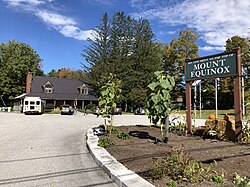
From Commercial Ambition to Monastic Quiet
Joseph George Davidson acquired approximately 7,000 acres, primarily on the western slopes of the mountain. While he initially considered developing a commercial ski area centered on the upper Hamilton Hollow, his legacy shifted toward spirituality. Before his death in 1969, Davidson transferred all his Equinox property to the Carthusians, an austere Catholic monastic order.
This transfer led to the establishment of the Charterhouse of the Transfiguration monastery, which opened in 1970 in the upper hollow at an elevation of 2,100 feet. The summit hotel eventually closed in the 1990s and fell into disrepair until it was demolished in 2011. In its place, the monastery established a viewing center. According to tax filings, the monastery's toll road and associated gift shop generated gross receipts of $327,502 in 2019.
Failed Ski Developments and the Equinox House
The eastern slopes of the mountain were also the subject of various development schemes. In the 1930s, a federal work agency proposed cutting ski trails, though the plan was never realized. Later, the 1962 sale of the Equinox House hotel and its 1,500 adjoining acres sparked a series of ambitious corporate proposals for a commercial ski area.
These plans were halted by a bankruptcy in 1974, leaving the Equinox House empty for the following decade. This period of stagnation preserved the site, now recognized as the Equinox House Historic District.
Modern Communications and Utility
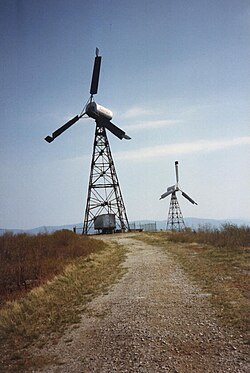
Beyond its spiritual and historical significance, Mount Equinox serves as a vital hub for telecommunications. The mountain hosts the tower for radio station WEQX, which derives its callsign from the mountain's name. Additionally, Vermont Public Radio's WVTQ transmits from the site.
The summit also contains a small, abandoned FAA Air Traffic Control facility. This site has been repurposed for two-way communications by the Vermont State Police and other land mobile radio tenants, all of whom pay rent to the property owner.
Key Facts
- Toll Road: A 5.2-mile road completed in 1947 by Joseph George Davidson.
- Monastic Presence: The Charterhouse of the Transfiguration (Carthusian order) opened in 1970 at 2,100 feet.
- Economic Activity: The monastery's toll road and gift shop earned $327,502 in 2019 gross receipts.
- Communications: Home to WEQX, WVTQ, and Vermont State Police radio operations.
- Land Transfer: Approximately 7,000 acres were transferred from Davidson to the Carthusians.
| Feature | Period/Date | Key Figure/Entity | Outcome |
|---|---|---|---|
| First Road | 1860s | Manchester Group | Fell into disuse |
| Toll Road & Hotel | 1947-1950 | Joseph George Davidson | Current access route |
| Monastery | 1970 | Carthusians | Charterhouse of the Transfiguration |
| Ski Proposals | 1930s-1970s | Federal Agency/Corporations | Unsuccessful/Bankruptcy |
Frequently Asked Questions
Who built the current toll road to the summit?
The 5.2-mile toll road was completed in 1947 by Joseph George Davidson, a retired executive of the Union Carbide Corp.
What is the Charterhouse of the Transfiguration?
It is a monastery belonging to the Carthusians, an austere Catholic monastic order, located in the upper Hamilton Hollow at an elevation of 2,100 feet.
Why is the radio station WEQX named as such?
The station's callsign is derived from its tower's location on Mount Equinox.
What happened to the summit hotel?
The hotel closed in the 1990s, became derelict, and was demolished in 2011 to make room for a viewing center operated by the monastery.
Were there ever any ski resorts on Mount Equinox?
While there were several proposals—including one by a federal agency in the 1930s and various corporate plans following the 1962 sale of Equinox House—none were successfully realized.