Manchester, Vermont: A History of Industry, Innovation, and Elegance
Nestled among the mountains, Manchester, Vermont, is a town defined by its transition from a colonial outpost to an affluent resort destination. From its early days as a grazing land for thousands of sheep to its role as a cradle for global sporting brands, the town's evolution reflects the broader industrial and social shifts of New England.
Colonial Foundations and Early Economy
Manchester was one of several towns chartered in 1761 by Benning Wentworth, the colonial governor of New Hampshire. Following a common practice of the time, Wentworth named the town after Robert Montagu, the 3rd Duke of Manchester, in hopes that the English aristocrat would take a patronly interest in the settlement. While the town was first settled in 1764, it was not formally laid out until 1784.
The local geography heavily influenced early economic activity. Because the land was better suited for grazing (raising livestock) than tillage (preparing land for crops), the town became a hub for sheep farming. By 1839, approximately 6,000 sheep inhabited the local hillsides and pastures.
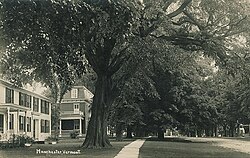
Industrial Growth and the Rise of Tourism
As the town grew, its economy diversified beyond agriculture. Manchester leveraged its natural resources to establish iron mines, marble quarries, mills, and lumber companies. The landscape began to shift from a purely agrarian society to an industrial one.
The arrival of the railroad connected Manchester to major industrialized hubs like New York City. This accessibility transformed the town, attracting tourists who were drawn to the stunning mountain scenery and the town's historic architecture. In the wake of the Civil War, Manchester evolved into an affluent resort area, a characteristic it maintains to this day.
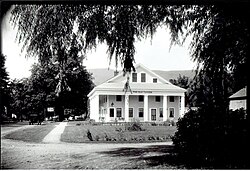
Legacy of Innovation and Commerce
Manchester has been the birthplace of several influential American enterprises. In 1856, Charles F. Orvis founded Orvis in Manchester to sell fishing tackle. Today, it remains a family-owned retail and mail-order business specializing in high-end sporting goods, hunting, and fly fishing, holding the title of the oldest mail-order retailer in the United States.
The town also played a pivotal role in the evolution of winter sports. Jake Burton Carpenter, the founder of Burton Snowboards, perfected his snowboard designs in his Manchester garage. The company operated within the town until 1992, when it moved to Burlington. This culture of innovation was supported by nearby Stratton Mountain, which was among the first ski resorts to permit snowboarding.
Legal History and Cultural Heritage
Beyond commerce, Manchester is noted in legal history for the Boorn–Colvin case, which occurred between 1812 and 1819. Often cited as "America's first wrongful conviction murder case," the event remains a subject of academic study and has been the focus of several books.
The town's architectural legacy is preserved through three state-recognized historic districts:
- The Depot district: Located on Highland Avenue and Elm Street.
- Bonnet Street: Situated just north of Main Street.
- Main Street: The central historic corridor of the town.
Key Facts
- Chartered: 1761 by Benning Wentworth.
- Early Economy: Dominated by sheep grazing (6,000 sheep by 1839).
- Retail Milestone: Home to Orvis, the oldest mail-order retailer in the U.S. (est. 1856).
- Sporting Legacy: Birthplace of Burton Snowboards' perfected design.
- Historic Status: Features three state-recognized historic districts.
| Period/Year | Event/Development | Significance |
|---|---|---|
| 1761 | Town Charter | Established by Benning Wentworth |
| 1812–1819 | Boorn–Colvin Case | First major wrongful conviction murder case |
| 1839 | Agricultural Peak | 6,000 sheep roaming the pastures |
| 1856 | Founding of Orvis | Oldest U.S. mail-order retailer |
| Post-Civil War | Resort Development | Transition to an affluent tourist destination |
| Until 1992 | Burton Snowboards | Company headquarters before moving to Burlington |
Frequently Asked Questions
Who founded the town of Manchester?
The town was chartered in 1761 by Benning Wentworth, the colonial governor of New Hampshire, who named it after Robert Montagu, the 3rd Duke of Manchester.
What is the significance of the Boorn–Colvin case?
Occurring between 1812 and 1819, it is recognized as America's first wrongful conviction murder case and continues to be studied today.
Which famous companies started in Manchester?
Orvis, the oldest mail-order retailer in the U.S., was founded here in 1856. Additionally, Jake Burton Carpenter perfected the design of Burton Snowboards in his Manchester garage.
Why did Manchester become a resort town?
The arrival of the railroad from cities like New York City brought tourists attracted by the town's beautiful mountain setting and historic architecture, leading to its development as an affluent resort area after the Civil War.
What are the historic districts in Manchester?
The town has three state-recognized historic districts: the Depot district (Highland Avenue and Elm Street), Bonnet Street, and Main Street.