Moscow Institute of Physics and Technology: The Evolution of the Phystech System
The Moscow Institute of Physics and Technology (MIPT) stands as a testament to a bold vision of scientific education. Founded on the belief that the brightest minds should learn through direct collaboration with leading researchers, MIPT introduced a radical departure from the rigid Soviet educational norms of the mid-20th century. This innovative approach, which became known as the Phystech System, emphasized personalized curricula and rigorous selection processes to push the boundaries of physics and technology.
The Vision of Pyotr Kapitsa
In the wake of World War II, between late 1945 and early 1946, a group of Soviet scientists led by future Nobel laureate Pyotr Kapitsa lobbied the government to create a new kind of higher education institution. Kapitsa envisioned a school where students were not merely pupils but junior colleagues. Under this model, applicants were selected through challenging examinations and personal interviews, then paired with prominent scientists to work on real-world research projects.
In February 1946, Kapitsa wrote to Joseph Stalin, arguing that such an institution was essential for maintaining and developing the Soviet Union's defense potential. He proposed that the school be governed by a board of directors from the leading research institutes of the USSR Academy of Sciences. This effort led to a government decree on March 10, 1946, mandating the creation of the "College of Physics and Technology" (Russian: Высшая физико-техническая школа).
From Department to Independent Institute
The path to independence was not linear. By the summer of 1946, the original plan stalled. While undocumented, it is widely believed that Kapitsa's refusal to join the Soviet atomic bomb project led to government disfavor, hindering the creation of an independent school. Consequently, a new decree on November 25, 1946, established the school as a Department of Physics and Technology within Moscow State University (MSU). This date is now celebrated as the founding of MIPT.
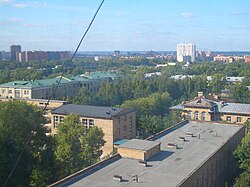
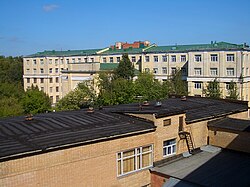
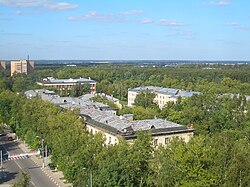
Despite being part of MSU, the department maintained significant autonomy. It operated out of facilities in Dolgoprudny, physically separated from the main MSU campus. To protect the department from university bureaucracy, the government created the role of "vice rector for special issues" to lead the school.
The Phystech System's success created a "cult status" among talented youth, who were drawn to the romanticism of working on classified projects of national importance. However, this prestige sparked jealousy and resistance within MSU. Combined with the political climate of the late 1940s—including antisemitic repressions and Kapitsa's own house arrest in 1950—the department became a target for accusations of "elitism" and "rootless cosmopolitanism." In the summer of 1951, the department was shut down.
The closure was short-lived. A group of academicians, supported by Air Force General Ivan Fedorovich Petrov, successfully lobbied Stalin to restore the institution. On September 17, 1951, a government decree officially re-established the school as the independent Moscow Institute of Physics and Technology.
A Legacy of Scientific Excellence
MIPT has since become a hub for some of the most influential scientists of the 20th and 21st centuries. The institute's faculty has included a staggering number of Nobel Prize winners and Academy of Sciences members, fostering an environment of extreme academic rigor.
| Category | Notable Names |
|---|---|
| Founding Visionary | Pyotr Kapitsa |
| Nobel Laureate Faculty | Nikolay Semyonov, Lev Landau, Alexandr Prokhorov, Vitaly Ginzburg |
| Academy of Sciences Members | Sergey Khristianovich, Mikhail Lavrentiev, Mstislav Keldysh, Sergey Korolyov, Boris Rauschenbach |
| Notable Alumni | Andre Geim, Konstantin Novoselov (2010 Nobel Prize in Physics) |
Key Facts
- Founding Date: November 25, 1946 (as an MSU department); September 17, 1951 (as an independent institute).
- The Phystech System: A pedagogical model featuring personalized curricula and direct collaboration between students and leading scientists.
- Location: The campus is located in Dolgoprudny, separate from the center of Moscow.
- Academic Pedigree: The institute has been taught by and produced multiple Nobel Prize winners in Physics.
- Political History: The school survived a brief shutdown in 1951 due to political intrigues and accusations of elitism.
Frequently Asked Questions
What is the Phystech System?
The Phystech System is an educational approach where students are selected via rigorous interviews and exams, then follow personalized curricula while working directly with prominent scientists on research projects.
Who was the primary driving force behind MIPT's creation?
Pyotr Kapitsa, a future Nobel Prize winner, was the lead advocate who lobbied the Soviet government to establish the institute to enhance the country's defense and scientific potential.
Why was MIPT briefly shut down in 1951?
The department was closed due to internal university resistance, political pressure, and accusations of "elitism" and "rootless cosmopolitanism," coinciding with the government's disfavor toward Pyotr Kapitsa.
Where is the MIPT campus located?
The campus is located in the city of Dolgoprudny, which allowed the institute to maintain autonomy from the main Moscow State University campus during its early years.
Which Nobel laureates are alumni of MIPT?
Andre Geim and Konstantin Novoselov, who won the Nobel Prize in Physics in 2010, are among the institute's distinguished alumni.