MINERVA: The Robotic Array Hunting for Exoplanets
The search for worlds beyond our solar system requires precision, patience, and specialized technology. One such endeavor is the MINiature Exoplanet Radial Velocity Array, commonly known as MINERVA. This ground-based robotic observatory is dedicated specifically to the detection and study of exoplanets—planets orbiting stars other than our Sun.
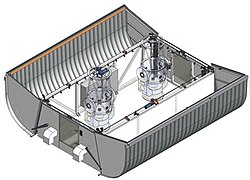
Located at the U.S. Fred Lawrence Whipple Observatory on Mount Hopkins, Arizona, MINERVA represents a strategic approach to astronomy by utilizing an array of small-aperture robotic telescopes rather than a single massive instrument. This facility is led by Principal Investigator Jason Eastman and utilizes hardware manufactured by PlaneWave Instruments.
Technical Capabilities and Methodology
MINERVA is designed to employ two primary astronomical techniques to identify distant planets. By combining these methods, the observatory can provide a more comprehensive understanding of a target star's planetary system.
Photometry
The array is outfitted for photometry, which is the measurement of the intensity of an astronomical object's electromagnetic radiation. In the context of exoplanet hunting, this is often used to detect the slight dip in a star's brightness as a planet passes in front of it.
High-Resolution Doppler Spectroscopy
Additionally, the facility utilizes high-resolution Doppler spectroscopy. This technique measures the "wobble" of a star caused by the gravitational pull of an orbiting planet. As the star moves slightly toward or away from Earth, the wavelength of its light shifts—a phenomenon known as the Doppler effect—allowing astronomers to calculate the planet's mass and orbit.
Key Facts
- Full Name: MINiature Exoplanet Radial Velocity Array.
- Location: Mount Hopkins, Arizona (31°41′18″N 110°53′07″W).
- Facility: U.S. Fred Lawrence Whipple Observatory.
- Principal Investigator: Jason Eastman.
- Hardware: Telescopes manufactured by PlaneWave Instruments.
- Primary Functions: Photometry and high-resolution Doppler spectroscopy.
Observatory Summary
| Feature | Detail |
|---|---|
| Observatory Type | Ground-based robotic array |
| Primary Goal | Exoplanet detection and study |
| Location | Mount Hopkins, Arizona |
| Equipment Provider | PlaneWave Instruments |
Frequently Asked Questions
What does MINERVA stand for?
MINERVA stands for the MINiature Exoplanet Radial Velocity Array.
Where is the MINERVA observatory located?
It is located at the U.S. Fred Lawrence Whipple Observatory on Mount Hopkins, Arizona.
Who is the lead scientist for the project?
The project's principal investigator is the American astronomer Jason Eastman.
What types of telescopes are used in the array?
The array consists of small-aperture robotic telescopes manufactured by PlaneWave Instruments.
What scientific methods does MINERVA use to find planets?
The facility uses both photometry and high-resolution Doppler spectroscopy to detect and analyze exoplanets.