Milwaukee Riots: A Timeline of Civil Unrest
Following a shooting incident, the city of Milwaukee experienced a period of intense civil unrest beginning on August 13. According to Mayor Tom Barrett, the initial riots were driven by social media messages that encouraged people to congregate in the affected area. What began as a gathering of protesters quickly escalated into violence, resulting in significant property damage and multiple injuries.
The Outbreak of Violence: August 13
Between 8:00 and 9:00 p.m. on August 13, approximately 100 black protesters gathered near the intersection of North Sherman and Auer. The group confronted a line of 20 to 30 police officers. While the Revolutionary Communist Party confirmed that some of its members traveled to Milwaukee to support a revolution, they stated they did not intend to incite violence.
The situation deteriorated rapidly as protesters set fire to several vehicles, including police squad cars. A BP gas station was looted and ignited; firefighters were initially unable to extinguish the blaze due to reports of gunfire in the area. The Milwaukee Fire Department also reported that bricks were thrown at one of their trucks.
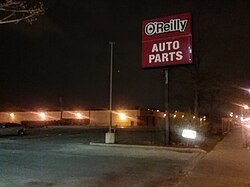
Beyond the gas station, several other businesses were targeted. An O'Reilly Auto Parts shop, a beauty supply store, and a BMO Harris Bank branch were set on fire. Additionally, a MetroPCS store was looted, while a supermarket and a liquor store were completely destroyed.
The violence extended to members of the press, with reporters and a photographer being attacked; one reporter was shoved to the ground and physically assaulted. By the end of the first night, four police officers had been treated for injuries, and seventeen people were arrested.
Escalation and Response: August 14
In the early hours of August 14, Mayor Barrett and other local officials held a press conference urging residents to help restore order and requesting that parents bring home any children participating in the protests. During the day, volunteers worked alongside police to clear debris from the streets.
The afternoon saw a shift toward peaceful demonstration. About 100 people, primarily black, gathered in front of the burned O'Reilly Auto Parts shop before moving to the local police station, where they held their arms in the air as a form of non-violent protest.
However, unrest returned that night. Approximately two dozen officers in riot gear responded to new disturbances where protesters threw objects at police. During this clash, an individual was shot in the neck; police utilized an armored vehicle to safely retrieve the victim from the crowd for hospital treatment. Another officer was injured when a rock smashed through a patrol car windshield.
The Final Wave: August 15
Protests continued into the early hours of August 15, with reports of objects being thrown and shots fired shortly after midnight. Chief Edward Flynn noted that the ShotSpotter system—an acoustic sensor technology used to detect and locate gunfire—recorded 30 instances of gunfire on the night of August 14.
By the morning of August 15, an additional fourteen people had been arrested and four more police officers were wounded. In response to the ongoing instability, a 10:00 p.m. curfew was implemented for teenagers. Property damage continued with three police cars and a BearCat (a tactical armored vehicle) being damaged, while another vehicle and a dumpster were set on fire and a store's windows were broken.
The night of August 15 remained relatively peaceful. While a few heated confrontations occurred, they were resolved after six people were arrested, and no further property damage was reported.
Key Facts
- Initial Trigger: Social media messages encouraged protesters to gather on August 13.
- Property Damage: Multiple businesses destroyed or burned, including a BP gas station, O'Reilly Auto Parts, and BMO Harris Bank.
- Casualties: Multiple police officers injured; one civilian shot in the neck on August 14.
- Law Enforcement Tools: ShotSpotter technology detected 30 gunshots; BearCat armored vehicles were deployed.
- Legal Action: A total of 37 people were arrested across the three-day period.
| Date | Primary Events | Key Impacts |
|---|---|---|
| August 13 | Initial riots and looting | BP station, O'Reilly Auto Parts, and BMO Harris Bank burned; 17 arrests. |
| August 14 | Peaceful afternoon protest; night violence | One civilian shot in neck; officer injured by rock; 30 gunshots detected. |
| August 15 | Early morning clashes; curfew implemented | 14 arrests; BearCat vehicle damaged; 10 PM curfew for teens. |
Frequently Asked Questions
What role did social media play in the riots?
Mayor Tom Barrett stated that the first riot was driven by social media messages that encouraged protesters to congregate in the area.
Which businesses were most affected by the violence?
Significant damage occurred at a BP gas station, an O'Reilly Auto Parts shop, a beauty supply store, a BMO Harris Bank branch, a MetroPCS store, a supermarket, and a liquor store.
How did the police handle the civilian shot on August 14?
Because of the unrest in the crowd, police had to use an armored vehicle to retrieve the victim, who had been shot in the neck, and transport them to the hospital.
What is ShotSpotter and how was it used?
ShotSpotter is a system used to detect gunfire. Chief Edward Flynn reported that the system recorded 30 instances of gunfire on the night of August 14.
What measures were taken to prevent further violence on August 15?
Local authorities announced a 10:00 p.m. curfew specifically for teenagers to help maintain order.