Military Transport Airframes: Fixed-Wing and Rotary-Wing Capabilities
Military logistics rely on a diverse array of airframes designed to move personnel, equipment, and supplies across varying distances and terrains. These assets are broadly categorized by their wing design—fixed-wing or rotary-wing—each serving a distinct operational purpose based on range, payload, and landing requirements.
Fixed-Wing Transport Aircraft
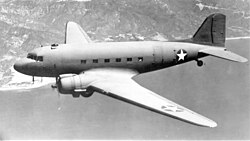
Fixed-wing military transport aeroplanes are primarily classified by their range capabilities, which dictate whether they serve as strategic airlift or tactical airlift. These designations align closely with commercial aviation standards established by Eurocontrol, which defines short-haul routes as those under 1,500 km (810 nmi), long-haul routes as those exceeding 4,000 km (2,200 nmi), and medium-haul as the range in between.
Beyond powered aircraft, the military glider serves as an unpowered tactical air transport. These specialized craft have been utilized in various campaigns to deliver troops and equipment directly to the battle front without the need for an engine.
Rotary-Wing Transport Aircraft
Military transport helicopters provide critical flexibility in environments where conventional runways are unavailable. They are essential for operations such as US Marine deployments from amphibious assault ships. Because helicopters can hover, they allow troops to deploy via roping or abseiling in dense terrain, such as jungles, where landing is impossible.
Assault Helicopters
Assault helicopters are typically the smallest transport class, designed to move an infantry section or squad along with their gear. To ensure survival during transit and to suppress landing zones, these aircraft are often armed. This armament may include door gunners or the addition of stub wings and pylons for rocket pods and missiles. For instance, the Mil Mi-8 Hip E and the Sikorsky S-70 (equipped with the External Stores Support System, or ESSM) can carry armament levels comparable to some dedicated attack helicopters.
Medium Transport Helicopters
Medium transport helicopters are capable of moving up to a full infantry platoon. They are also used to transport light vehicles or towed artillery, either inside the cabin or as underslung loads (cargo suspended by cables beneath the aircraft). Unlike assault variants, medium transports generally do not land in contested zones; instead, they reinforce and resupply areas already secured by the initial assault wave. Examples include the NH90, CH-46 Sea Knight, Super Puma, and unarmed versions of the Mil Mi-8.
Heavy Lift Helicopters
Heavy lift helicopters are the most capable rotary-wing assets, functioning similarly to small fixed-wing turboprop air-lifters in a tactical role. They can transport up to 80 troops and move small armored fighting vehicles. While they suffer from lower speeds, shorter ranges, and higher fuel consumption than fixed-wing aircraft, their ability to operate without a runway is a decisive advantage. Key examples include the CH-47 Chinook, CH-53 Sea Stallion, CH-53E Super Stallion, Mil Mi-26, and SA 321 Super Frelon.
Key Facts
- Strategic vs. Tactical: Fixed-wing aircraft are categorized by range, mirroring commercial short, medium, and long-haul definitions.
- Versatility: Helicopters enable deployment in jungle or ship-to-shore environments where runways are non-existent.
- Payloads: Heavy lift helicopters can carry up to 80 troops or armored vehicles.
- Armament: Some assault helicopters, like the S-70 with ESSM, possess firepower similar to attack helicopters.
- Gliders: Unpowered aircraft are used specifically for tactical troop and equipment delivery.
| Class | Primary Capacity | Typical Role | Examples |
|---|---|---|---|
| Assault | Infantry squad/section | Direct insertion and LZ suppression | Sikorsky S-70, Mil Mi-8 Hip E |
| Medium | Infantry platoon / Light vehicles | Reinforcement and resupply | NH90, CH-46 Sea Knight, Super Puma |
| Heavy Lift | Up to 80 troops / Armored vehicles | Tactical heavy transport | CH-47 Chinook, Mil Mi-26, CH-53E |
Frequently Asked Questions
How are military fixed-wing transports classified?
They are classified as either strategic or tactical airlift based on their range capabilities, which correspond to short-haul (<1,500 km), medium-haul, and long-haul (>4,000 km) distances.
What is the primary advantage of a transport helicopter over a fixed-wing aircraft?
The primary advantage is the lack of a requirement for a runway, allowing helicopters to land in nearly any location or deploy troops via hovering and roping in dense environments.
What are underslung loads?
Underslung loads are pieces of equipment, such as towed artillery or light vehicles, that are carried suspended by cables beneath a helicopter rather than inside the fuselage.
Can transport helicopters be armed for combat?
Yes, particularly assault helicopters. They may use door gunners or be equipped with stub wings and pylons to carry missiles and rocket pods for self-protection and landing zone suppression.
Which helicopters are considered heavy lift?
Current heavy lift assets include the CH-47 Chinook, the CH-53 Sea Stallion and Super Stallion, the Mil Mi-26, and the SA 321 Super Frelon.