Military Medicine: Evolution, Practice, and Global Impact
Military medicine is a multifaceted field that extends far beyond the immediate treatment of wounds on a battlefield. It encompasses a broad spectrum of healthcare, from the specialized occupational needs of service members to the complex logistics of mass casualty management and the development of medical technologies that eventually benefit the entire civilian population.
At its core, military medicine serves as a critical pillar of operational readiness. By managing the health of soldiers, sailors, and airmen, it ensures that forces remain effective in the face of both enemy action and environmental hazards.
Key Facts
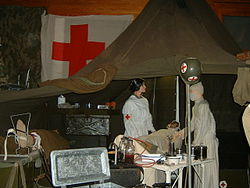
- Historically, disease caused more military casualties than combat until the late 19th century.
- The Franco-Prussian War (1870–71) was one of the first conflicts where combat injuries exceeded deaths from disease.
- Military trauma innovations, such as rapid transfer to operating theaters, have significantly increased survival rates for gunshot wounds in civilian settings.
- A 2025 study indicates that superior military medicine directly correlates with improved military effectiveness.
- Many modern medical advancements, including water chlorination and vaccines, originated from military research.
The Four Dimensions of Military Medicine
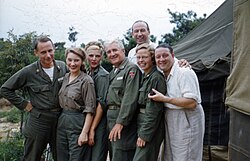
Military medicine is not a single practice but a collection of four distinct functional areas:
1. Occupational Specialty
This branch focuses on the preventive and interventional medical needs of service members. It addresses risks specific to military environments, such as tropical diseases and the ergonomics of operating complex machinery. Subspecialties include aviation medicine (flight-related health) and undersea medicine (diving and submarine health).
2. Battlefield and Surgical Management
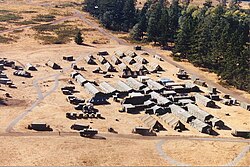
This involves the planning and execution of surgical care for mass casualties. It requires a structured medical command hierarchy to operate combat support hospitals—mobile facilities designed to provide critical care near the front lines.
3. Peacetime Healthcare Administration
In many nations, the military maintains a comprehensive healthcare system for service members and their dependents. In the United States, this system parallels civilian medicine and includes specialized entities like the Veterans Health Administration.
4. Medical Research and Development
Military-funded research often solves urgent problems encountered during deployment. These innovations—ranging from medical evacuation systems to new pharmaceuticals—frequently transition into the civilian sector, improving global public health.
Historical Evolution and Significance
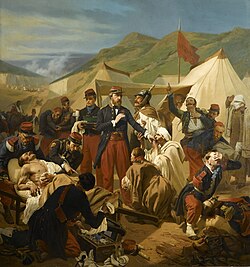
The history of military medicine is a transition from battling infection to mastering trauma. In the American Civil War (1860–65), disease was twice as lethal as combat. However, as medical understanding evolved, the focus shifted toward survival and recovery.
![French surgeon Ambroise Paré (c. 1510–1590) – known as the "Father of Military Medicine"[citation needed] – attending to a soldier's amputated leg.](/images/e8/32/e83218daf2dab37e9b048a99736a065fb89cf70217cbfb835ed1e9563adcd5b4.jpg)
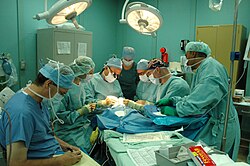
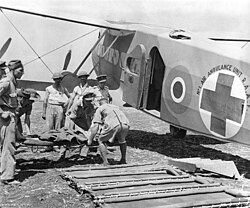
The development of medical evacuation (MEDEVAC) and improved triage—the process of determining the priority of patients' treatments based on the severity of their condition—has drastically increased survival rates. For example, the practice of moving major trauma patients immediately to an operating theater to stop internal bleeding has become a standard in both military and civilian trauma centers.
The Role of the Surgeon
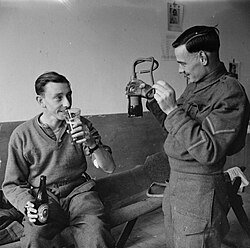
Historically, the term "surgeon" in many English-speaking militaries was applied broadly to medical practitioners. Today, the US Army Medical Corps maintains specific occupation codes for surgeons dedicated to treating wounded soldiers.
Global Infrastructure and Specialized Assets
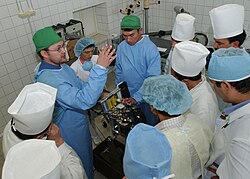
Different nations organize their military medical services to suit their strategic needs. These systems often include specialized transport and facilities to ensure care is delivered regardless of location.
| Asset/Role | Primary Function | Example/Context |
|---|---|---|
| Hospital Ships | Large-scale mobile medical facilities at sea | USNS Mercy, USNS Comfort |
| Combat Medic | Immediate point-of-injury care | US Army 68W |
| Air Ambulance | Rapid aeromedical evacuation | RAAF Air Ambulance (1943) |
| Field Hospital | Temporary surgical and medical tents | MASH (Mobile Army Surgical Hospital) |
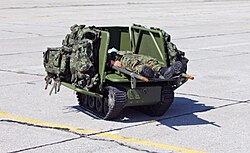
| Medical Robots | Evacuating wounded from danger zones | Miloš L (UGV) |
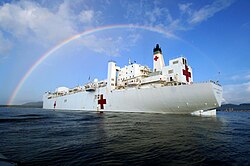
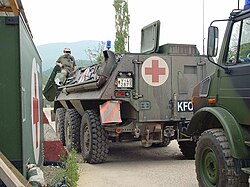
From the use of hospital ships marked with the international red cross to the deployment of Unmanned Ground Vehicles (UGVs) for casualty evacuation, the tools of military medicine continue to evolve to reduce risk to both patients and providers.
Frequently Asked Questions
How has military medicine influenced civilian healthcare?
Many civilian trauma protocols, such as the rapid transport of gunshot victims to surgery, were developed and refined during military conflicts. Additionally, research into vaccines, water purification, and aerospace medicine began as military necessities before becoming civilian standards.
What is the difference between a combat medic and a surgeon?
A combat medic (such as the US Army 68W) provides immediate, life-saving care and stabilization at the point of injury. A surgeon performs complex operative procedures, typically in a more stable environment like a combat support hospital or a field operating tent.
Why was disease more lethal than combat in early wars?
Before the late 19th century, the lack of antibiotics, vaccines, and basic sanitation meant that infectious diseases spread rapidly through crowded military camps, often claiming far more lives than enemy weapons.
What are the subspecialties of military medicine?
Key subspecialties include aviation medicine, which deals with the physiological effects of flight, and undersea medicine, which focuses on the health risks associated with diving and submarine operations.
What is a Combat Support Hospital (CSH)?
A CSH is a mobile field hospital designed to be deployed in war zones or disaster areas. It is the modern successor to the Mobile Army Surgical Hospital (MASH), providing comprehensive surgical and medical care closer to the battlefield.