Indian Medical Service: A History of Military and Civilian Medicine in British India
The Indian Medical Service (IMS) was a specialized military medical organization in British India that balanced rigorous military duties with essential civilian healthcare functions. From its early roots during the East India Company's rule to its formal unification in 1896, the IMS played a pivotal role in the medical landscape of the subcontinent until India gained independence in 1947.
The service was composed of both British and Indian officers, many of whom served in civilian hospitals. The IMS is remembered for producing world-renowned medical figures, including Sir Ronald Ross, a Nobel Prize winner; Sir Benjamin Franklin, who served as an honorary physician to three British monarchs; and Henry Vandyke Carter, the illustrator famous for the seminal anatomy textbook Gray's Anatomy.
Key Facts
- Origin: Began as ship surgeons for the East India Company in 1600.
- Unification: Formally amalgamated into a single organization on April 1, 1896.
- Scope: Provided both military medical support and civilian healthcare services.
- Transition: Amalgamated into the Indian Army Medical Corps (IAMC) on April 3, 1943.
- Legacy: Contributed to early research in tropical medicine and the establishment of the Calcutta School of Tropical Medicine.
Early History and the East India Company
The foundations of the IMS lie with the British East India Company, formed in 1599 and chartered in 1600. The earliest medical officers were ship surgeons, such as John Banester, Lewis Attmer, and Rober. During the first Company fleet voyage in 1600, led by James Lancaster on the Red Dragon, surgeons and barbers conducted a serendipitous experiment using lemon juice to cure scurvy (a disease caused by vitamin C deficiency).
Medical professionals often facilitated diplomatic relations. For instance, Gabriel Boughton reportedly saved Princess Jahanara, daughter of Shah Jahan, from burn injuries, which helped the Company secure trading rights in Surat. As the Company expanded, physicians like the Venetian Nicholas Manucci and the Armenian Sikandar Beg served in various Indian courts.
By 1614, a hierarchy was introduced with the appointment of a Surgeon General, the first being John Woodall. Over time, surgeons became influential figures in colonial administration. John Zephaniah Holwell, who arrived in 1732, eventually became the Zamindar of Calcutta and survived the infamous Black Hole incident.
Evolution of Structure and Organization
The path toward a unified service began with the establishment of the Bengal Medical Service on October 20, 1763, followed by similar services in Madras and Bombay by 1764. As military conflicts increased, the service split into Military Surgeons and Civil Surgeons.
The mid-19th century marked a shift toward inclusivity and centralization. Soorjo Coomar Goodeve Chuckerbutty became the first Indian native to join the service on January 24, 1855, followed by Rajendra Chandra Chandra in 1858. Following the events of 1857, the separate Medical Boards for the Presidencies were abolished, leading to the creation of a single Indian Medical Service in 1858.
By the 20th century, the IMS became a gateway for officers to enter the Indian Political Department. The government also prioritized specialized research, establishing the Calcutta School of Tropical Medicine between 1910 and 1921 as a postgraduate center for tropical medicine (the branch of medicine dealing with infectious diseases prevalent in tropical regions).
Ranks and Hierarchy
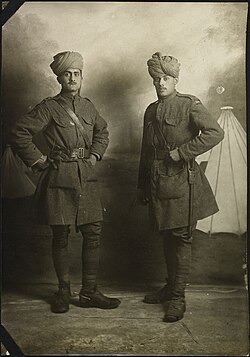
The ranking system of the IMS underwent several transformations to align with military standards. Initially, the service was led by a Surgeon-General, followed by Head Surgeons, Surgeons, and Hospital Mates. In 1788, these were reclassified as commissioned officers, with Head Surgeons ranking as Majors and Assistant Surgeons as Lieutenants.
By 1843, the East India Company formalized military equivalents, placing the Physician-General at the rank of Brigadier-General. In 1891, IMS officers were granted formal military ranks corresponding to the British Indian Army. The head of the service was designated the Director-General, holding the title of Surgeon-General (Major-General). By 1918, the title of Surgeon-General was dropped, and the Director-General held the rank of either Major-General or Lieutenant-General.
Summary of Director-Generals (Selected)
| No. | Name | Term of Office | Highest Rank |
|---|---|---|---|
| 1 | James Cleghorn | 1896–1898 | Surgeon-General |
| 3 | Sir Benjamin Franklin | 1901–1905 | Surgeon-General |
| 5 | Sir Charles Pardey Lukis | 1910–1917 | Surgeon-General |
| 12 | Sir Gordon Gray Jolly | 1939–1943 | Lieutenant-General |
| 14 | Robert Hay | 1946–1947 | Lieutenant-General |
The Final Transition
During World War II, the need for a rapidly expanding army led to a major reorganization. On April 3, 1943, the Indian Medical Service, the Indian Medical Department, and the Indian Hospital & Nursing Corps were amalgamated to form the Indian Army Medical Corps (IAMC). Following India's independence, the IAMC was redesignated as the Army Medical Corps on January 26, 1950.
Frequently Asked Questions
When was the Indian Medical Service formally unified?
The various medical services of the Bengal, Madras, and Bombay Presidencies were formally amalgamated into a single organization on April 1, 1896.
Who were some of the most notable members of the IMS?
Notable members included Nobel laureate Sir Ronald Ross, Sir Benjamin Franklin (physician to three British monarchs), and Henry Vandyke Carter, the illustrator for Gray's Anatomy.
How did the IMS contribute to medical science?
The IMS contributed to early research on scurvy through lemon juice experiments and helped establish the Calcutta School of Tropical Medicine for postgraduate research.
Who were the first Indian natives to join the IMS?
Soorjo Coomar Goodeve Chuckerbutty joined the service on January 24, 1855, followed by Rajendra Chandra Chandra on January 27, 1858.
What happened to the IMS after 1943?
On April 3, 1943, it was amalgamated with the Indian Medical Department and the Indian Hospital & Nursing Corps to form the Indian Army Medical Corps (IAMC), which later became the Army Medical Corps in 1950.