Miguel Primo de Rivera: The Rise and Fall of Spain's Military Dictator
Miguel Primo de Rivera y Orbaneja was a pivotal and controversial figure in early 20th-century Spanish history. A career military officer and the 2nd Marquis of Estella, he ruled as the Prime Minister of Spain from 1923 to 1930. His tenure marked a dramatic departure from parliamentary democracy during the final years of the Bourbon Restoration, a period characterized by the constitutional monarchy of the House of Bourbon.
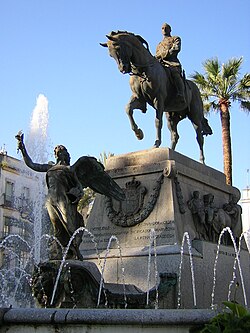
Born into an aristocratic landowning family in Jerez de la Frontera, Primo de Rivera's life was defined by a blend of military discipline and authoritarian nationalism. His ascent to power was not through the ballot box, but through a military coup that sought to "cleanse" Spain of political corruption.
Key Facts
- Role: Prime Minister and Dictator of Spain (1923–1930).
- Rise to Power: Seized control via a military coup d'état on September 13, 1923.
- Political Alignment: Authoritarian nationalism and populism; founder of the Patriotic Union (UP).
- Key Achievements: Significant infrastructure expansion, including the Barcelona Metro and hydroelectric dams.
- Downfall: Resigned in January 1930 due to economic inflation and loss of support from King Alfonso XIII and the military.
Early Life and Military Ascent
Miguel Primo de Rivera was born on January 8, 1870. He came from a lineage of military prestige; his father was a retired colonel, and his great-grandfather had been a hero of the Spanish Resistance against Napoleon Bonaparte. After studying history and engineering, he graduated from the General Military Academy in Toledo in 1884.
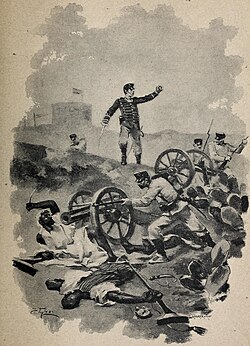
His early career was marked by rapid promotion and combat experience. He saw action in the Melilla War and the Kert campaign, where he was wounded in 1911. By 1919, he had reached the rank of lieutenant general. Throughout his service, he held administrative roles in Valencia, Madrid, and Barcelona, where he notably advocated for the withdrawal of Spanish forces from Africa.
The Coup of 1923
The early 1920s were a time of profound instability for Spain. The country was reeling from the Rif War in Morocco, specifically the disastrous defeat at the Battle of Annual in 1921. This failure led to the "Picasso file," a series of inquiries into military corruption and the responsibility of King Alfonso XIII.
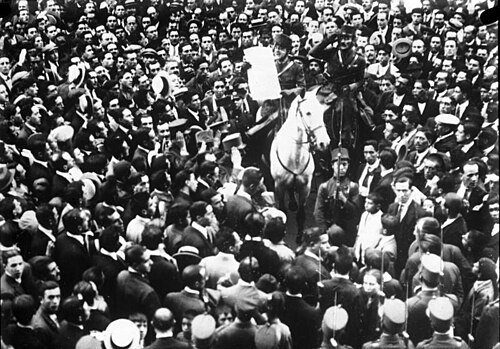
On September 13, 1923, Primo de Rivera staged a military coup in Barcelona. With the tacit approval of King Alfonso XIII, he suspended the Constitution of 1876 and established martial law. He justified this action by claiming that the professional political class had ruined the nation and that his rule would be a "brief parenthesis" to restore order.
The Dictatorship: Governance and Economy
Primo de Rivera's rule evolved from a military directorate to a Civil Directory in 1925. His governance was characterized by a paternalistic approach, combining authoritarian control with populist economic policies.
Infrastructure and Economic Nationalism
Under the guidance of Finance Minister José Calvo Sotelo, the regime pursued aggressive economic nationalism. Key developments included:
- Transport: The opening of the Barcelona Metro in 1924 and the modernization of railroads.
- Energy: The construction of dams on the Duero and Ebro rivers to provide hydroelectric power to rural areas.
- Industry: The creation of state monopolies, such as the oil company Campsa, and protectionist policies to shield national producers.
While foreign trade increased by 300% between 1923 and 1927, these gains primarily benefited the wealthy elite, leaving the underlying social tensions unresolved.
Political Legitimacy and the Patriotic Union
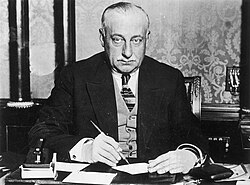
To transition from a military to a civilian-led government, Primo de Rivera created the Patriotic Union (UP) in 1924. He envisioned the UP as an "apolitical" party that represented true public opinion above the fray of traditional politics. However, the party failed to gain widespread organic support.
In 1926, he held a plebiscite to demonstrate public backing. While the results were presented as a landslide victory, critics dismissed the vote as a farce. Later, in 1927, he established a National Assembly to draft a new constitution, which notably proposed granting women the right to vote.
Collapse and Death
The regime's stability crumbled as the economic boom of the 1920s ended. The onset of the Great Depression, combined with a bad harvest in 1929 and rising inflation, eroded public confidence. The peseta fell in value, and the government's heavy spending on public works became a liability.
Primo de Rivera also alienated the military by introducing political considerations into promotions. By January 1930, realizing he had lost the support of both the army and King Alfonso XIII, he resigned on January 28. He moved to Paris, where he died on March 16, 1930, at the age of 60, due to diabetes and fever.
![1925 caricature of Primo de Rivera by Flemish magazine Weekblad Pallieter[further explanation needed]](/images/be/f0/bef0f018aba3868b1cd400581ae1350be9bdbbcd19aed23afa2c1458feab2656.jpg)
Legacy and Aftermath
The fall of Primo de Rivera left a power vacuum that the monarchy could not fill. The subsequent failure to return to a stable constitutional order led to the municipal elections of April 1931, which saw a surge in republican support. This culminated in the exile of Alfonso XIII and the birth of the Second Spanish Republic.
The influence of the dictatorship persisted through Primo de Rivera's son, José Antonio, who founded the fascist Falange. The authoritarian structures established during the 1920s later served as a blueprint for the regime of Francisco Franco following the Spanish Civil War.
| Category | Details |
|---|---|
| Period of Rule | 1923–1930 |
| Method of Accession | Military Coup d'état |
| Key Political Body | Patriotic Union (UP) |
| Major Economic Focus | Infrastructure, Hydroelectric Power, Protectionism |
| Constitutional Status | Constitution of 1876 suspended |
| Successor | Dámaso Berenguer |
Frequently Asked Questions
How did Miguel Primo de Rivera come to power?
He seized power on September 13, 1923, through a military coup d'état in Barcelona, which was supported by the military and acquiesced to by King Alfonso XIII.
What were the main economic achievements of his regime?
His government focused on modernization, building hydroelectric dams, upgrading railroads, opening the Barcelona Metro, and creating state monopolies like Campsa to protect national industry.
Why did the dictatorship eventually fail?
The regime collapsed due to a combination of economic decline (inflation and the Great Depression), the loss of support from the Spanish military, and the eventual withdrawal of backing from King Alfonso XIII.
What was the Patriotic Union (UP)?
The Patriotic Union was an "apolitical" party created by Primo de Rivera to replace traditional political parties and provide a civilian basis for his government, though it struggled to gain genuine popularity.
What happened to Spain after his resignation?
His resignation led to a period of political instability that eventually resulted in the exile of King Alfonso XIII and the establishment of the Second Spanish Republic in 1931.