Merseyrail Network: A Comprehensive Overview of Liverpool's Rail System
The Merseyrail network serves as the backbone of public transport within the Liverpool City Region, providing a primarily self-contained rail system that connects the city centre with its surrounding towns and cities. Operated by Merseyrail Electrics 2002 Limited—a 50:50 joint venture between Serco and Transport UK Group—the network is a concession awarded by the Liverpool City Region Combined Authority and overseen by Merseytravel, the passenger transport executive responsible for coordinating regional public transport.
Since the current concession began in July 2003, replacing Arriva Trains Merseyside, the network has managed 67 stations, ensuring seamless connectivity across the region.
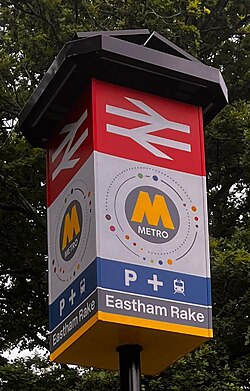
Key Facts
- Total Route Length: 120.7 km (75.0 miles) across 69 stations.
- Power Systems: Primarily 750 V DC third-rail, with some BEMUs (Battery Electric Multiple Units) and OHLE (Overhead Line Equipment).
- Core Lines: The Northern line (blue) and the Wirral line (green).
- Service Frequency: Generally every 15 minutes, with the exception of the Ellesmere Port branch (30 minutes).
- Governance: Managed by a Serco and Transport UK Group joint venture under Merseytravel oversight.
The Core Merseyrail Lines
The Northern Line
Represented in blue on network maps, the Northern line connects the city centre to several key destinations. It operates three primary routes: from Hunts Cross to Ormskirk via the Link tunnel, from Liverpool Central to Southport, and from Liverpool Central to Headbolt Lane via Kirkby. Most routes maintain a 15-minute frequency from Monday to Saturday, with additional peak-hour services on the Southport line.
The Northern line is vital for sports fans; at Sandhills station, passengers can connect to the SoccerBus for Liverpool F.C.'s Anfield, while the station itself is within walking distance of Everton FC's Hill Dickinson Stadium.
Major non-Merseyrail connections on this line include:
- Southport: Services to Wigan Wallgate and Manchester Airport.
- Liverpool South Parkway: Access to London Northwestern Railway, East Midlands Railway, TransPennine Express, and Northern.
- Hunts Cross: Connections to Warrington Central and Manchester Oxford Road.
- Ormskirk: Services to Preston.
- Headbolt Lane: Services to Blackburn via Wigan Wallgate and Manchester Victoria.
The Wirral Line
The Wirral line, denoted in green, operates from four terminus stations: Chester, Ellesmere Port, New Brighton, and West Kirby. All services converge at Birkenhead Hamilton Square before passing through the Mersey Railway Tunnel into a single-track underground loop beneath Liverpool's city centre.
While most services run every 15 minutes, the Ellesmere Port branch operates on a 30-minute frequency. Combined, these services ensure a train arrives at least every five minutes at Birkenhead Hamilton Square and around the city centre loop.
Key external connections include:
- Bidston: Access to the Borderlands line to Wrexham (Transport for Wales).
- Chester: Services to London Euston, Crewe, Wrexham, Shrewsbury, and Manchester.
- Ellesmere Port: Infrequent services to Warrington.
- Liverpool Lime Street: Intercity and regional links to London, Scotland, the Midlands, and Wales.
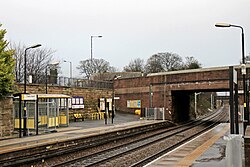
The City Line
The City Line (marked red) differs from the Northern and Wirral lines in that it is not operated by the Merseyrail concession. Instead, it is part of the Northern franchise, though it is branded as Merseyrail or Merseytravel to maintain a unified local identity and shared ticketing structure. It serves 26 stations from the mainline platforms of Liverpool Lime Street.
The City Line utilizes OHLE (Overhead Line Equipment) for electrification, though the routes to Manchester via Warrington Central and Chester via Runcorn are operated by diesel trains. While Northern is the primary operator, other services are provided by TransPennine Express, Avanti West Coast, East Midlands Railway, Transport for Wales, and West Midlands Trains.
Network Interchanges
To facilitate easy travel across the region, the three lines intersect at several strategic hubs:
- Northern and City Lines: Interchange at Liverpool South Parkway and Hunts Cross.
- Wirral and City Lines: Interchange at Liverpool Lime Street.
- Northern and Wirral Lines: Interchange at Liverpool Central and Moorfields.
| Line | Map Color | Primary Operator | Power Source | Key Destinations |
|---|---|---|---|---|
| Northern | Blue | Merseyrail Electrics | Third Rail / BEMU | Southport, Ormskirk, Headbolt Lane |
| Wirral | Green | Merseyrail Electrics | Third Rail | Chester, New Brighton, West Kirby |
| City Line | Red | Northern (and others) | OHLE / Diesel | Manchester, Wigan, Crewe |
Frequently Asked Questions
Who operates the Merseyrail network?
The Northern and Wirral lines are operated by Merseyrail Electrics 2002 Limited, a joint venture between Serco and Transport UK Group. The City Line is primarily operated by Northern Trains, along with several other operators.
What is the difference between the Merseyrail lines and the City Line?
The Northern and Wirral lines are part of a specific Merseyrail concession and use a third-rail power system. The City Line is part of the Northern franchise, uses overhead lines or diesel power, and operates from the mainline platforms at Lime Street.
How often do trains run on the Merseyrail network?
Most services on the Northern and Wirral lines run every 15 minutes from Monday to Saturday. The exception is the Ellesmere Port branch, which operates every 30 minutes.
Where can I change between the Northern and Wirral lines?
Passengers can interchange between the Northern and Wirral lines at Liverpool Central and Moorfields stations in the city centre.
How do I get to the football stadiums using Merseyrail?
For Liverpool F.C.'s Anfield, passengers should take the Northern line to Sandhills station and connect with the SoccerBus. Sandhills station is also within walking distance of Everton FC's Hill Dickinson Stadium.