Merlo: The History and Evolution of a Buenos Aires Landmark
The story of Merlo is a fascinating journey from a colonial ranch-house to a bustling urban center. Originally emerging as a small hamlet known as Villa San Antonio del Camino, the settlement was born out of necessity and faith during the 18th century, shaped by the vision of a Spanish landlord and the shifting tides of Argentine infrastructure.
The Legacy of Francisco de Merlo
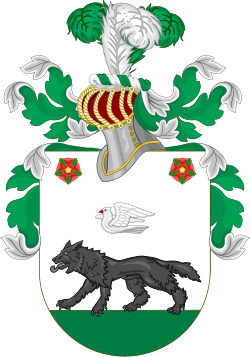
The foundations of the city were laid by Francisco Javier de Merlo y Barbosa. Born in Seville, Spain, on August 11, 1693, Merlo migrated to Buenos Aires in the early 18th century. He successfully integrated into the upper class, serving as a notary public for the cabildo (the municipal government) and becoming a laity member of the Third Order of Our Lady of Mercy.
A pivotal moment in Merlo's life occurred in 1729 following the death of Francisco Sánchez Botija. Botija left his fortune to Merlo with two strict conditions: the construction of a sanctuary in his memory and the celebration of fifty annual masses for the absolution of his soul.
Using this inheritance, Merlo acquired numerous haciendas (large estates) in the western countryside. By the mid-18th century, he established a massive estate located approximately 35 kilometers (seven leagues) from Buenos Aires, situated between the upper Matanza and upper Reconquista rivers.
Merlo strategically built his ranch-house on high ground overlooking the Camino Real del Oeste, the vital road connecting Buenos Aires with Lima, the capital of the Viceroyalty of Peru. Beside his home, he erected a private oratory dedicated to Saint Anthony of Padua and the Immaculate Conception, which served as the parish church for the sparsely populated Parish of La Matanza for many years. He also demonstrated a commitment to education by establishing one of the first schools outside Buenos Aires, managed by the mercedarian friars.
The Founding of Villa San Antonio del Camino
In 1742, Francisco de Merlo petitioned King Philip V of Spain for permission to found a village on his lands. This request was granted in 1755, and on August 28 of that year, Villa San Antonio del Camino was officially founded. To encourage growth, Merlo offered free land to those willing to settle in the new town.
The village began with 24 families totaling 111 inhabitants. However, following Francisco de Merlo's death on April 4, 1758, the estate was divided among his heirs and sold to various private investors. While the town remained on land donated to the Mercedarian Order—who later built a hospice in 1776 for the rural poor—the settlement soon faced a period of decline.
Merlo's fortunes dipped when the Camino de los Gaona bypassed the town by three kilometers to the north in 1773, following the construction of a wooden bridge over the Reconquista River by landlord Juan Marquez. This isolation was compounded when the parish seat moved to the neighboring town of Morón. By 1810, Merlo had dwindled into an insignificant hamlet where criollos (people of Spanish descent born in the Americas) engaged in illegal trade with indigenous populations.
The Railway Revolution and Urban Redesign
The trajectory of Merlo changed forever in 1857 with the opening of the Camino de Hierro de Buenos Aires al Oeste, Argentina's first steam locomotive public railway. As the company planned to extend its line westward toward Moreno, land speculation became highly profitable.
The railway line was slated to pass through an estate owned by Manuela Calderón de Pearson and managed by her son, Juan Dillon. Recognizing the economic potential, Dillon commissioned the renowned architect and engineer Pedro Benoit in 1859 to redesign the town.
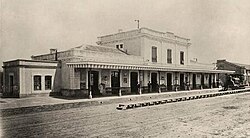
Benoit implemented a modern rectangular grid of streets and blocks. His comprehensive vision included the design of a town hall, a main avenue, a school, the Church of Our Lady of Mercy, and the train station. The station officially opened on August 11, 1859, reintegrating Merlo into the regional economy.
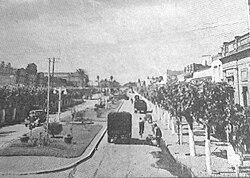
As the town grew, its central artery, Avenida Ituzaingó (now known as Avenida del Libertador San Martín), became the heart of the community.
Modern Expansion
During the second half of the 20th century, Merlo underwent a significant demographic shift. A large influx of immigrants from other Argentine provinces led to rapid urban sprawl. The surrounding countryside and old farms were gradually replaced by residential housing designed for lower-income residents, transforming the town into the expansive urban area it is today.
Key Facts
- Founder: Francisco Javier de Merlo y Barbosa, a Spanish-born notary public.
- Original Name: Villa San Antonio del Camino, founded August 28, 1755.
- Initial Population: 111 inhabitants across 24 families.
- Key Infrastructure: The railway station opened on August 11, 1859.
- Urban Planner: Architect Pedro Benoit designed the town's rectangular grid layout.
- Location: Situated approximately 35 km from Buenos Aires between the Reconquista and Matanza rivers.
| Period | Key Development | Primary Influence |
|---|---|---|
| Mid-18th Century | Founding of Villa San Antonio del Camino | Francisco de Merlo |
| Late 18th Century | Economic decline and isolation | Bypassing by Camino de los Gaona |
| 1859 | Urban redesign and railway opening | Juan Dillon & Pedro Benoit |
| Late 20th Century | Rapid population growth and sprawl | Internal provincial migration |
Frequently Asked Questions
Who was Francisco de Merlo?
Francisco Javier de Merlo y Barbosa was a Spanish immigrant and notary public in Buenos Aires who used an inheritance from Francisco Sánchez Botija to establish a large estate and found the town of Villa San Antonio del Camino in 1755.
Why did the town of Merlo decline in the late 1700s?
The town became isolated when the Camino de los Gaona road bypassed it in 1773 and the parish seat was moved to Morón, leaving it as a small, forgotten hamlet for several decades.
How did the railway impact Merlo?
The arrival of the Camino de Hierro de Buenos Aires al Oeste in 1859 sparked a period of land speculation and growth, leading to a complete urban redesign of the town to accommodate the new transport hub.
Who designed the layout of modern Merlo?
The architect and engineer Pedro Benoit was commissioned in 1859 to design the town's rectangular grid, as well as its town hall, station, and school.
What was the original purpose of the oratory built by Merlo?
The oratory was built to fulfill the last will of Francisco Sánchez Botija, serving as a sanctuary in his memory and acting as the parish church for the Parish of La Matanza.