Melampittas: The Enigmatic Ground Birds of New Guinea
Deep within the rugged highlands of New Guinea live the melampittas, a pair of mysterious passerine birds that have long puzzled ornithologists. Members of the family Melampittidae, these birds are characterized by their striking black plumage and a predominantly terrestrial lifestyle. For decades, their place in the avian family tree remained a subject of intense debate, as their physical appearance belied their true genetic lineage.
Today, the family is divided into two distinct genera: the greater melampitta (Megalampitta) and the lesser melampitta (Melampitta). While they share a general appearance, they differ significantly in size, habitat preferences, and vocalizations.
Key Facts
- Family: Melampittidae, formally established in 2014.
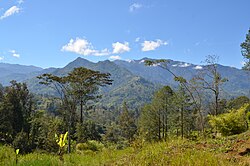
- Distribution: Endemic to the montane forests of New Guinea.
- Appearance: Small to medium-sized birds with black plumage and strong legs.
- Diet: Primarily insectivores, foraging in forest leaf litter.
- Conservation Status: Both species are listed as Least Concern by the IUCN.
Taxonomic History and Evolution
The classification of melampittas was historically confusing. When the lesser melampitta was first described in 1871, it was placed with the pittas due to its plump body and long legs. The name melampitta reflects this, combining the Ancient Greek melas (black) with Pitta.
Over time, researchers moved them through various groups, including Old World babblers, jewel-babblers, and birds-of-paradise. It wasn't until recent DNA analysis that their true relationship was revealed. They are now recognized as sister taxa to a group including drongos, fantails, monarch flycatchers, and birds-of-paradise. Their distinct look is likely an adaptation to terrestrial living (living primarily on the ground), whereas their relatives are mostly arboreal (tree-dwelling).
The Split of Genera
While once considered congeneric, the greater and lesser melampittas were split into separate genera in 2014. The greater melampitta was moved to Megalampitta due to its larger size and different calls. Recent genomic studies from 2024 suggest further complexity: while the greater melampitta is a single population, the lesser melampitta shows deep genetic divisions that may indicate it actually consists of three different species.
Distribution and Specialized Habitats
Both species inhabit the New Guinean rainforest, but they occupy different ecological niches. The lesser melampitta is found in damp areas near watercourses at altitudes typically between 2,000 and 2,800 meters, though it can reach as high as 3,500 meters.
The greater melampitta is far more specialized, restricted to rugged limestone karst terrain. It relies on limestone sinkholes for roosting and nesting, making it difficult for scientists to encounter due to the treacherous landscape. In the Kumawa Mountains, these birds have been recorded at altitudes between 650 and 1,400 meters.
Physical Characteristics
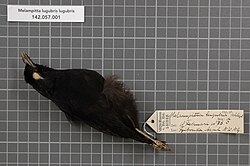
Melampittas are built for life on the forest floor, possessing strong legs, large feet, and short, rounded wings. Both species feature black plumage, though there are notable differences in size and detail.
| Feature | Lesser Melampitta (M. lugubris) | Greater Melampitta (M. gigantea) |
|---|---|---|
| Length | ~18 cm (7.1 in) | ~29 cm (11 in) |
| Weight | ~30 g (1.1 oz) | ~205 g (7.2 oz) |
| Tail | Short and rounded | Long, strengthened for climbing |
| Bill | Black | Black, larger and hooked |
| Juvenile Color | Brown lower body | Russet back and belly |
An interesting biological quirk is found in the juvenile greater melampitta. Its russet coloration resembles the hooded pitohui, a poisonous bird. This is believed to be Batesian mimicry, where a harmless animal evolves to look like a dangerous one to deter predators.
Behavior, Diet, and Breeding
Melampittas are shy, ground-dwelling birds that move by hopping. They are insectivores; the lesser melampitta is known to eat beetles, caterpillars, worms, snails, and small frogs, occasionally supplementing its diet with small fruit. They forage by flipping through leaf litter with their bills.
Unique Nesting Habits
The breeding habits of the greater melampitta are mostly known through local reports, which describe basket-like nests of vines suspended in limestone sinkholes. The lesser melampitta, however, has been studied more closely. It builds a closed, dome-shaped nest made of live green moss, typically attached to tree ferns.
This dome-nesting is a rare evolutionary reversal within the Corvoidea superfamily, which typically builds cup nests. The female lays a single white, speckled egg and handles all incubation for approximately 27 days, while the male provides food. Unlike birds-of-paradise, melampitta parents feed their chicks whole food rather than regurgitated meals.
Frequently Asked Questions
Why were melampittas difficult to classify?
Their physical appearance—plump bodies and long legs—made them look like pittas, but their internal anatomy (the syrinx) and DNA revealed they are actually related to a group including drongos and birds-of-paradise.
What is the difference between the two species?
The greater melampitta is significantly larger and heavier, has a hooked bill, a longer tail, and lives in limestone karst habitats. The lesser melampitta is smaller and prefers damp montane forests.
How does the greater melampitta use its tail?
The greater melampitta has strengthened tail feathers that it likely uses to cling to the walls of narrow limestone sinkholes, similar to how a woodpecker uses its tail for support.
Are melampittas endangered?
No, both species are currently listed as Least Concern by the IUCN. Their populations are considered stable, and their primary habitats are not currently threatened.
What is Batesian mimicry in these birds?
Juvenile greater melampittas have russet plumage that mimics the toxic hooded pitohui. By looking like a poisonous bird, the harmless juvenile melampitta may avoid being eaten by predators.