Meganet: The Early Internet Ambitions of the Sega Mega Drive
When the Sega Mega Drive launched in Japan on October 29, 1988, it entered a market dominated by fierce competition. Despite positive reviews from influential magazines like Famitsu and Beep!, the console struggled initially, shipping only 400,000 units in its first year. To attract a wider audience and differentiate itself from competitors, Sega looked toward the future of connectivity, developing an early internet service known as Meganet.
The Technology Behind the Mega Modem
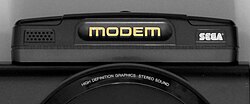
Launched in Japan on November 3, 1990, Meganet was powered by the Mega Modem. This peripheral connected to the console via the EXT 9-pin port located at the rear of the machine. The hardware setup involved a cable running from the modem to a dual-port connector, which then linked directly into a standard telephone line.
The Mega Modem operated at connection speeds of up to 1200bit/s. To access the service, users required a specific cartridge that acted as a gateway to the Meganet game library. At launch, approximately six titles were available for users to explore.
Expanding Utility: Mega Anser and Banking
Sega attempted to push the Mega Drive beyond gaming by introducing the Mega Anser in 1990. This was a specialized system developed for use with Nagoya Bank in Japan. The Mega Anser was an all-in-one bundle that included the Mega Drive console, the Mega Modem, a dedicated keypad, and a specific Mega Anser cartridge.
This system transformed the game console into a financial terminal, allowing users to perform banking transactions such as loan information requests, fund transfers, and balance inquiries. The base system retailed for JP¥34,000, while a premium version equipped with a printer cost ¥72,800.
Global Ambitions and Regional Outcomes
Sega's vision for online connectivity was not limited to Japan. In January 1990, at the Winter Consumer Electronics Show (Winter CES), Sega announced a North American version of the service called Tele-Genesis. While the service was advertised in publications like Electronic Gaming Monthly, it never officially launched in the region.
Interestingly, Meganet found a second life in Brazil, where it launched in 1995 through Sega's regional distributor, Tectoy. While the Brazilian service initially focused on e-mail, it expanded by 1996 to include chat features and online multiplayer. Tectoy also released a home banking product in Brazil, mirroring the utility of the Japanese Mega Anser.
The Decline of Meganet in Japan
Despite the innovation, Meganet was a commercial failure in its home market. Several factors contributed to its downfall, including a prohibitively high price point, a limited library of titles, and the overall struggle of the Mega Drive to gain traction in Japan. By 1992, Mega Modems were frequently found in bargain bins at discounted prices.
The final blow came in 1993 when Sega released a remodeled version of the Mega Drive. This new hardware revision completely removed the EXT 9-pin port, making it physically impossible for owners of the newer model to connect to the Meganet service.
Key Facts
- Launch Date: November 3, 1990 (Japan).
- Hardware: Mega Modem connecting via the EXT 9-pin port.
- Speed: Maximum connection speed of 1200bit/s.
- Cost: JP¥12,800 for equipment plus a ¥800 monthly fee.
- Banking: The Mega Anser allowed Nagoya Bank customers to manage accounts via console.
- Regional Variants: Announced as Tele-Genesis in North America (unreleased) and launched via Tectoy in Brazil.
| Feature | Japan (Meganet) | North America (Tele-Genesis) | Brazil (Meganet) |
|---|---|---|---|
| Status | Released | Cancelled | Released |
| Primary Hardware | Mega Modem | N/A | Tectoy Hardware |
| Key Services | Gaming & Banking | N/A | E-mail, Chat, Multiplayer |
| Banking Integration | Nagoya Bank | None | Available |
Frequently Asked Questions
What was the Mega Modem?
The Mega Modem was a peripheral for the Sega Mega Drive that connected to the console's EXT 9-pin port, allowing users to access the Meganet online service via a telephone line.
Could you use the Mega Drive for banking?
Yes, through the Mega Anser system in Japan (via Nagoya Bank) and a similar product released by Tectoy in Brazil, users could perform transactions like balance inquiries and transfers.
Why was Meganet a failure in Japan?
The service suffered from a high cost, a lack of available software titles, and the general lack of market success for the Mega Drive console in Japan at the time.
Was Meganet ever released in North America?
No. Although it was announced as "Tele-Genesis" at the 1990 Winter CES and advertised in gaming magazines, it was never officially released in North America.
What features did the Brazilian Meganet service offer?
Launched by Tectoy in 1995, the Brazilian service focused on e-mail and later added chat features and online multiplayer capabilities by 1996.