Mediterranean Climate: Characteristics, Classifications, and Global Distribution
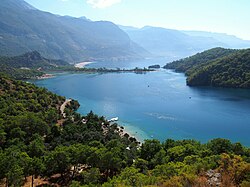
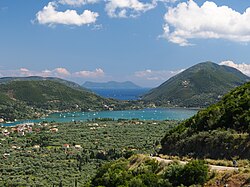
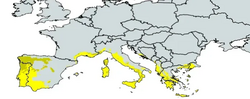
The Mediterranean climate, often referred to as a dry summer climate, is a unique temperate climate type found primarily in the lower mid-latitudes, typically between 30 and 45 degrees north and south of the equator. Characterized by a distinct seasonal rhythm, these regions experience hot, dry summers and mild, wet winters.
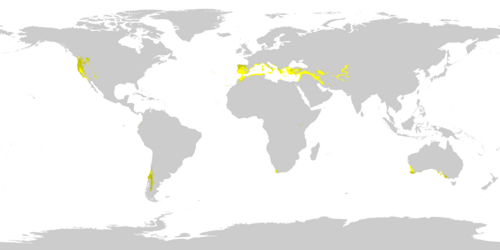
While named after the coastal regions of the Mediterranean Sea, this climate is not exclusive to Europe. It occurs almost exclusively on the western portions of continents near the coast, acting as a transitional zone between oceanic climates to the equatorward side and desert or semi-arid climates to the poleward side.
Key Facts
- Primary Feature: Dry summers and wet winters.
- Global Location: Western coasts of continents between 30° and 45° latitude.
- Driving Force: The seasonal migration of the subtropical ridge.
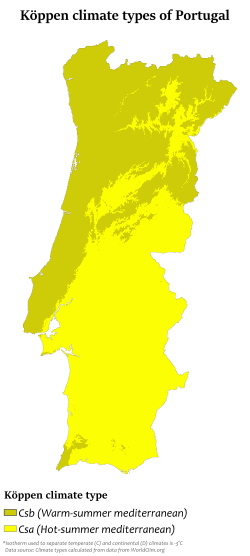
- Köppen Classifications: Divided into Csa (hot-summer), Csb (warm-summer), and Csc (cold-summer).
- Typical Vegetation: Sclerophyllous plants, including olive trees, cypress, and lavender.
The Mechanics of a Dry Summer Climate
The defining characteristic of the Mediterranean climate is the subtropical ridge, a belt of high pressure. During the summer, this ridge extends toward the poles, blocking moisture-bearing storms and creating arid conditions. In the winter, the ridge migrates back toward the equator, allowing wet weather systems to move in from the ocean.
The specific weather patterns in any given Mediterranean region are heavily influenced by three main factors: proximity to the ocean, elevation, and precise geographical location.
Köppen Climate Classification
Under the Köppen climate system, Mediterranean climates fall under the "C" group, denoting temperate climates. To qualify as a "C" zone, the average temperature of the coolest month must be above 0°C (32°F) or −3°C (27°F), but below 18°C (64°F). The "s" indicates a dry summer, defined as a month with less than 30 mm (1.2 in) of precipitation (though some use a 40 mm threshold) that also contains one-third or less of the precipitation of the wettest winter month.
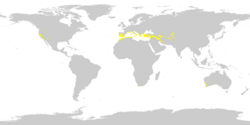
Hot-Summer Mediterranean Climate (Csa)
The Csa subtype is the most common and is considered the "typical" Mediterranean climate. It is defined by an average temperature in the warmest month exceeding 22°C (72°F). These regions experience hot, sometimes very hot, dry summers. Winters are generally mild, though snowfall can occur in certain inland cities like Kermanshah, while coastal cities like Casablanca rarely see it.
Warm-Summer Mediterranean Climate (Csb)
The Csb subtype features warm but not hot dry summers, with the warmest month averaging below 22°C (72°F). This cooler variation is often the result of higher elevation or stronger coastal influence. For example, in France, the coastal town of Menton has a Csa climate, while the nearby town of Castellar, located at a higher elevation, has a Csb climate.
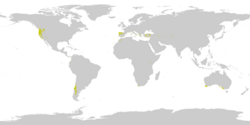
Cold-Summer Mediterranean Climate (Csc)
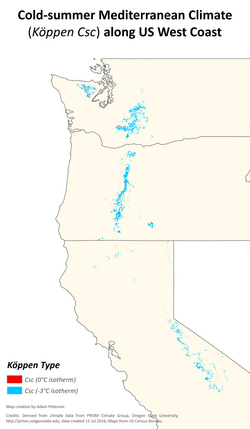
The Csc subtype is rare and isolated, found mostly at high elevations along the west coasts of North and South America. It is characterized by cool, dry summers—with fewer than four months averaging 10°C (50°F) or above—and cool, wet winters. The proximity to the Pacific Ocean helps maintain a narrow temperature range throughout the year.
Global Distribution and Examples
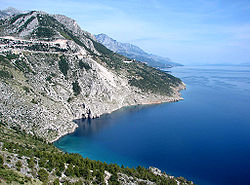
Beyond the Mediterranean Basin, this climate appears in several key global regions:
- North America: Pacific portions of the United States (e.g., California, Oregon, Washington).
- South America: Central Chile and extreme west Argentina.
- Africa: Northwest Africa and the southwest tip of South Africa.
- Australia: Parts of Southwest and South Australia.
- Asia: Parts of Central Asia and Northern Iran.
The Mediterranean Biome and Vegetation
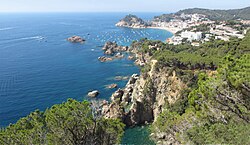
The flora of these regions has evolved to survive long periods of summer drought. The vegetation is diverse, ranging from towering evergreens to aromatic herbs.
| Plant Category | Examples |
|---|---|
| Evergreen Trees | Pine, Cypress, Casuarina, Melaleuca |
| Deciduous Trees | Sycamore, certain Oak species |
| Fruit Trees | Olive, Figs, Walnuts, Grapes |
| Sub-shrubs | Lavender, Sagebrush, Grevillea, Halimium |
| Grasses & Herbs | Themeda triandra, Bunchgrasses, Achillea, Penstemon |
Frequently Asked Questions
What makes a climate "Mediterranean"?
A Mediterranean climate is defined by its seasonal precipitation pattern: dry summers and wet winters, combined with mild temperatures during the winter months.
What is the difference between Csa and Csb climates?
The primary difference is the summer temperature. Csa climates have "hot" summers with at least one month averaging above 22°C (72°F), while Csb climates have "warm" summers where the average temperature stays below 22°C (72°F).
Why are Mediterranean climates usually found on west coasts?
They are positioned where the subtropical ridge migrates seasonally, and their proximity to the ocean moderates temperatures and influences the delivery of winter precipitation.
Is the Csc climate common?
No, the cold-summer Mediterranean climate (Csc) is very rare and typically restricted to high-elevation areas along the west coasts of the Americas.
Which plants are most characteristic of this biome?
The biome is famous for drought-resistant species such as olive trees, grapes, cypress, and aromatic herbs like lavender.