Medals and Medallions: A History of Commemorative Art and Awards
A medal or medallion is a small, portable artistic object, typically a thin metal disc featuring designs on both sides. While many are recognized today as awards for achievement, medals have served diverse purposes throughout history, from diplomatic gifts and religious tokens to pure works of artistic expression. These objects can be produced through die-striking—similar to the process used for coins—or die-casting in a mould.
In the study of numismatics (the study of coins and medals), these items are categorized as either exonumia (non-coin currency) or militaria (military-related collectibles). The artist responsible for creating these works is known as a medalist.
Key Facts
- Size distinctions: Technically, medalets are under one inch, medals are the standard size, and medallions are three inches or larger.
- Materials: Traditionally crafted from platinum, gold, silver, bronze, pewter, copper, tin, or iron.
- Olympic Standard: Since 1904, the Olympics have awarded gold, silver, and bronze; however, "gold" medals are often silver-gilt.
- Production: Early Renaissance medals were primarily cast, while steel die-stamping became the standard in Augsburg, Germany, around 1550.
- Purpose: Medals serve as awards, religious devotionals, artistic objects, or society membership tokens.
Terminology and Classifications
While the terms are often used interchangeably in casual conversation, numismatists distinguish between different types of medals based on their purpose and size.
Size and Form
- Medalets: Small discs measuring less than one inch in diameter.
- Medals: The standard portable disc.
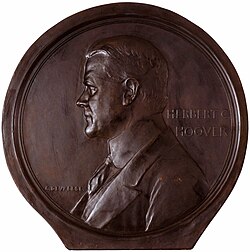
- Medallions: Larger discs (three inches or more). Because of their size, they are often called "table medals" as they are intended for display on a desk or wall rather than being worn.
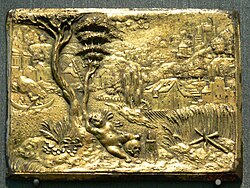
- Plaquettes: Flat, often rectangular artistic medals, frequently created for the collector's market.
Functional Categories
Medals are generally divided into several classes:
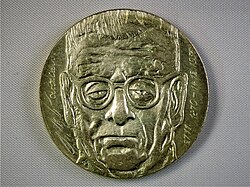
- Awards: Recognition for sporting, military, scientific, or academic achievements.
- Religious: Devotional items worn for faith-based reasons.
- Artistic: Created purely as art objects for collectors.
- Society Medals: Used as badges or tokens of membership in a specific organization.
The Evolution of Medals
Early Origins and the Middle Ages
In Northern Europe during the Migration Period, bracteates (thin gold medals, usually plain on the reverse) were worn as jewelry. These often imitated Roman imperial coins. By around AD 600, the Liudhard medalet emerged in Anglo-Saxon England as an early example of a Christian medal.
The Renaissance Revival
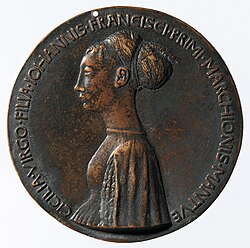
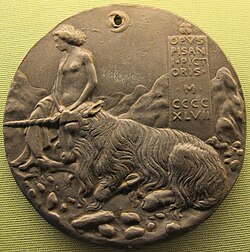
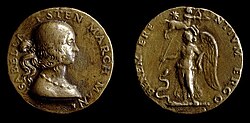
The medieval revival of medals began around 1400 with Jean, Duc de Berry. However, the Italian artist Pisanello is widely regarded as the finest medalist of the Renaissance. Starting in 1438, he created portrait medals that were often cast in bronze and distributed as diplomatic gifts among nobles and humanists.
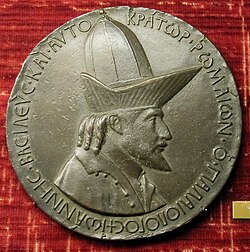
By the 16th century, medals became tools for propaganda and commercial ventures. The introduction of the die-stamping machine in 1550 shifted production from relief modeling to intaglio die-cutting, allowing for greater precision and volume.
Religious and Political Medals
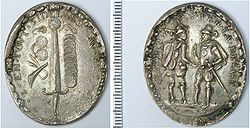
Devotional medals became prominent in Catholic regions, most notably the Miraculous Medal of 1832. Conversely, the Protestant Reformation saw the rise of polemical medals, such as the Geuzen medals produced during the Dutch Revolt.
Military Medals and Decorations
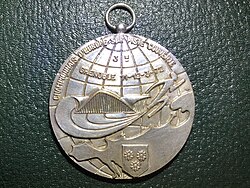
There is a technical distinction between different types of military honors:
- Decorations: Awarded for specific acts of heroism or exceptional achievement (e.g., the Victoria Cross or the U.S. Medal of Honor).
- Service Awards/Campaign Medals: Awarded for serving in a specific capacity, location, and timeframe.

While the Roman Republic used phalerae for soldiers, the modern system of wearing medals on the chest became standard in the Early Modern period. Napoleon I's Légion d'honneur (1802) was revolutionary because it was open to rank-and-file soldiers, not just high-ranking officers. By the 19th century, the practice of awarding medals to all combatants in a battle became common, starting with the Waterloo Medal in 1815.
Materials and Competitive Awards
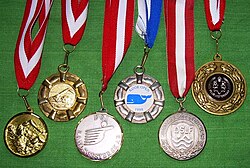
Medals are traditionally crafted from metals based on a hierarchy of value. This hierarchy is most visible in athletic competitions.
| Material | Relative Value/Rank | Common Use Case |
|---|---|---|
| Platinum | Highest | Rare high-honor awards |
| Gold / Silver-gilt | Very High | 1st Place / Olympic Gold |
| Silver | High | 2nd Place / Olympic Silver |
| Bronze | Medium | 3rd Place / Olympic Bronze |
| Pewter / Copper / Tin / Iron | Lower | Commemorative or mass-produced |
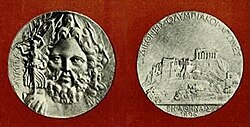
The gold, silver, and bronze system for the top three places was officially introduced at the 1904 Summer Olympics. Earlier events, such as the 1896 Games, used different combinations, such as silver for winners and bronze for runners-up.
Frequently Asked Questions
What is the difference between a medal and a medallion?
Technically, a medallion is larger than a medal, typically starting at three inches in diameter. Because of their size, medallions are often used as "table medals" for display rather than being worn, although the term is colloquially used for any large pendant.
What is a medalist?
A medalist is an artist who specializes in the design and creation of medals or medallions.
Are Olympic gold medals actually made of pure gold?
No, modern Olympic gold medals are typically made of silver-gilt, which is silver plated with a layer of gold.
What is the difference between a military decoration and a service award?
A decoration is awarded for a specific act of heroism or achievement, whereas a service award (or campaign medal) is given for serving in a particular area or time frame regardless of a specific heroic act.
What are plaquettes?
Plaquettes are a type of artistic medal, often rectangular and featuring crowded scenes from religious, historical, or mythological sources, created primarily as decorative objects for collectors.