Olympic GamesInternational Olympic CommitteeSummer OlympicsWinter OlympicsPierre de Coubertin

Olympic Games: From Ancient Traditions to Global Phenomenon

Olympic Games: From Ancient Traditions to Global Phenomenon The Olympic Games represent the pinnacle of athletic achievement and international cooperation. What began as a religious and a...

Olympic Games: From Ancient Traditions to Global Phenomenon

The Olympic Games represent the pinnacle of athletic achievement and international cooperation. What began as a religious and athletic festival in ancient Greece has evolved into the world's most prestigious multi-sport event, uniting nations under a shared motto: Faster, Higher, Stronger – Together (Citius, Altius, Fortius – Communiter).

From the dust of Olympia to the high-tech stadiums of the 21st century, the Games have mirrored the social, political, and cultural shifts of human history. Today, the movement is governed by the International Olympic Committee (IOC), headquartered in Lausanne, Switzerland, and led by President Kirsty Coventry.
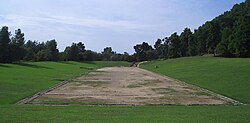
The Ancient Olympic Games stadium in Olympia, Greece

Key Facts

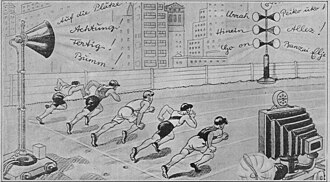
A Berliner Illustrirte Zeitung cartoon published during the 1936 Olympics in Berlin envisions the Olympics in 2000, when spectators would be replaced by television and radio, with the cheers of spectators broadcast through loudspeakers. Almost a century after the prediction, spectators still watch the Games in person and by globally-broadcast television coverage.
  • First Modern Summer Games: Athens, Greece (1896).
  • First Modern Winter Games: Chamonix, France (1924).
  • Frequency: Every four years, with Summer and Winter Games alternating every two years.
  • Governing Body: International Olympic Committee (IOC).
  • Core Philosophy: The Olympic creed, emphasizing the importance of participating and striving for excellence.

The Evolution of the Games
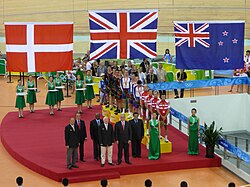
A medal ceremony at the 2008 Summer Olympics with (from left to right): the Danish flag, the Union Flag of the UK, and the New Zealand flag

Ancient Roots and Early Forerunners

The origins of the Olympics lie in antiquity, where athletes competed in honor of the gods. While the ancient games ceased, the spirit of competition persisted through various forerunners. For instance, as early as 1834, a handbill in Oswestry, Shropshire, England, advertised "Ho-limpyc Gaymes," showcasing a vernacular attempt to revive the tradition long before the official modern movement.
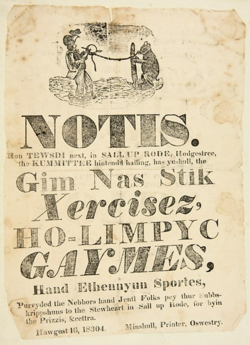
The 1834 handbill, written in phonetic vernacular, advertising "Ho-limpyc Gaymes" in Oswestry, Shropshire, England

The Modern Revival

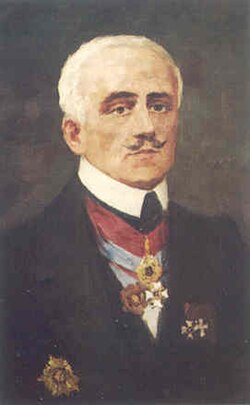
The modern era was spearheaded by Pierre de Coubertin, a French educator and co-founder of the IOC, along with Evangelos Zappas. Coubertin envisioned the Games as a means to promote international peace and physical excellence. This vision culminated in the first modern Summer Olympics in Athens in 1896.
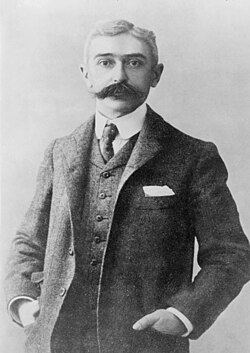
Pierre de Coubertin, co-founder of the International Olympic Committee and its second president
Evangelos Zappas, co-founder of the International Olympic Committee
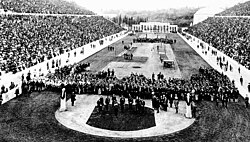
The opening ceremony of the 1896 Summer Olympics in Panathinaiko Stadium in Athens

Expansion and Adaptation

The Games quickly expanded beyond Europe. The 1904 Summer Olympics in St. Louis marked the first time the event was held outside of Europe. Over time, the scope of the Olympics grew to include the Winter Games in 1924, the Paralympic Games for athletes with disabilities, and the Youth Olympic Games for teenage athletes.
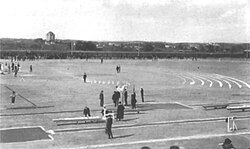
Francis Field at Washington University in St. Louis during the 1904 Summer Olympics, the first held outside Europe
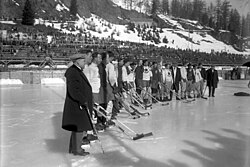
An ice hockey game during the 1928 Winter Olympics at St. Moritz
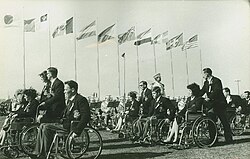
1964 Summer Paralympics in Tokyo

Symbols, Ceremonies, and Governance
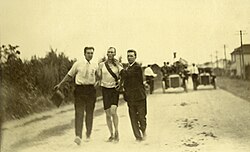
Thomas Hicks running the marathon at the 1904 Olympics in St. Louis

The Olympic Movement

The Olympic Movement is structured around three main elements: the IOC, national organizing committees, and the international sports federations. The Olympic Charter serves as the codification of the fundamental principles of Olympism.

Iconic Symbols and Rituals

The Olympic flag, the torch relay, and the opening and closing ceremonies are central to the Games' identity. These rituals symbolize the continuity between the ancient and modern worlds and the unity of the five continents.
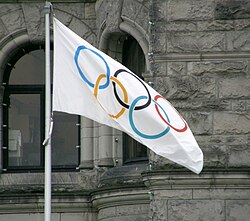
The Olympic flag
The Olympic flag
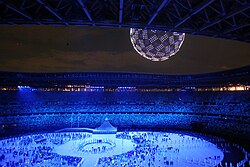
Opening ceremony of the 2020 Summer Olympics in Tokyo
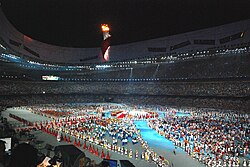
Athletes gather in the stadium during the closing ceremony of the 2008 Summer Olympics in Beijing

Challenges and Controversies

Politics and Boycotts

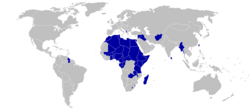
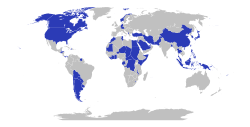
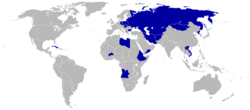
Despite the ideal of political neutrality, the Games have often been a stage for global tensions. Significant boycotts occurred during the 1956, 1964, 1976, 1980, and 1984 Games, often driven by diplomatic disputes or protests against host nations.
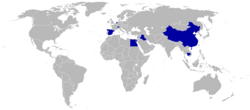
Countries that boycotted the 1956 Summer Olympics (shaded blue)
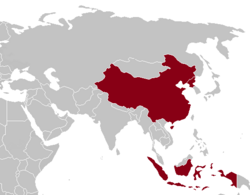
Countries that boycotted the 1964 Summer Olympics (shaded red)
Countries that boycotted the 1976 Summer Olympics (shaded blue)
Countries that boycotted the 1980 Summer Olympics (shaded blue)
Countries that boycotted the 1984 Summer Olympics (shaded blue)

Ethics and Integrity

The movement has faced numerous challenges, including allegations of bribery and corruption within the IOC, the commercialization of sports, and the struggle against performance-enhancing drugs. The Russian doping scandal remains one of the most prominent examples of the fight for athletic integrity.

Social Impact and Human Rights

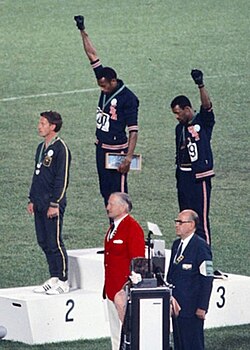
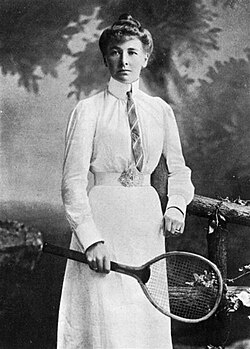
The Olympics have also been a platform for social change. Jesse Owens' four gold medals in 1936 challenged racial prejudices, while Tommie Smith and John Carlos used the 1968 podium to highlight human rights issues. Additionally, the Games have seen a steady increase in the participation of women, from Charlotte Cooper becoming the first female champion in 1900 to the inclusion of women's boxing.

Jesse Owens on the podium after winning the long jump at the 1936 Summer Olympics, where he won four gold medals; in his 1980 obituary, The New York Times called him "perhaps the greatest and most famous athlete in track and field history".[214]
Gold medallist Tommie Smith (centre) and bronze medallist John Carlos (right) showing the raised fist on the podium after the 200 m race at the 1968 Summer Olympics; both are wearing Olympic Project for Human Rights badges. Peter Norman (silver medallist, left) from Australia is also wearing an OPHR badge, in solidarity with Smith and Carlos.
Charlotte Cooper of the United Kingdom, the first female Olympic champion, in the 1900 Games

Athletic Excellence and Legacy

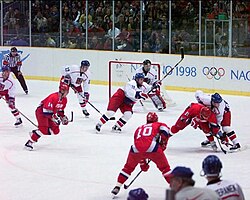
The Games have produced legendary figures such as Paavo Nurmi, the "Flying Finn," who won nine gold medals between 1920 and 1928. The transition from strict amateurism to professionalism has also evolved, notably allowing professional NHL players to compete in ice hockey since the 1998 Winter Olympics.
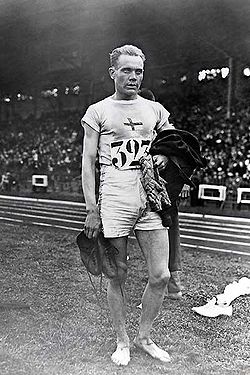
Paavo Nurmi, legendary Finnish middle-distance and long-distance runner, nicknamed the "Flying Finn", set 22 world records at distances between 1500 m and 20 km, winning nine gold and three silver medals in the 1920 through 1928 Olympic Games.
The Gold medal game between Russia and Czech Republic at the 1998 Winter Olympics; professional National Hockey League players have been eligible to participate in ice hockey since then.

Host City Impact

Hosting the Olympics brings immense prestige but also significant economic burdens. While some cities experience urban renewal and tourism boosts, others struggle with the cost of specialized infrastructure. The distribution of host cities shows a concentration in North America and Europe, though bids continue to emerge globally.
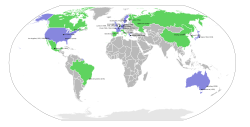
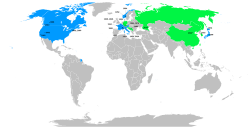
Map of Summer Olympics locations with countries that have hosted one Summer Olympics shaded in green and countries that have hosted two or more shaded in blue
Map of Winter Olympics locations with countries that have hosted one Winter Olympics shaded in green and countries that have hosted two or more shaded in blue
Summary of Olympic Game Types
Game Type First Edition Primary Focus Frequency
Summer Olympics 1896 (Athens) General Athletics & Sports Every 4 Years
Winter Olympics 1924 (Chamonix) Snow and Ice Sports Every 4 Years
Paralympics Post-WWII era Athletes with disabilities Concurrent with Olympics
Youth Olympics 2010 Teenage athletes Every 4 Years

Frequently Asked Questions

Who founded the modern Olympic Games?

The modern Games were primarily the vision of Pierre de Coubertin, a French educator who co-founded the International Olympic Committee (IOC) to revive the ancient tradition of athletic competition.

How often are the Olympic Games held?

The Summer and Winter Olympics each occur every four years, but they are staggered so that a global Olympic event takes place every two years.

What is the significance of the Olympic motto?

The motto "Faster, Higher, Stronger – Together" reflects the Olympic ideal of continuous improvement and the spirit of global unity through sport.

Can professional athletes compete in the Olympics?

Yes. While the Games originally emphasized amateurism, rules have changed over time. For example, professional NHL players have been eligible for Olympic ice hockey since 1998.

What is the role of the International Olympic Committee (IOC)?

The IOC is the supreme authority of the Olympic Movement, responsible for selecting host cities, overseeing the Olympic Charter, and managing the organization of the Games.

References

  1. English and French are the official languages of the Olympic Movement.
  2. However, Theodosius' decree contains no specific reference to Olympia.[28]
  3. The 1988 Winter Olympics were in Calgary, Canada, and the 1988 Winter Paralympics were in Innsbruck, Austria.[52]
  4. The IOC lists a French immigrant to the United States Albert Corey as a United States competitor for his marathon silver medal, but he is listed (together with four undisputed Americans) as part of a mixed team for the team race silver medal.[297][298]
  5. All three of Great Britain's athletes in 1904 were from Ireland, which at the time was part of the United Kingdom of Great Britain and Ireland. Despite the team being called "Great Britain" or "Team GB", inhabitants of Northern Ireland (and formerly the whole of Ireland) are/were eligible to join.[299]