Mass in Western Christianity: History, Liturgy, and Denominational Variations
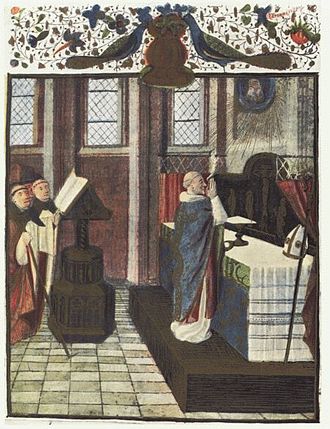
The Mass is the central Eucharistic liturgical service practiced across various branches of Western Christianity. While most commonly associated with the Catholic Church, the term is also used by Lutheran, Old Catholic, and Independent Catholic churches, as well as Western Rite Orthodoxy. In some Anglican and Protestant traditions, the term is used occasionally, though other denominations may prefer terms like "worship service" or simply "service."
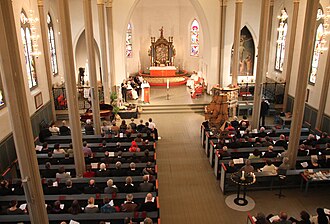
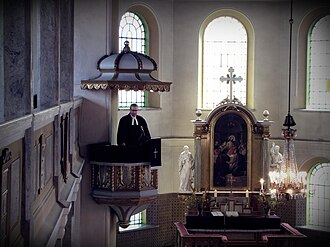
In the Lutheran tradition, particularly in Nordic countries, the term Mass remains standard, whereas in North America, the term Divine Service is more common. This differs from Eastern Christianity—including Eastern Catholic and Eastern Lutheran Churches—where the service is typically called the Divine Liturgy, Holy Qurbana, Holy Qurobo, or Badarak.
Key Facts
- Core Purpose: The Mass is a Eucharistic liturgy commemorating the death and resurrection of Jesus Christ.
- Denominational Use: Primarily used by Catholic, Lutheran, and Western Rite Orthodox churches.
- Etymology: Most commonly derived from the Latin missa, referring to the dismissal at the end of the service.
- Lutheran Influence: Lutheran worship remains structurally similar to the Roman Catholic Mass due to Martin Luther's conservative approach to reform.
- Anglican Evolution: Anglican rites evolved from the 1549 and 1552 Books of Common Prayer, shifting from medieval theology to a series of communion devotions.
Etymology of the Word "Mass"
The term "Mass" comes from the Latin noun missa. While the most common explanation links it to the dismissal formula ite, missa est, historical scholars have proposed other theories. In the 16th century, figures like Reuchlin and Martin Luther suggested it might be a Latinization of the Hebrew matzâh (unleavened bread or oblation). Other theories suggest a derivation from the Greek mýēsis (initiation) or the Germanic mese (assembly).
Medieval authorities offered different spiritual interpretations. A 9th-century text, De divinis officiis, suggested the word comes from mittere ("sending"), implying the service sends the believer toward God. Similarly, Rupert of Deutz in the 12th century viewed it as a "dismissal" of the enmities that once existed between God and humanity.
Denominational Perspectives and Liturgies
The Catholic Church
The Catholic Church maintains a distinct theology regarding the validity of clergy orders, which generally prevents intercommunion with other denominations. However, the 1964 Decree on Ecumenism from Vatican II acknowledges that when Lutherans, Anglicans, and Presbyterians commemorate the Lord's Supper, they profess a life in communion with Christ.
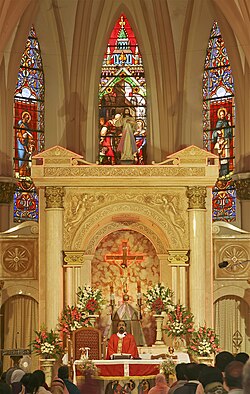
Lutheran Churches
Lutheran worship is noted for its close resemblance to the Roman Catholic rite. Martin Luther sought to reform rather than entirely replace Catholic practices. However, he rejected the Roman Catholic Canon of the Mass, arguing it conflicted with the biblical teaching in Hebrews 7:27, which states that Christ offered his body as a sacrifice only once.
To replace the Canon, Luther composed the Formula Missae (1523) in Latin and the Deutsche Messe (1526) in the vernacular. In Lutheranism, the Mass is often viewed as convertible with the term "Lord's Supper."
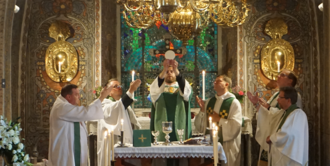
Anglican Churches
Anglican Eucharistic liturgies evolved from the 1549 and 1552 editions of the Book of Common Prayer, largely shaped by Thomas Cranmer. While the 1549 rite kept the traditional sequence, the 1552 revision restructured the elements into a series of communion devotions, distancing the service from medieval Catholic theology.
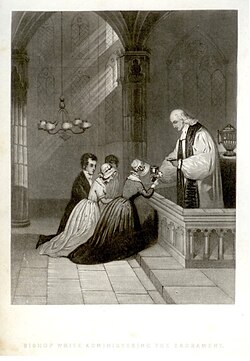
Methodist Churches
Methodist traditions often use a "Service of the Word and Table." Some modern Methodist liturgical expressions have sought to blend the United Methodist Order for the Administration of the Sacrament of the Lord's Supper with the "New Order of Mass" from the Roman Catholic Church to foster ecumenism.
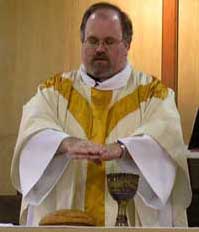
Comparison of Liturgical Structures
While specific elements vary by denomination and season, most Western rites follow a general progression from preparation and scripture to the consecration of the elements and final blessing.
| Element | Catholic / Western Rite Orthodox | Lutheran | Methodist |
|---|---|---|---|
| Opening | Kyrie, Gloria, Collect | Kyrie, Gloria, Collect | General Confession |
| The Word | Epistle, Gospel, Sermon | OT, Psalm, Epistle, Gospel, Sermon | Affirmation of Faith |
| The Eucharist | Canon, Lord's Prayer, Fraction | Eucharistic Prayer, Lord's Prayer, Fraction | Prayer of Consecration |
| Closing | Blessing, Dismissal | Blessing, Dismissal | Benediction |
Special Observances and Ceremonial
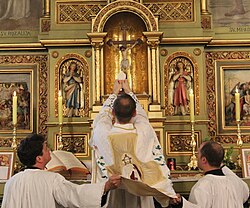
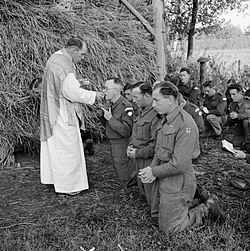
The liturgical calendar includes various "Masses" tied to specific feast days, such as Candlemas, Christmas, and Michaelmas. Some traditions use specialized books for ceremonial order, including meditations for the celebrant and specific rites for events like the blessing of palms on Palm Sunday.
Frequently Asked Questions
What is the difference between a Mass and a Divine Service?
In practice, they are often the same Eucharistic liturgy. "Mass" is the traditional term used globally, while "Divine Service" is the preferred term in North American Lutheran circles.
Why did Martin Luther change the Roman Catholic Canon?
Luther believed the Roman Canon implied a repeated propitiatory sacrifice, which he argued contradicted the New Testament (specifically Hebrews 7:27), which teaches that Christ's sacrifice was a single, sufficient event.
Do all Christian denominations use the term Mass?
No. While common in Catholic and Lutheran churches, many Protestant denominations use terms like "Communion service," "Lord's Supper," or simply "worship service."
What is the significance of the "elevation of the host"?
Beginning in the 14th century, the elevation of the consecrated host was introduced to allow the congregation to see the bread during the liturgy.
How does the Anglican Mass differ from the Catholic Mass?
While they may look similar, the Anglican rite evolved through the Book of Common Prayer to reflect a different underlying theology, moving away from medieval Catholic interpretations of the sacrifice.