Martín Miguel de Güemes: The Guardian of Northern Argentina
In the struggle for South American independence, few figures were as pivotal to the defense of the northern frontier as Martín Miguel de Güemes. A military leader and popular caudillo (a regional political-military leader), Güemes dedicated his life to shielding northwestern Argentina from the Spanish royalist armies, ensuring that the revolution in the south could survive and flourish.
Early Life and Education
Born on February 8, 1785, in Salta, within the Viceroyalty of the Rio de la Plata, Güemes was raised in a wealthy and intellectual household. His father, Gabriel de Güemes Montero, was a learned man from Santander, Spain, who served as the royal treasurer for the Spanish crown. His mother, María Magdalena de Goyechea y la Corte, was a criolla (a person of Spanish descent born in the colonies) from Salta.
Güemes received a rigorous education from private tutors in science and philosophy before attending the Royal College of San Carlos in Buenos Aires. This academic foundation complemented the military instincts he would later develop on the battlefield.
Rise Through the Military Ranks
Güemes began his military career at the age of 23, gaining early notoriety during the British invasions of the Río de la Plata. He distinguished himself by leading a cavalry charge to capture the Justine, a British merchant ship moored in shallow waters near Buenos Aires.
Following the May Revolution of 1810, which established the first local government junta, Güemes joined the campaign against Spanish troops in Upper Peru (modern-day Bolivia), contributing to the victory at the Battle of Suipacha. He also participated in the strategic siege of Montevideo before returning to his home province.
The Defense of Salta and Guerrilla Warfare
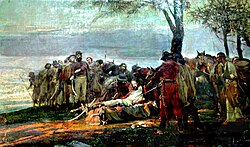
Returning to Salta in 1815, Güemes was appointed Governor of the province. He recognized that conventional warfare was insufficient against the royalists; instead, he organized a popular army of gauchos (skilled horsemen and laborers of the plains) trained in guerrilla tactics—small, mobile strikes designed to harass and exhaust the enemy.
His leadership was not without friction. In November 1815, General José Rondeau attempted to seize weapons from Güemes's gauchos, leading to a standoff that required intervention from the Supreme Director, Ignacio Álvarez Thomas. However, subsequent leadership under Juan Martín de Pueyrredón recognized Güemes's effectiveness, promoting him to colonel major. He earned the respect of legendary figures like José de San Martín and Manuel Belgrano.
The Defeat of Marshal José de la Serna
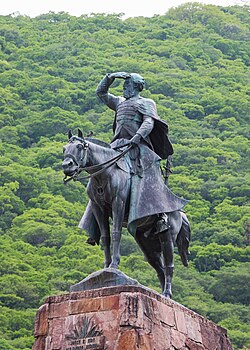
The resilience of Güemes's forces was tested in 1817 when Marshal José de la Serna invaded Salta with 5,400 experienced soldiers. Güemes employed a scorched earth policy—destroying resources to deny the enemy sustenance—combined with relentless guerrilla attacks. Despite reaching Salta City on April 16, the royalists were forced to retreat due to plummeting morale and news of San Martín's victory at the Battle of Chacabuco.
Political Conflict and Final Days
By 1819, Güemes found himself isolated. With San Martín in Chile and Belgrano recalled to Santa Fe, Güemes had to fund his defense by extorting wealthy landowners in Salta, creating deep internal resentment. The situation worsened in 1820 after the Battle of Cepeda triggered a period of intense civil war in Argentina.
Güemes faced a dual threat: royalist forces to the north and Bernabé Aráoz, the governor of Tucumán, to the south. In April 1821, Aráoz—allied with Salta's disgruntled landowners—defeated Güemes, leading to his temporary removal from the governorship by the conservative Cabildo (city council).
Although his gauchos briefly restored him to power in May, the royalist colonel José María Valdés launched a final assault on June 7, supported by local landowners. While fleeing the city, Güemes was shot in the back. He retreated to his camp in La Chamical, where he issued his final orders before passing away on June 17, 1821, at the age of 36 in the Quebrada de La Horqueta.
Key Facts
- Role: Governor of Salta (1815–1821) and General of the United Provinces.
- Strategy: Pioneered the use of gaucho guerrilla warfare and scorched earth tactics.
- Key Victory: Successfully repelled Marshal José de la Serna's 5,400-man army in 1817.
- Death: Died at age 36 from wounds sustained during a royalist attack.
- Legacy: His forces permanently expelled the royalists from Salta on July 22, 1821.
| Category | Details |
|---|---|
| Born | February 8, 1785 (Salta) |
| Died | June 17, 1821 (Quebrada de La Horqueta) |
| Highest Rank | General |
| Political Office | Governor of Salta Province |
| Primary Adversaries | Spanish Royalists and Bernabé Aráoz |
| Resting Place | Panteón de las Glorias del Norte, Salta |
Cultural Legacy
The impact of Güemes extends beyond military history. The 1942 film La Guerra Gaucha depicts the conflicts in which he fought. In the scientific community, his name lives on through the Guemesia, an abelisaurid theropod ceratosaur dinosaur named in his honor.
Frequently Asked Questions
What was the "Guerra Gaucha"?
The Guerra Gaucha refers to the guerrilla war waged by Martín Miguel de Güemes and his army of gauchos to defend the northern border of Argentina against Spanish royalist invasions.
How did Güemes defeat larger royalist armies?
He utilized a combination of scorched earth tactics—denying the enemy food and shelter—and lightning-fast guerrilla skirmishes that wore down the morale and strength of the Spanish troops.
Why did Güemes clash with the landowners of Salta?
Because he lacked official reinforcements and funding from the central government, Güemes resorted to extorting money from the wealthy upper-class landowners to sustain his army.
Who was the primary enemy of Güemes during his final year?
Güemes fought on two fronts: the Spanish royalists led by figures like Colonel José María Valdés and the governor of Tucumán, Bernabé Aráoz.
Where is Martín Miguel de Güemes buried?
He is laid to rest in the Panteón de las Glorias del Norte in Salta, Argentina.