Maritime Losses and Shipwrecks of the Early 20th Century
The early 20th century was a period of significant maritime activity, but it was also marked by frequent losses due to environmental hazards, mechanical failures, and the devastation of global conflict. From the frozen waters of the north to the strategic channels of Europe, the records of lost vessels provide a glimpse into the perils faced by sailors and the limitations of early industrial shipping.
Key Facts
- Environmental Hazards: Ice was a primary cause of wreckage for several US tugboats and icebreakers during the January-February period.
- War Losses: The Imperial German Navy lost multiple submarines, including the SM UB-107 and SM UC-79, to mines during World War I.
- Diverse Causes: Vessel losses ranged from boiler explosions and collisions to illegal hunting impoundments and intentional scuttling.
- Geographic Reach: Incidents occurred globally, spanning from the coast of Norway and France to the rivers of Louisiana and the shores of Alaska.
The Impact of Environmental Conditions
Winter weather posed a severe threat to maritime operations, particularly in colder climates. A recurring pattern of wreckage occurred between January and February, where ice proved fatal for numerous American vessels. The tugboats Dorothy Barrett, Hazel Watson, and Wabash, as well as the icebreaker Isabella, were all wrecked by ice during this window. While the Elisha was also wrecked by ice, it was successfully raised and repaired.
In other regions, visibility and geography played a role. The vessel Norian ran aground on a mattress sill—a structural foundation—at the head of Pass a Loutre, Louisiana, due to heavy fog, though it was refloated after 18 days. In Michigan, the yacht Pastime became a known obstruction in the Cheboygan River, requiring removal efforts that concluded on October 19.
Accidents and Mechanical Failures
Not all losses were caused by nature; mechanical failure and human error were frequent culprits. The German cargo ship Diana sank off the coast of Norway following a boiler explosion in January or early February. Similarly, the French ship Sénégamble was lost in February or early March after colliding with another vessel.
Some losses were the result of fire or legal action. The Fairhaven, a sternwheel passenger paddle steamer—a vessel propelled by a large wheel at the rear—was destroyed by fire while moored in Seattle, Washington.
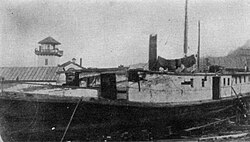
In a unique case of legal seizure, the Japanese ship Kaisei Maru was impounded in Sealing Cove on Japonski Island, Alaska, around 1909 or 1910 for illegal seal hunting. The vessel eventually sank around 1918 after becoming waterlogged.
Military Losses and Intentional Scuttling
World War I introduced high-stakes dangers to the seas. The Imperial German Navy suffered losses to naval mines, including the SM UC-79 (a Type UC II submarine) in the English Channel and the SM UB-107 (a Type UB III submarine) in the North Sea. The loss of the SM UB-107 was particularly tragic, resulting in the deaths of all 38 crew members.
Additionally, some vessels were removed from service intentionally. The Vulcan, a dipper dredge—a specialized vessel used for excavating material from the sea floor—was stripped and scuttled (intentionally sunk) by the US Army Corps of Engineers in the St. Louis, Missouri District.
Summary of Notable Vessel Losses
| Vessel Name | Nationality/Affiliation | Primary Cause of Loss | Location |
|---|---|---|---|
| SM UB-107 | Imperial German Navy | Mine | North Sea |
| Fairhaven | United States | Fire | Seattle, Washington |
| Diana | Germany | Boiler Explosion | Coast of Norway |
| Kaisei Maru | Japan | Waterlogged (after impoundment) | Sitka, Alaska |
| Success | Australia | Ice | Carrollton, Kentucky |
| Vulcan | US Army | Scuttled | St. Louis, Missouri |
Frequently Asked Questions
What happened to the SM UB-107?
The SM UB-107 was a Type UB III submarine of the Imperial German Navy that struck a mine in the North Sea between July 27 and August 3, resulting in the loss of all 38 crew members.
Which vessels were lost due to ice?
Several vessels were wrecked by ice during January and February, including the tugboats Dorothy Barrett, Hazel Watson, and Wabash, the icebreaker Isabella, and the sailing vessel Success.
What was the fate of the Kaisei Maru?
The Kaisei Maru was impounded in Sealing Cove, Alaska, around 1909 or 1910 for illegal seal hunting and eventually sank around 1918 after becoming waterlogged.
What is a dipper dredge, and what happened to the Vulcan?
A dipper dredge is a vessel used for excavating material from the bottom of a body of water. The Vulcan, a US Army Corps of Engineers dipper dredge, was condemned, stripped, and scuttled in the St. Louis, Missouri District.
Was the vessel Success a genuine prison ship?
The Success was described as a fake museum ship that supposedly had a previous career as an Australian prison ship before it was sunk by ice in Kentucky.