Imperial German Navy: The Rise and Fall of the Kaiserliche Marine
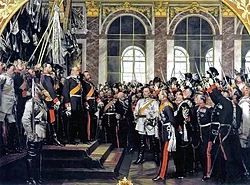
The Imperial German Navy, known as the Kaiserliche Marine, served as the maritime arm of the German Empire from 1871 to 1919. What began as a modest force focused on coastal defense evolved into one of the most formidable naval powers in history, second only to the British Royal Navy. This rapid ascent was driven by imperial ambition and a strategic shift toward global sea power, ultimately contributing to the geopolitical tensions that sparked World War I.
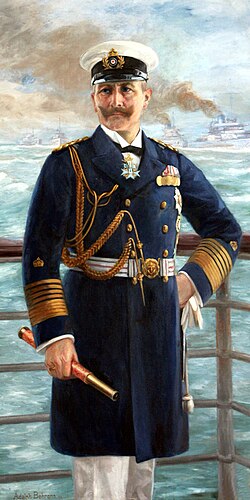
The navy's origins lay in the Prussian Navy and the subsequent North German Federal Navy. However, the trajectory of the force changed dramatically under the leadership of Kaiser Wilhelm II and Admiral Alfred von Tirpitz. Influenced by the sea power theories of American strategist Alfred Thayer Mahan, Tirpitz sought to expand the size and quality of the fleet to challenge established maritime powers.
Key Facts
- Active Period: 1871–1918 (Disbanded in 1919).
- Primary Goal: Transition from coastal defense to a global "High Seas Fleet."
- Key Architect: Admiral Alfred von Tirpitz.
- Major Rivalry: An intense naval arms race with the British Royal Navy.
- Defining Technology: The development of Dreadnought-style battleships and diesel-powered U-boats.
- Final Fate: The majority of the modern fleet was scuttled at Scapa Flow in 1919.
The Era of Expansion (1871–1906)
Under Kaiser Wilhelm I, the navy remained relatively small. The shift toward expansion began in earnest with Kaiser Wilhelm II. Despite opposition from military leaders like Waldersee, Schlieffen, and Moltke—who feared naval spending would compromise the army—Wilhelm II pursued a gradual enlargement of the fleet.
In 1888, Vice-Admiral Alexander von Monts was appointed head of the admiralty, overseeing the construction of the Brandenburg-class battleships. These vessels, each displacing 10,000 tons, marked the beginning of Germany's move toward heavier capital ships. By 1892, Germany introduced the SMS Kaiserin Augusta, the first navy ship to feature triple propellers.
The Tirpitz Era and the Navy Bills
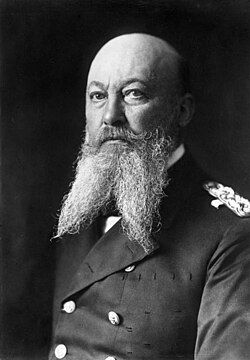
The appointment of Admiral Alfred von Tirpitz signaled a new phase of aggressive growth. The first Navy Bill, passed by the Reichstag on April 10, 1898, established a structured fleet of 19 battleships and various cruisers, with a replacement cycle of 25 years. This legislation aimed to make Germany a threat to France and Russia, though it remained inferior to the Royal Navy.
This expansion triggered a response from Britain. Under First Sea Lord Fisher, the Royal Navy scrapped older ships and modernized its gunnery and training. Strategic alliances, such as the 1902 treaty with Japan and the 1904 Entente Cordiale with France, allowed Britain to concentrate its forces in home waters, viewing Germany as its primary naval adversary by 1906.
Technological Innovation and the Dreadnought Race
The naval race accelerated with the introduction of the Dreadnought concept—ships with all-big-gun armaments. Germany responded with the Nassau-class battleships, designed with high secrecy. These ships featured side armor equal to the caliber of their large guns and internal watertight compartments to increase survivability.
Battlecruisers and Light Cruisers
Innovation continued with the SMS Von der Tann, Germany's first battlecruiser, which utilized Parsons turbines to reach speeds of 27 knots. Subsequent designs, such as the Moltke-class, further improved speed and firepower. Meanwhile, light cruisers like the Dresden-class provided the navy with versatile vessels for overseas operations.
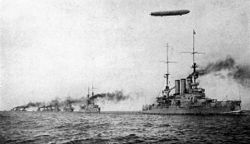
The Evolution of the Battleship
German battleship design evolved through several iterations to maximize firepower and protection:
- Nassau-class: Featured twelve 28 cm guns, though wing turrets could not fire across the deck.
- Kaiser-class: Introduced turbine propulsion and superfiring aft turrets, allowing for more flexible firing arcs.
- Bayern-class: The pinnacle of German battleship design, featuring 38 cm (15 in) guns and a displacement of 28,600 tons.
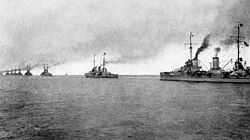
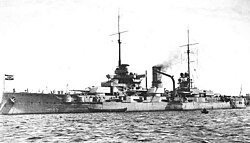
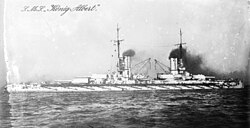
Submarines and Air Power
Recognizing the utility of asymmetric warfare, Germany invested heavily in the U-boat (Unterseeboot). By 1910, the navy developed submarines powered by twin diesel engines, such as the U-19, which boasted a cruising range of 7,600 nautical miles and the ability to dive to 80 meters.
The navy also experimented with air power. The L 1 Zeppelin was introduced with machine guns and experimental 80 kg bombs. However, early losses due to storms and explosions hampered the development of a robust naval air division, leaving the navy with limited aerial capabilities by the start of the war.
World War I and the High Seas Fleet
At the outbreak of World War I, the Imperial Navy consisted of 22 pre-Dreadnoughts, 14 dreadnought battleships, and 4 battlecruisers. The force was split between the High Seas Fleet in the North Sea and smaller squadrons in overseas protectorates, such as the East Asia Squadron at Qingdao.

The navy engaged in several notable conflicts, including the Battle of Heligoland Bight and the Battle of the Gulf of Riga. However, the most strategic impact came from the U-boat fleet. The sinking of the RMS Lusitania on May 7, 1915, became a pivotal event that eventually drew the United States into the conflict in 1917.

The End of the Imperial Navy
Following Germany's defeat in 1918, the remnants of the navy faced a chaotic end. In November 1918, 74 modern ships were interned at Scapa Flow. On June 21, 1919, under the orders of Rear Admiral Ludwig von Reuter, the crews scuttled the fleet to prevent the ships from falling into Allied hands. The few surviving vessels eventually formed the foundation of the Reichsmarine under the Weimar Republic.
| Class | Type | Key Feature | Main Armament |
|---|---|---|---|
| Brandenburg | Battleship | Early expansion era | 10,000 tons displacement |
| Nassau | Dreadnought | Watertight compartments | 12 x 28 cm guns |
| Kaiser | Battleship | Turbine propulsion | Superfiring turrets |
| Von der Tann | Battlecruiser | High speed (27 knots) | 4 x Twin 28 cm turrets |
| Bayern | Battleship | Maximum firepower | 38 cm (15 in) guns |
Frequently Asked Questions
Who was the primary architect of the Imperial German Navy's expansion?
Admiral Alfred von Tirpitz was the key leader who expanded the size and quality of the navy, applying the sea power theories of Alfred Thayer Mahan to challenge the British Royal Navy.
What was the significance of the Scapa Flow incident?
Scapa Flow was the site where 74 modern German ships were interned after World War I. To avoid the ships being seized by the Allies, the crews scuttled the fleet on June 21, 1919.
How did German battleship design change between the Nassau and Kaiser classes?
The Nassau-class had wing turrets that could not fire across the deck. The Kaiser-class improved this by introducing tandem wing turrets for cross-deck firing, superfiring aft turrets, and more efficient turbine propulsion.
What role did U-boats play in World War I?
U-boats were instrumental in Germany's naval strategy, utilizing submarine warfare to disrupt enemy shipping. A notable event was the sinking of the RMS Lusitania, which contributed to the United States entering the war.
Why did Germany continue to use coal for the Bayern-class battleships?
Germany lacked a reliable supply of fuel oil and believed that coal bunkers located at the sides of the ship provided additional protection against penetrating shells.