Marie Laveau: The Legacy of the New Orleans Voodoo Queen
In the heart of New Orleans, the name Marie Laveau evokes images of mysticism, power, and the deep spiritual currents of Louisiana. Known as the Voodoo Queen, Laveau was a formidable figure in the 19th century, blending her roles as an occultist, herbalist, and midwife to become one of the most renowned practitioners of Voodoo in American history.
Beyond the myths, Laveau was a woman of complex identity and significant social influence, navigating the rigid racial and social hierarchies of a colonial city to establish a spiritual empire that continues to fascinate the world today.
Key Facts
- Full Name: Marie Catherine Laveau
- Lifespan: September 10, 1801 – June 15, 1881
- Primary Roles: Voodoo priestess, herbalist, midwife, and nurse
- Heritage: Louisiana Creole (African, European, and Native American ancestry)
- Final Resting Place: Saint Louis Cemetery No. 1, New Orleans
Early Life and Heritage
Marie Catherine Laveau was born on September 10, 1801, in the French Quarter of New Orleans. At the time, Louisiana was transitioning between Spanish and French administration. She was born a free woman of color, a distinct social class in colonial Louisiana. Her mother, Marguerite D'Arcantel, shared this status and possessed a diverse ancestry of African, European, and Native American roots.
Historical records regarding her father remain ambiguous due to inconsistent spellings in 19th-century documents. Some historians suggest her father was Charles Laveau, the son of a white Louisiana Creole politician, while others believe he was a free man of color also named Charles Laveaux.
Marriage and Family
On August 4, 1819, Laveau married Jacques Paris, a free man of color and an émigré from Saint-Domingue who had arrived in New Orleans following the Haitian Revolution. The couple had two daughters, Félicité and Angèle, though both are believed to have died in childhood. Following the disappearance of Jacques Paris from city records in 1822 and his presumed death in Baton Rouge in 1823, Laveau was identified in records as "the Widow Paris."
Career as a Spiritual Leader
Marie Laveau rose to prominence as a practitioner of Voodoo, a syncretic religion blending African spiritualism with Roman Catholicism. Her expertise extended beyond the occult; she was a skilled herbalist and midwife, providing essential healthcare and spiritual guidance to a diverse clientele in New Orleans.
Her influence was not limited to her own lifetime. Her daughter, Marie Laveau II (1827–c. 1862), also practiced spiritual arts, including rootwork (a system of folk magic) and conjure, blending Native American and African spiritualism with traditional Catholicism.
Death and the Mystery of the Tomb
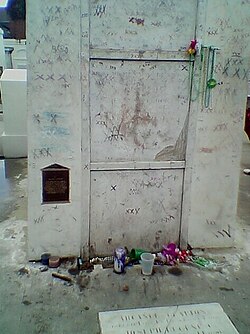
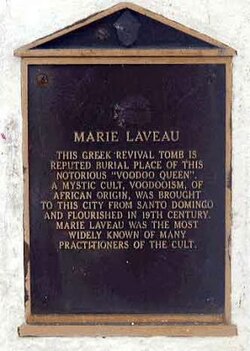
Marie Catherine Laveau Paris Glapion passed away on June 15, 1881, at the age of 79. She was interred in the historic Saint Louis Cemetery No. 1, where her tomb has since become a site of pilgrimage and, occasionally, controversy.
In December 2013, the tomb was vandalized with pink latex paint. The subsequent restoration process in 2014, a collaboration between the Archdiocese of New Orleans and the nonprofit Save Our Cemeteries, sparked debate among preservationists over the use of pressure washing on old plaster. Despite the restoration, the site remains a target for visitors who scratch "X" marks into the plaster, continuing a long-standing local tradition associated with the Voodoo Queen.
Artistic Legacy and Popular Culture
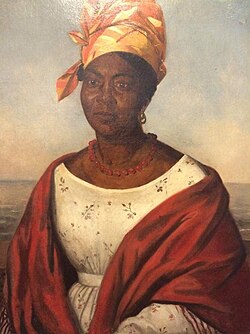
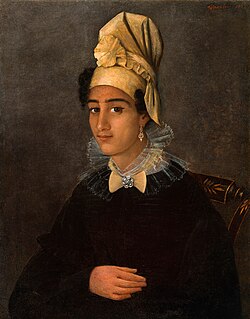
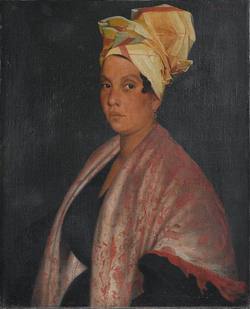
One of the most enduring mysteries regarding Marie Laveau is her appearance. Because she was never photographed and never sat for a formal portrait, many 19th-century paintings of unidentified Creole women have been mislabeled as her likeness. Specifically, portraits of women wearing a tignon (a traditional head wrap) are frequently attributed to her.
Influence on Music and Literature
Laveau's legend has inspired a vast array of creative works. In music, she is the subject of songs by artists ranging from Dr. John and Volbeat to Canned Heat and Bobby Bare. In literature, she appears as a character or inspiration in works by Neil Gaiman (as Marie Paris in American Gods), Jeaniene Frost, and Rick Riordan.
| Category | Details |
|---|---|
| Birth/Death | 1801 – 1881 |
| Location | New Orleans, Louisiana |
| Specialties | Voodoo, Herbalism, Midwifery, Nursing |
| Key Family | Jacques Paris (Spouse), Marie Laveau II (Daughter) |
| Cultural Impact | Subject of numerous novels, songs, and folklore |
Frequently Asked Questions
Was Marie Laveau actually photographed?
No, there are no known photographs of Marie Laveau, nor did she ever sit for a painter. Most images attributed to her are actually portraits of unidentified Creole women from the 19th century.
What is the significance of the "X" marks on her tomb?
Visitors often scratch "X" marks into the plaster of her tomb in Saint Louis Cemetery No. 1 as part of a folk tradition to seek favors or luck from the Voodoo Queen.
What was Marie Laveau's role in her community?
Beyond her spiritual work as a Voodoo priestess, she served her community as a midwife and nurse, utilizing her knowledge of herbalism to provide healthcare.
Who was Marie Laveau II?
Marie Laveau II was the daughter of the original Voodoo Queen. She continued the family tradition by practicing Louisiana Voodoo, rootwork, conjure, and African and Native American spiritualism.
Where can I find Marie Laveau's grave today?
Her tomb is located in Saint Louis Cemetery No. 1 in New Orleans, Louisiana.