Mango: The Botany, History, and Nutrition of the Tropical Stone Fruit
The mango is a succulent edible stone fruit produced by the tropical tree Mangifera indica. Renowned for its sweet flavor and vibrant color, the mango is more than just a fruit; it is a cultural icon. It serves as the national fruit of India, Pakistan, and the Philippines, while the mango tree itself is the national tree of Bangladesh.
Originating in the northeastern regions of South Asia—specifically in areas that are now Myanmar, northeastern India, and Bangladesh—the species has been cultivated for millennia. This long history of domestication has led to two primary modern cultivar lineages: the "Indian" and "Southeast Asian" types.
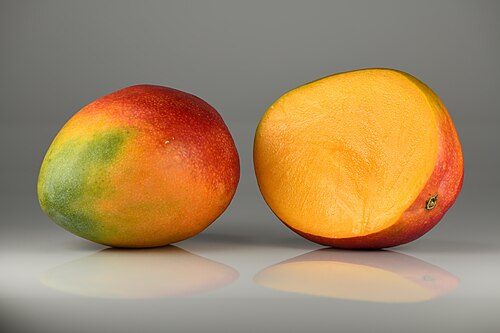
Key Facts
- Scientific Name: Mangifera indica.
- Origin: South Asia (Bangladesh, India, and Myanmar).
- Tree Lifespan: Long-lived; some specimens continue to fruit after 300 years.
- Nutritional Highlight: Exceptionally rich in Vitamin C (40% DV per 100g).
- Global Production: India is the world's leading producer.
Botanical Description
The Mango Tree
Mango trees are impressive specimens, reaching heights of 30 to 40 meters (98 to 131 feet) with a crown radius spanning 10 to 15 meters (33 to 49 feet). These trees are remarkably hardy and long-lived.
The Fruit and Seed
Ripe mangoes are characterized by a distinctive sweet, resinous aroma. The fruit contains a single seed, 4 to 7 cm long, encased in a woody endocarp (the hard inner layer of the stone) that is 1 to 2 mm thick. Mangoes produce recalcitrant seeds, meaning they cannot survive the process of freezing or drying.
![A mango of the cultivar 'Nam Dok Mai', which originated in Thailand.[18]](/images/e3/16/e316b8c7cdcbb71f70b757ceeefdba473e92318f1931660f50aa6c143ea6868e.jpg)
Cultivars and Diversity
There are several hundred mango cultivars grown worldwide. These varieties differ significantly in size, shape, sweetness, and color. The flesh can range from pale yellow and gold to green or orange.
- Indian Type: Often monoembryonic (containing one embryo per seed), such as the 'Langra' cultivar.
- Southeast Asian Type: Often polyembryonic (containing multiple embryos per seed), such as the 'Carabao' cultivar.
Global Distribution and History
The journey of the mango from tropical Asia to the rest of the world was driven by trade and colonialism:
- East Africa: Introduced by Arab and Persian traders between the 9th and 10th centuries.
- The Americas: The Portuguese Empire brought mangoes from Goa to Africa, and subsequently to Brazil between the 16th and 17th centuries. From Brazil, they spread to the Caribbean and eastern Mexico.
- Mexico: The Spanish Empire introduced mangoes directly from the Philippines to western Mexico via the Manila galleons starting in the 16th century.
- North America: Mangoes reached Florida by 1833.
Production and Culinary Use
Mangoes are produced globally, with India dominating the market. While ripe mangoes are prized for their sweetness, unripe mangoes are frequently used in savory dishes. In the Philippines, for example, sour unripe mangoes are commonly paired with salt, chili, vinegar, soy sauce, or shrimp paste.
| Country | Production (Million Tonnes) |
|---|---|
| India | 26.2 |
| Indonesia | 4.1 |
| China | 3.9 |
| Mexico | 2.7 |
| Pakistan | 2.6 |
| Brazil | 2.3 |
| Malawi | 2.1 |
| World Total | 61.1 |
Nutrition and Phytochemistry
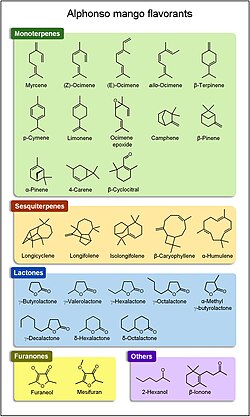
A raw mango is composed of approximately 84% water, 15% carbohydrates, and 1% protein, with negligible fat content. It is a powerhouse of micronutrients, particularly Vitamin C, folate, and copper.
Nutritional Value (per 100g)
- Energy: 60 kcal (250 kJ)
- Carbohydrates: 15 g (of which 13.7 g are sugars)
- Dietary Fiber: 1.6 g
- Vitamin C: 40% of Daily Value (DV)
- Folate: 11% DV
- Copper: 12% DV
Frequently Asked Questions
Where did mangoes originally come from?
Mangoes originated in the northeastern part of South Asia, specifically in the regions that now comprise Bangladesh, Myanmar, and northeastern India.
What is the difference between Indian and Southeast Asian mangoes?
These represent two distinct cultivar lineages. Indian types are typically monoembryonic, while Southeast Asian types are typically polyembryonic.
Are mango seeds easy to preserve?
No, mangoes have recalcitrant seeds, which means they cannot survive the drying or freezing processes typically used for seed storage.
Which country produces the most mangoes?
India is the world's largest producer of mangoes, contributing significantly to the global total of 61.1 million tonnes.
What are the primary health benefits of eating mangoes?
Mangoes are a rich source of Vitamin C, which supports the immune system, and provide moderate amounts of folate and copper.