Cherries: A Comprehensive Look at Prunus Species, Cultivation, and Nutrition
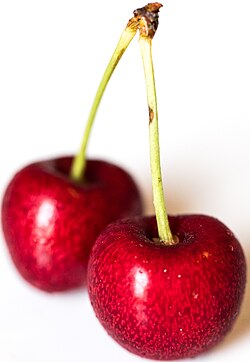
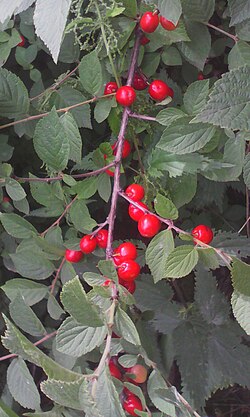
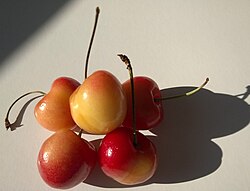
The cherry is the fruit of various plants within the genus Prunus. Botanically classified as a drupe—a fleshy fruit containing a single hard stone or pit—cherries are prized globally for their flavor, ornamental beauty, and versatile wood. While many species exist, commercial production primarily focuses on cultivars of the sweet cherry (Prunus avium) and the sour cherry (Prunus cerasus).
Beyond the fruit, the term "cherry" encompasses the tree, its blossoms, and its timber. Whether grown as ornamental cherry blossoms or harvested for food, these plants play a significant role in both agriculture and landscape design.
Key Facts
- Botanical Type: Fleshy drupe (stone fruit) from the genus Prunus.
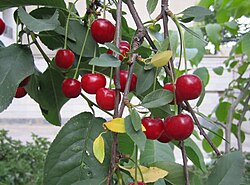
- Primary Commercial Species: Prunus avium (sweet) and Prunus cerasus (sour).
- Top Global Producer: Turkey leads world production for sweet cherries.
- Nutritional Highlight: Sour cherries contain significantly more Vitamin A and Vitamin C than sweet varieties.
- Cultivation Requirement: Most varieties require a "chilling period" of 800+ hours below 7°C to fruit.
Botany and Species Diversity
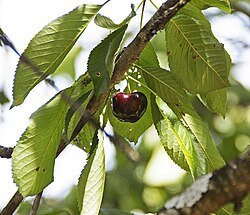
The genus Prunus is vast, encompassing a wide array of cherries categorized by their growth habits and characteristics.
True Cherries
True cherries include a diverse range of species such as the sweet cherry (Prunus avium), also known as the mazzard or gean, and the sour cherry (Prunus cerasus). Other notable species include the Japanese cherry (Prunus serrulata), the Yoshino cherry (Prunus yedoensis), and the Tibetan paperbark cherry (Prunus serrula).
Bush and Bird Cherries
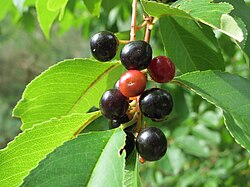
Not all cherries grow on large trees. Bush cherries, such as the sand cherry (Prunus pumila) and the purple-leaf sand cherry (Prunus cistena), maintain a smaller, shrub-like form. Additionally, bird cherries and cherry laurels, including the black cherry (Prunus serotina) and the hollyleaf cherry (Prunus ilicifolia), often feature different flowering patterns known as racemose inflorescences.
Cultivation and Global Production
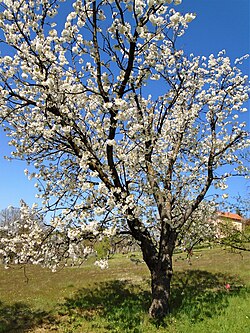
Growing cherries requires specific climatic conditions, particularly regarding temperature. Most varieties have a chilling requirement of 800 hours or more below 7°C (45°F) during winter to break dormancy and set fruit. To accommodate warmer climates, "low chill" varieties like Minnie Royal and Royal Lee (requiring 300 hours or less) have been developed, benefiting producers in regions like Southern California.
Global Production Statistics (2020)
The production of cherries is split between sweet and sour varieties, with different nations dominating each market.
| Variety | Total World Production | Leading Producer | Other Major Producers |
|---|---|---|---|
| Sweet Cherries | 2.61 million tonnes | Turkey (28%) | United States, Chile |
| Sour Cherries | 1.48 million tonnes | Russia | Turkey, Ukraine, Serbia |
Nutritional Profile
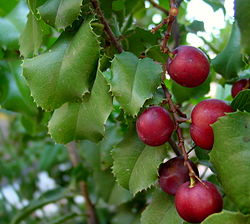
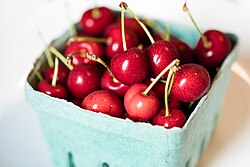
Cherries are primarily composed of water (approximately 82-86%) and carbohydrates. While sweet cherries provide moderate amounts of dietary fiber and Vitamin C, sour cherries are nutritionally denser in specific areas, offering roughly 50% more Vitamin C and 20 times more Vitamin A (specifically beta-carotene) per 100g serving.
Below is a detailed comparison of the nutritional values per 100g serving:
| Nutrient | Sweet Cherries | Sour Cherries |
|---|---|---|
| Energy | 50 kcal | 63 kcal |
| Carbohydrates | 12.2 g | 16 g |
| Sugars | 8.5 g | 12.8 g |
| Dietary Fiber | 1.6 g | 2.1 g |
| Protein | 1 g | 1.1 g |
| Vitamin C | 11% DV | 8% DV (though higher absolute content) |
| Vitamin A | 7% DV | 0% DV (higher beta-carotene) |
Other Uses of the Cherry Tree
The utility of the Prunus genus extends beyond the fruit. The blossoms are world-renowned for their ornamental value, particularly in East Asian cultures. Furthermore, cherry wood is highly valued in cabinetry and furniture making due to its durability and aesthetic appeal.

Frequently Asked Questions


What is the difference between a sweet cherry and a sour cherry?
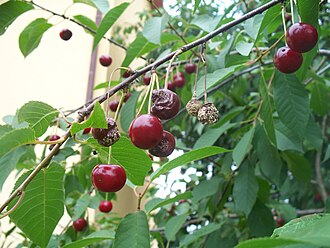
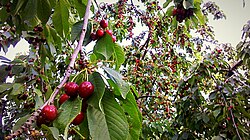
Sweet cherries (Prunus avium) are typically eaten raw as fresh fruit, while sour cherries (Prunus cerasus) are more acidic and are frequently used in cooking and preserves. Nutritionally, sour cherries contain higher levels of Vitamin A and Vitamin C.
What is a "chilling requirement" in cherry cultivation?
A chilling requirement is the number of hours a cherry tree must be exposed to temperatures below 7°C (45°F) during the winter to break its dormancy. This process is essential for the tree to blossom and produce fruit in the spring.
Which country produces the most sweet cherries?
Turkey is the world's leading producer of sweet cherries, accounting for approximately 28% of the global production as of 2020.
Are there cherries that grow as shrubs?
Yes, there are several "bush cherry" species, such as Prunus pumila (sand cherry) and Prunus humilis (Chinese plum-cherry), which grow as shrubs rather than full-sized trees.
What is a drupe?
A drupe is a type of fleshy fruit that contains a single, hard shell (the pit or stone) surrounding a seed, which is characteristic of cherries, peaches, and plums.