Maize: The Global Impact of the World's Most Produced Grain
Maize (Zea mays), commonly known as corn in North America, is a powerhouse of global agriculture. As a member of the Poaceae family, this versatile cereal grain is cultivated on every inhabited continent, serving as a primary source of food, animal feed, and industrial raw materials. From its ancient origins in Mesoamerica to the high-tech laboratories of modern genetic engineering, maize has shaped human civilizations and continues to be a cornerstone of global food security.
The plant is characterized by its distinct structure, featuring both male and female flowers on the same plant. The male flowers are located in the tassel at the top, while the female flowers develop into the ears, protected by husks and featuring long, thread-like silks that facilitate pollination.
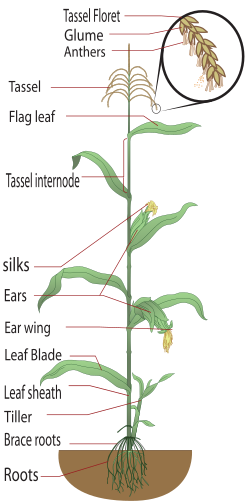
Key Facts
- Scientific Name: Zea mays L.
- Global Production: 1.16 billion tonnes produced in 2020.
- Leading Producer: The United States (31% of global total).
- Origins: Domesticated from teosinte in southern Mexico and Central America.
- Genetic Status: 92% of U.S. maize was genetically modified by 2016.
- Conservation Status: Least Concern (IUCN 3.1).
Origins and Evolutionary History
Maize did not appear in its current form spontaneously; it is the result of thousands of years of selective breeding. Its wild ancestor, teosinte, is a grass with very few kernels. Evidence of early maize pollen dates back 7,300 years to San Andres, Tabasco, on the Caribbean coast. Primitive corn was grown across southern Mexico, Central America, and northern South America approximately 7,000 years ago.
Archaeological findings further pinpoint its development: ears found in the Oaxaca Valley's Guila Naquitz Cave are roughly 6,250 years old, while those near Tehuacan, Puebla, date back 5,450 years. This transition from a wild grass to a high-yield crop was a pivotal moment in human history, supporting the rise of great Mesoamerican civilizations.
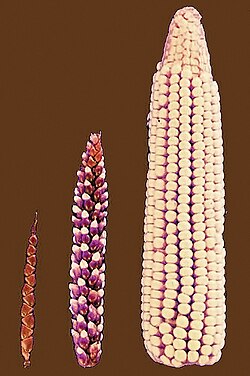
To maintain genetic health and develop new domestic strains, breeders often collect exotic varieties to increase genetic diversity.
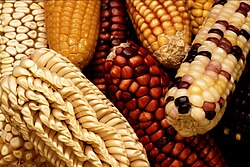
Cultural Significance and Spread
Maize was deeply integrated into the spiritual and social fabric of ancient Americas. It appears in ancient Mesoamerican relief sculptures and was central to the mythology of the Maya and Aztecs, who viewed the maize god as a symbol of life and rebirth.
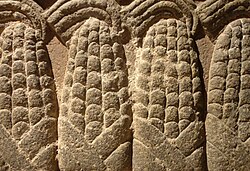
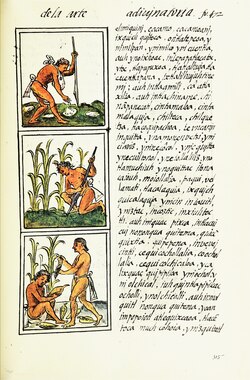
The 16th-century Florentine Codex provides detailed illustrations of how maize was cultivated and stored by the Aztecs, highlighting the sophisticated agricultural techniques used before European contact.
Modern Cultivation and Production
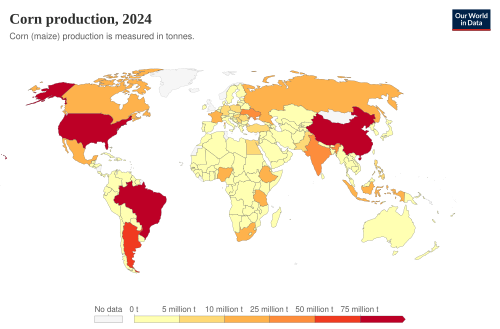
Today, maize is the most produced grain by weight worldwide. Production is dominated by a few key nations, with the United States and China leading the way. The process involves sowing seedlings, which grow into tall stalks that produce ears of corn, which are then harvested using a variety of methods ranging from industrial machinery in Iowa and Finland to hand-picking in Myanmar and Malawi.
Global Production Statistics (2020)
The following table outlines the top maize producers globally, demonstrating the concentration of production in the Americas and Asia.
| Rank | Country | Production (Million Tonnes) | Global Share (%) |
|---|---|---|---|
| 1 | United States | 360.3 | 31.0% |
| 2 | China | 260.7 | 22.43% |
| 3 | Brazil | 104.0 | 8.95% |
| 4 | Argentina | 58.4 | 5.02% |
| 5 | Ukraine | 30.3 | 2.61% |
| 6 | India | 30.2 | 2.6% |
| 7 | Mexico | 27.4 | 2.36% |
| 8 | Indonesia | 22.5 | 1.94% |
| 9 | South Africa | 15.3 | 1.32% |
| 10 | Russia | 13.9 | 1.2% |
| Total | World | 1162.4 | 100% |
Genetic Engineering and Breeding
To combat pests and increase yields, maize has been a primary target for genetic modification. Since 1997, the U.S. and Canada have grown genetically modified (GM) maize, with Bt maize (engineered to be insect-resistant) being the most prevalent. By 2016, herbicide-tolerant and insect-resistant varieties were grown in over 20 countries.
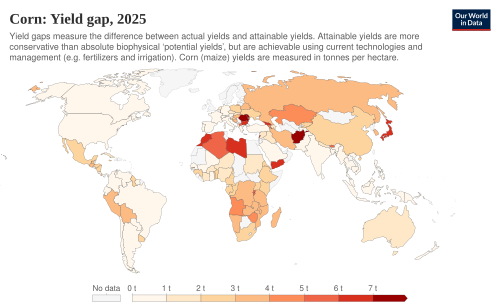
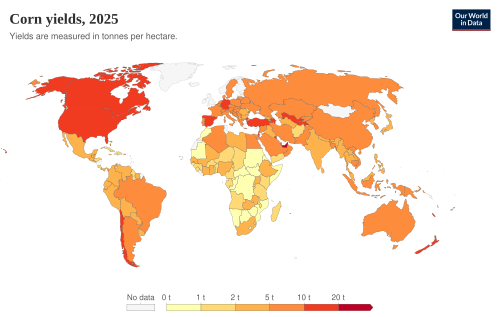
Despite these advancements, farmers still face challenges such as the yield gap—the difference between potential and actual yields—and various pests like the European corn borer.
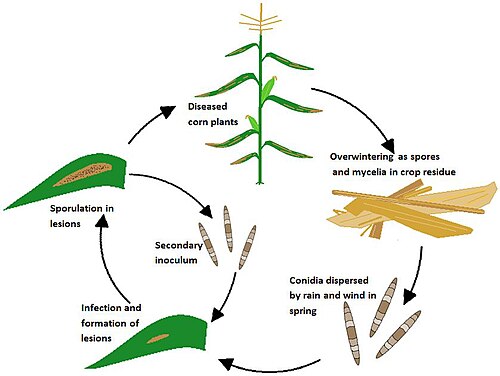
Diseases also pose a significant threat; for example, Northern corn leaf blight follows a specific disease cycle that can devastate crops if not managed.
Nutritional Value and Uses
Maize is a dense source of energy, providing carbohydrates and essential vitamins. It is used in a vast array of culinary applications, from Italian polenta to corn-on-the-cob. Beyond human consumption, it is critical for animal feed (often used as baled cornstalks) and the production of chemicals and biofuels.
Nutritional Profile (per 100g)
- Energy: 86 kcal (360 kJ)
- Carbohydrates: 18.7 g (including 5.7 g starch and 6.26 g sugars)
- Protein: 3.27 g
- Fat: 1.35 g
- Key Vitamins: Thiamine (B1), Pantothenic acid (B5), and Folate (B9)
- Key Minerals: Magnesium, Potassium, and Phosphorus
Frequently Asked Questions
What is the difference between maize and corn?
Scientifically, they are the same plant (Zea mays). "Maize" is the preferred term internationally, while "corn" is used primarily in the United States. In other English-speaking regions, "corn" historically referred to the primary local cereal grain, such as wheat in England or oats in Scotland.
What is Bt maize?
Bt maize is a genetically modified variety of maize engineered to be resistant to certain insect pests. It contains proteins from the bacterium Bacillus thuringiensis, which are toxic to specific pests but safe for human consumption.
Where did maize originally come from?
Maize was domesticated from a wild grass called teosinte in southern Mexico and Central America. Archaeological evidence suggests it was being grown in these regions approximately 7,000 years ago.
What are the primary uses of maize besides food?
Beyond human food, maize is extensively used as animal feed, a raw material for producing chemicals, and as a feedstock for biofuels.