Maiwand: A Crossroads of History and Culture in Afghanistan
Located in the heart of southern Afghanistan, Maiwand is a village of significant historical and spiritual importance. Situated within the Maywand District of Kandahar Province, it serves as a poignant reminder of the region's strategic value and its role in shaping the geopolitical landscape of Central Asia.
Geographically, Maiwand is positioned approximately 50 miles northwest of the city of Kandahar, lying along the primary road connecting Kandahar to Lashkargah. To support local agriculture in this arid region, the area is irrigated by the Helmand and Arghandab Valley Authority, a system designed to manage water resources for the surrounding farmland.
Key Facts
- Location: Maywand District, Kandahar Province, Afghanistan.
- Coordinates: 31°44′22″N 65°08′24″E.
- Historical Significance: Site of the Battle of Maiwand (July 27, 1880).
- Spiritual Heritage: Birthplace of the 13th-century Sufi saint Lal Shahbaz Qalandar.
- Infrastructure: Located on the main Kandahar–Lashkargah road.
The Battle of Maiwand
Maiwand is most widely recognized for the Battle of Maiwand, a pivotal engagement that occurred on July 27, 1880, during the Second Anglo-Afghan War. This conflict pitted the forces of the British Empire against Afghan defenders.
Under the leadership of Ayub Khan, and bolstered by the legendary courage of Malalai Anaa, the Afghan forces achieved a decisive victory over a British brigade commanded by General Burrows. The defeat was a significant blow to British military prestige in the region.
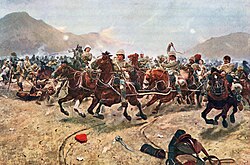
The memory of this clash extends beyond Afghanistan. In England, the British commemorated the fallen and the event with the Maiwand Lion, a sculpture located in Forbury Gardens.
Cultural and Spiritual Importance
Beyond its military history, Maiwand holds a deep spiritual resonance. It is the birthplace of Lal Shahbaz Qalandar, a revered Sufi saint from the 13th century. Sufism is a mystical branch of Islam that emphasizes the inner, spiritual dimension of the faith, and the legacy of such saints continues to influence the cultural fabric of the region.
Regional Overview
| Category | Details |
|---|---|
| Province | Kandahar |
| District | Maywand |
| Time Zone | UTC+4:30 |
| Primary Road Access | Kandahar–Lashkargah road |
| Irrigation Source | Helmand and Arghandab Valley Authority |
Frequently Asked Questions
Where exactly is Maiwand located?
Maiwand is a village in the Maywand District of Kandahar Province, Afghanistan, situated 50 miles northwest of Kandahar on the road to Lashkargah.
What happened during the Battle of Maiwand?
On July 27, 1880, during the Second Anglo-Afghan War, Afghan forces led by Ayub Khan and Malalai Anaa defeated a British brigade under the command of General Burrows.
Who is Lal Shahbaz Qalandar?
Lal Shahbaz Qalandar was a prominent 13th-century Sufi saint who was born in Maiwand.
How is the land in Maiwand irrigated?
The area is irrigated through the efforts of the Helmand and Arghandab Valley Authority.
What is the Maiwand Lion?
The Maiwand Lion is a sculpture located in Forbury Gardens in England, created by the British to commemorate the Battle of Maiwand.