Discover Magazine: A History of Science Journalism
The landscape of science communication changed significantly in the late 20th century with the arrival of publications designed to bridge the gap between academic journals and general-interest magazines. At the forefront of this movement was Discover, a publication that evolved from a strict focus on "hard science" to a broader exploration of the natural world and human psychology.
The Founding and Early Vision
Discover was the brainchild of Leon Jaroff, an editor at Time magazine. Jaroff observed a recurring pattern: whenever Time featured a science topic on its cover, sales spiked. Recognizing a deep public appetite for scientific knowledge, Jaroff began advocating for a dedicated science magazine in 1971. Despite facing resistance from management—who found the idea of "selling science" a difficult proposition—Jaroff's persistence led to the publication of the first issue in 1980.
The magazine entered a competitive market aimed at educated non-professionals. It was strategically positioned to be more accessible than Scientific American while providing more scientific depth than Popular Science. This trend sparked a wave of similar publications, including the American Association for the Advancement of Science (AAAS) launch of Science 80, as well as format changes for Science News and Science Digest.
In its early years, Discover focused on rigorous reporting and avoided speculative or fringe topics, such as extraterrestrial intelligence. The publication frequently featured essays from world-renowned scientists, including Stephen Hawking, Jared Diamond, and Stephen Jay Gould. One of its most popular early features was the "Skeptical Eye" column, which exposed pop-science scams and served as the platform for James Randi to reveal the results of Project Alpha.
Evolution and Market Adaptation
By the mid-1980s, many of Discover's early competitors had vanished. To maintain growth and attract a wider readership, the magazine shifted its editorial direction to include psychology and psychiatry. While Leon Jaroff initially disagreed with this move, arguing these were not "solid sciences," the new format—which embraced more speculative and controversial topics like the end of the universe—proved to be a commercial success.
Under the leadership of editor Gilbert Rogin, who joined in 1985, the magazine sought to expand its reach. In 1986, Time purchased the subscription lists of Science 86 and Science Digest. Despite reaching a circulation of 925,000 by May 1987 and generating $6.9 million in 1986 revenue, the magazine suffered a net loss of $10 million that year.
A History of Ownership Changes
Discover's ownership history is marked by several high-profile transitions. In 1987, Time, Inc. sold the publication to Family Media for $26 million. However, Family Media eventually collapsed, suspending all its titles in 1991. The final issue under Family Media in August 1991 boasted a circulation of 1.1 million copies.
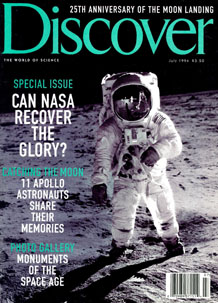
The Walt Disney Company acquired the magazine in September 1991 for its Disney Publishing Magazine Group. Disney invested heavily in the publication, doubling the content and photography budgets and moving the primary offices to Burbank, California. In 1993, Disney partnered with Ziff Marketing to launch a trade campaign repositioning Discover as an accessible, general-interest science magazine.
The magazine changed hands again in October 2005 when Bob Guccione, Jr. and private equity partners purchased it from Disney. Following a redesign in 2006, Guccione was replaced as CEO in 2007 due to philosophical differences with backers. Henry Donahue took over as CEO and later publisher, while Corey Powell became editor-in-chief in 2008.
In 2010, Discover was acquired by Kalmbach Publishing, a company specializing in hobbyist and craft publications. This transition eventually led to the magazine moving its operations from New York City to Wisconsin in 2013. After years under Kalmbach, the company sold most of its other titles to Firecrown Media on May 1, 2024, leaving Discover as its sole remaining publication. Finally, on November 8, 2024, Discover was acquired by LabX Media Group.
Key Facts
- Founded: 1980 by Leon Jaroff.
- Original Goal: To provide a middle ground between academic science journals and popular science magazines.
- Peak Circulation (Family Media era): 1.1 million copies by August 1991.
- Notable Contributors: Stephen Hawking, Stephen Jay Gould, and Jared Diamond.
- Current Owner: LabX Media Group (acquired November 2024).
| Period | Owner/Parent Company | Key Event |
|---|---|---|
| 1980–1987 | Time, Inc. | Founding and initial launch |
| 1987–1991 | Family Media | Sold for $26 million; later collapsed |
| 1991–2005 | The Walt Disney Company | Budget increase and Burbank relocation |
| 2005–2010 | Bob Guccione, Jr. & Partners | Redesign and leadership shifts |
| 2010–2024 | Kalmbach Publishing | Relocation to Wisconsin |
| 2024–Present | LabX Media Group | Acquisition in November 2024 |
Frequently Asked Questions
Who founded Discover magazine and why?
Leon Jaroff, an editor at Time magazine, founded Discover in 1980. He noticed that science-themed covers significantly boosted magazine sales and believed there was a strong public demand for a dedicated science publication.
How did Discover's editorial focus change over time?
Initially, the magazine focused strictly on "hard science" and avoided speculative topics. In the mid-1980s, it expanded to include psychology, psychiatry, and more controversial or speculative scientific theories to appeal to a broader audience.
What was the "Skeptical Eye" column?
The "Skeptical Eye" was a popular early column dedicated to uncovering pop-science scams. It was notably used by James Randi to publish the results of Project Alpha.
Which major companies have owned Discover?
Discover has been owned by Time, Inc., Family Media, The Walt Disney Company, a group led by Bob Guccione, Jr., Kalmbach Publishing, and most recently, LabX Media Group.
Where is Discover magazine based now?
After moving from New York City to Wisconsin in 2013 under Kalmbach Publishing, the magazine has recently transitioned to the ownership of LabX Media Group.