Luwian Language: The Lost Voice of Ancient Anatolia
The Luwian language was a prominent Indo-European tongue spoken in the ancient regions of Anatolia (modern-day Turkey) and Northern Syria. As a key member of the Anatolian branch of the Indo-European family, Luwian played a vital role in the administration and culture of the Hittite Empire, Arzawa, and the subsequent Neo-Hittite kingdoms. Though it became extinct around 600 BC, its legacy survives through a vast array of inscriptions and tablets.
Key Facts
- Language Family: Indo-European > Anatolian > Luwic.
- Geographic Reach: Primarily Anatolia and Northern Syria.
- Writing Systems: Utilized both Cuneiform and Anatolian hieroglyphs.
- Timeline: Attested from the early 2nd millennium BC until approximately 600 BC.
- Decipherment: Fully deciphered by Emmanuel Laroche in 1960.
The Two Faces of Luwian: Cuneiform and Hieroglyphs
Luwian is unique for having been recorded in two distinct writing systems, which often served different social and administrative purposes.
Cuneiform Luwian
Cuneiform Luwian, also known as Kizzuwatna Luwian, is primarily found in the tablet archives of Hattusa. It used the same wedge-shaped script as the Hittite language. This version of the language is seen in various dialects, including Kizzuwatna, Ištanuwa, and Empire Luwian. The latter was the vernacular of scribes in the 14th and 13th centuries BC and is often found as insertions within Hittite texts.
Hieroglyphic Luwian
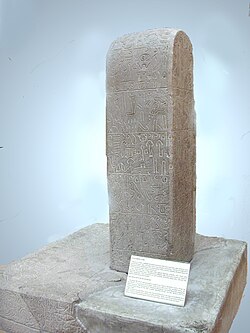
Hieroglyphic Luwian used Anatolian hieroglyphs, a script consisting of approximately 500 unique signs. These signs could function as logograms (representing a whole word), syllabograms (representing a sound), or determinatives (providing context). While the earliest seals date to the early 2nd millennium BC, a full-fledged writing system was established by the 14th century BC.
Monumental inscriptions in this script flourished during the Late Bronze Age and again during the Early Iron Age (10th to 8th centuries BC) before falling into oblivion in the early 7th century BC.
Decipherment and Rediscovery
The journey to understand Hieroglyphic Luwian was arduous. For decades, it was mistakenly referred to as "Hieroglyphic Hittite." A major breakthrough occurred in 1947 when Helmuth Theodor Bossert discovered a bilingual text in Phoenician and Hieroglyphic Luwian. This discovery eventually led to the full decipherment presented by Emmanuel Laroche in 1960, with further refinements made by scholars like David Hawkins and Anna Morpurgo Davies in 1973.
Archaeological finds have expanded our knowledge, from the relief at Fraktin reported in 1850 to the massive excavations at Karatepe in 1946. Some artifacts, such as basalt bowls found in Babylon, demonstrate the reach of the language beyond its heartland.
![Basalt bowl with engraved inscription in Luwian hieroglyphics found in Babylon, southern Iraq, in the 1880s and now in the collection of the British Museum[27]](/images/8b/b7/8bb727777abe298492fe9a3522b1662ef26638b96b5e57321f83057cb37a6838.jpg)
Linguistic Structure
Luwian possesses a complex grammatical structure typical of ancient Indo-European languages, featuring a sophisticated system of noun cases and verb conjugations.
Nouns and Adjectives
The language employed six distinct cases to indicate the role of a noun in a sentence: nominative, genitive, dative/locative, accusative, ablative/instrumental, and vocative. It distinguished between animate and inanimate nouns in its declension patterns.
Verbal System
Luwian verbs were categorized by voice (active and mediopassive) and tense (present, preterite, and imperative). The active voice endings varied based on person (1st, 2nd, 3rd) and number (singular, plural).
| Feature | Details |
|---|---|
| Language Family | Indo-European (Anatolian branch) |
| Primary Scripts | Cuneiform, Anatolian Hieroglyphs |
| Noun Cases | 6 (Nominative, Genitive, Dative/Locative, Accusative, Ablative/Instrumental, Vocative) |
| Extinction Date | c. 600 BC |
| Key Regions | Anatolia, Northern Syria |
Frequently Asked Questions
Is Luwian the same as Hittite?
No. While both are Anatolian Indo-European languages and were used within the same empire, they are distinct languages. Luwian was often the vernacular spoken by the people, while Hittite was frequently the language of the royal court and administration.
How was Hieroglyphic Luwian deciphered?
Decipherment was achieved through the study of bilingual texts, most notably a Phoenician-Luwian bilingual discovered in 1947, and the subsequent work of Emmanuel Laroche in 1960.
What are logograms in the Luwian script?
Logograms are signs that represent an entire word or concept rather than a sound. For example, a sign depicting a foot could be read as the word for "foot" (PES) when used logographically.
Where can Luwian inscriptions be found today?
Significant inscriptions are found at sites like Karatepe and Karkamiš, and artifacts are held in institutions such as the Museum of Anatolian Civilizations in Ankara and the British Museum.