Louis Agassiz: Pioneer of Glaciology and Natural History
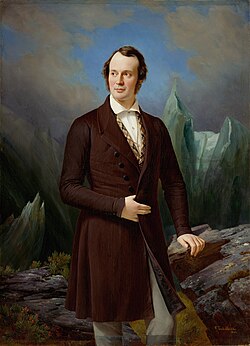
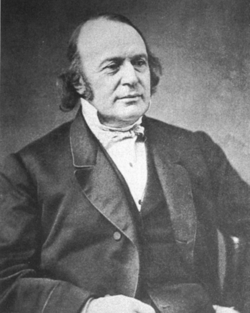
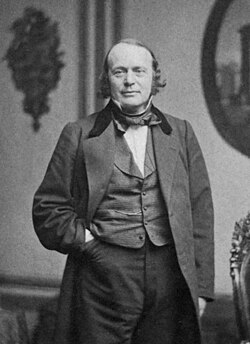
Jean Louis Rodolphe Agassiz (1807–1873) was a Swiss-born American biologist and geologist whose work fundamentally reshaped our understanding of Earth's natural history. From his early obsession with fossil fish to his groundbreaking theories on global glaciation, Agassiz became one of the most influential and celebrated scientists of the 19th century.
His career spanned two continents and multiple disciplines, including paleontology (the study of fossils), glaciology (the study of glaciers), and zoology. While his scientific contributions were immense, his legacy is complex, marked by both academic brilliance and the promotion of controversial theories on human origins.
Key Facts
- Primary Achievement: Formulated the theory of the Ice Age, proposing that Earth had undergone extensive past glaciations.
- Academic Leadership: Founded the Museum of Comparative Zoology at Harvard University in 1859.
- Major Work: Published the five-volume Recherches sur les poissons fossiles (Research on Fossil Fish) between 1833 and 1843.
- Education: Earned his PhD from the University of Erlangen and studied at Ludwig-Maximilians-Universität München.
- Controversy: Promoted polygenism, a theory suggesting that human races have different origins, which contributed to scientific racism.
Early Scientific Career and Fossil Research
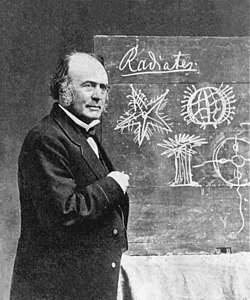
Agassiz's early career was defined by an intense enthusiasm for the natural world. He began by describing Brazilian fish, a project completed in 1829, before shifting his focus to the freshwater fish of Central Europe. In 1832, he was appointed professor of natural history at the University of Neuchâtel, a role he chose specifically because it allowed him the leisure for private study.
His most significant early contribution was the study of fossil fish found in the slates of Glarus and the limestones of Monte Bolca. This research culminated in the publication of Recherches sur les poissons fossiles, a magnificently illustrated work that established his international reputation. During this period, he received mentorship and encouragement from the renowned naturalist Georges Cuvier in Paris.
The Discovery of the Ice Age
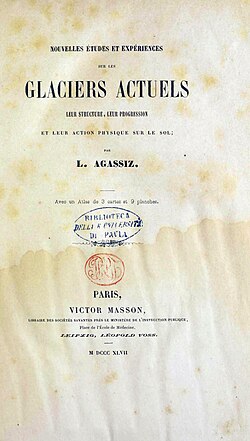
By 1836, Agassiz turned his attention to the Swiss glaciers. At a time when many scientists were unaware of the scale of past glacial movements, Agassiz proposed a revolutionary hypothesis: that the Earth had once been gripped by a massive Ice Age.
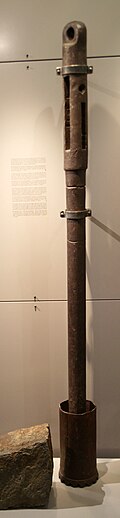
He presented this theory on July 24, 1837, during a speech to the Swiss Academy of Natural Sciences. To prove his claims, he spent years traveling the Alps, searching for physical evidence of previous glacial movements. His groundbreaking research on the Unteraargletscher between 1840 and 1845 provided the empirical data needed to support his theory.
Life and Influence in the United States
![After the 1906 San Francisco earthquake toppled Agassiz's statue from the façade of Stanford's zoology building, Stanford President David Starr Jordan wrote, "Somebody—Dr. Angell, perhaps—remarked that 'Agassiz was great in the abstract but not in the concrete.'"[75]](/images/9b/88/9b8808d295bfbb35143852052d1886fb3b173fe9ba788cfe920758b12ac42aca.jpg)
Agassiz moved to the United States in the mid-19th century, where he became a central figure in American science. In 1847, he became the head of the Lawrence Scientific School at Harvard University, where he served as a professor of zoology and geology. In 1859, he founded the Museum of Comparative Zoology, serving as its first director until his death.
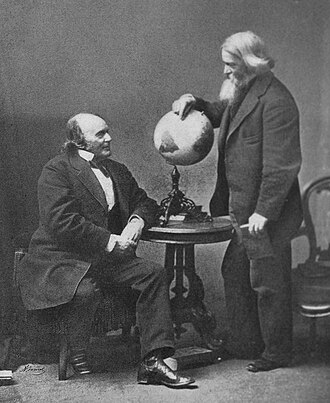
In America, Agassiz was not only a researcher but a public intellectual. He delivered a series of prestigious Lowell Institute lectures on topics ranging from ichthyology (the study of fish) to deep-sea dredging. He was highly regarded by the public and his peers, including the poet Henry Wadsworth Longfellow.
Opposition to Darwinism
Despite his scientific prowess, Agassiz was a staunch critic of Charles Darwin's theory of evolution. He believed in a divine plan of creation, arguing that God created new life forms after each ice age. This perspective made him a popular figure among those who sought to reconcile science with religious faith.
Legacy and Controversies
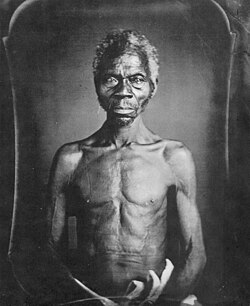
Agassiz's legacy is a mixture of scientific triumph and social failure. While he is honored through numerous biological tributes—with species of fish, crabs, and turtles named after him—his views on human biology are now widely condemned.
Agassiz was a proponent of polygenism, the belief that different human races evolved from separate origins. This ideology provided a scientific veneer for racism and inequality. In recent years, this has led to the renaming of institutions; for example, the Agassiz Elementary School in Cambridge, Massachusetts, was renamed the Baldwin Neighborhood to honor Maria Louise Baldwin and distance the community from Agassiz's history of scientific racism.
| Category | Details |
|---|---|
| Born/Died | May 28, 1807 – December 14, 1873 |
| Nationality | Swiss-born American |
| Key Theories | Ice Age, Polygenism |
| Major Institutions | University of Neuchâtel, Harvard, Cornell |
| Notable Award | Wollaston Medal (1836) |
Frequently Asked Questions
What was Louis Agassiz's most important scientific contribution?
His most significant contribution was the formulation of the Ice Age theory, which proposed that Earth had experienced periods of extensive glaciation that shaped the planet's current geography.
Did Louis Agassiz believe in evolution?
No, Agassiz critically examined and rejected Darwin's theory of evolution. He believed that species were created by God in a specific plan, with new life appearing after each glacial period.
Why is Agassiz's legacy considered controversial today?
Agassiz promoted polygenism, the theory that human races have different origins. This work is now recognized as a foundation for scientific racism, leading many modern institutions to remove his name from their buildings.
What is the Museum of Comparative Zoology?
It is a research and teaching museum at Harvard University founded by Louis Agassiz in 1859 to facilitate the study of zoology and the natural history of animals.
How did Agassiz contribute to the study of fish?
He spent much of his early career classifying fish, producing the definitive Recherches sur les poissons fossiles and the History of the Freshwater Fish of Central Europe.