Life Magazine: A History of Photojournalism and Visual Storytelling
For decades, Life stood as the definitive visual record of American and global experience. Launched with the revolutionary idea that images could drive a narrative rather than simply illustrate text, the magazine transformed how the public consumed news and culture. From the battlefields of World War II to the heights of the Apollo moon missions, Life captured the 20th century in vivid detail.
The Birth of a Visual Giant
In 1936, publisher Henry Luce purchased a humor magazine named Life for US$ 92,000 (approximately $2.13 million in 2025) primarily to acquire the name for his company, Time Inc. Luce envisioned a new kind of publication—one where photography took center stage. On November 23, 1936, the new Life debuted with founding editors John Shaw Billings and Daniel Longwell.
The first issue, priced at ten cents ($2.32 in 2025), featured five pages of photography by Alfred Eisenstaedt. The format was an immediate sensation; by condensing text into captions for 50 pages of high-quality photographs printed on coated paper, Life saw its circulation explode from 380,000 in the first issue to over one million copies per week within four months.
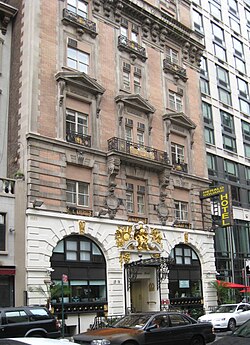
This rapid growth allowed Life to challenge The Saturday Evening Post as the country's leading weekly and inspired competitors like Look (1937–1971). To support its expanding operations, Luce moved the magazine into a Beaux-Arts building at 19 West 31st Street before eventually relocating editorial offices to 9 Rockefeller Plaza.
War, Art, and Global Influence
During World War II, Life became an essential tool for documenting the conflict. The magazine employed a diverse team of correspondents, including women such as Margaret Bourke-White, Mary Welsh Hemingway, and Jacqueline Saix. Life also played a critical role in supporting military artists; when government funding for field artists was cut, Life privatized these programs, hiring artists to document the war and later donating their work to the Department of War.
The magazine's relationship with legendary photographer Robert Capa was particularly storied. Capa covered the D-Day invasion in 1944, though many of his images were blurry. While Life attributed this to Capa's shaking hands, the photographer blamed the darkroom, later titling his memoir Slightly Out of Focus.
Cultural Milestones and Literary Ties
Beyond news, Life earned prestige by collaborating with world-class authors. It published Ernest Hemingway's The Old Man and the Sea in 1952 and later handled the rights to President Harry S. Truman's memoirs. The magazine's influence extended globally with the launch of Life en español in 1953, which reached over 300,000 readers in Latin America.
The magazine's archive also became a cornerstone for art history. Curator Edward Steichen utilized 111 images from Life's 3.5 million-photo archive for his 1955 exhibition, The Family of Man, which was viewed by nine million people worldwide.
The Mid-Century Shift and the Television Era
As television gained popularity in the late 1950s, Life faced a decline in readership. The magazine attempted to adapt by lowering prices and shifting focus toward high-impact color photography of celebrities, the Kennedy family, and the Vietnam War. Notable contributions during this era included the work of Gordon Parks and a groundbreaking 1964 report on homosexuality in America, which was the first of its kind in a mainstream national publication.
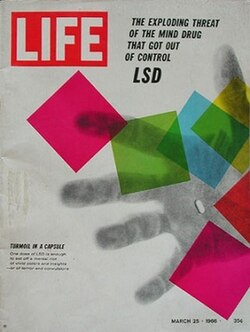
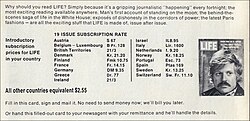
Despite winning a National Magazine Award in 1967, financial pressures mounted. Rising costs and a heavy reliance on mail subscribers (96% of circulation) over more profitable newsstand sales led to a series of circulation cuts. A loss of credibility following the publication of a fraudulent Howard Hughes autobiography by Clifford Irving further damaged the brand.
The End of the Weekly Era and Digital Evolution
The original weekly run of Life ended on December 29, 1972. However, the brand persisted through various iterations:
- Special Reports (1972–1978): Ten themed issues that sold up to 1 million copies each.
- General Interest Revival (1978–2000): A return to regular publication with a circulation of around 1.5 million.
- Digital Presence: The launch of Life.com in 2009 in partnership with Getty Images.
The final regular issue in May 2000 brought the magazine's history full circle. The first issue in 1936 had featured a baby named George Story under the headline "Life Begins"; the final issue, titled "A Life Ends," documented Story's passing from heart failure shortly before the closure.
Life in the 21st Century
Life was revived in 2004 as a free weekly newspaper supplement distributed via major papers like The Washington Post and Los Angeles Times, but this version folded in April 2007. Today, the magazine's legacy lives on through the Google Cultural Institute, which hosts an archive of over six million photographs, and special commemorative editions published for events like the Nobel Prize.
Key Facts
- Founded: November 23, 1936, by Henry Luce.
- Original Price: 10 cents per issue.
- Peak Influence: 1936 through the mid-1960s.
- Archive Size: Over 6 million photographs now accessible via Google.
- Notable Firsts: First mainstream national report on gay issues (June 1964).
- Final Weekly Issue: December 29, 1972 (original run); May 2000 (second run).
| Era | Format | Key Focus | Status |
|---|---|---|---|
| 1936–1972 | Weekly Magazine | Photojournalism & World Events | Original Run |
| 1972–1978 | Special Reports | Themed Collections | Intermittent |
| 1978–2000 | General Interest | News Features | Second Run |
| 2004–2007 | Newspaper Supplement | Weekend Features | Free Distribution |
| Present | Digital/Special Editions | Archival & Commemorative | Active Archive |
Frequently Asked Questions
Who founded Life magazine?
Life was founded by publisher Henry Luce, who launched the photo-centric version of the magazine on November 23, 1936, after purchasing the name from a humor magazine.
Why did Life magazine stop publishing?
The magazine faced several closures due to the rise of television, shrinking advertising revenues, and rising production costs. The final 2000 closure was intended to divert resources to other Time Inc. launches like Real Simple.
What was the "Dewey Defeats Truman" mistake?
On November 1, 1948, Life printed a full-page photo of Thomas E. Dewey with a caption stating he was the "next President," only for Harry S. Truman to win the election the following day.
How can I access Life magazine's photos today?
A vast archive of over six million photographs is hosted by Google as part of a joint effort, accessible through the Google Cultural Institute and Google image search.
Did Life magazine cover the moon landing?
Yes, Life provided extensive coverage of the Apollo program and the U.S. mission to the Moon in 1969.