Lebanese People: Demographics, Diaspora, and Cultural Identity
The Lebanese people possess a rich and complex identity shaped by their location in the Levant—the eastern Mediterranean region—and a history of significant global migration. With a domestic population of approximately 4 million, the reach of the Lebanese identity extends far beyond the borders of Lebanon, creating one of the most expansive diasporas in the world.
This global presence is a testament to the resilience and entrepreneurial spirit of the Lebanese people, who have established vibrant communities across South America, Africa, and the West, while maintaining deep ties to their ancestral homeland.
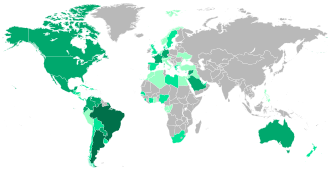
Key Facts
- Domestic Population: Approximately 4 million people.
- Global Diaspora: Estimated between 4 million and 14 million people worldwide.
- Primary Languages: Vernacular Lebanese Arabic and Cypriot Maronite Arabic, with French, English, Spanish, and Portuguese common in the diaspora.
- Largest Diaspora Hub: Brazil, with estimates ranging from 1 million to 7 million people.
- Related Ethnic Groups: Syrians, Palestinians, and Jordanians.
The Lebanese Diaspora: A Global Footprint
The Lebanese diaspora refers to the millions of people of Lebanese descent living outside of Lebanon. This migration has resulted in significant populations in several key regions, particularly in the Americas and West Africa.
The Americas
South America hosts some of the largest Lebanese communities globally. Brazil leads this trend with a population estimated between 1 million and 7 million, followed by Argentina (1.2 to 1.5 million) and Colombia (ranging from 125,000 to 3.2 million). In North America, the United States is home to over 440,000 Lebanese descendants, while Canada hosts approximately 250,000.
Africa and the Middle East
Lebanese migration has also left a mark on Africa, notably in the Ivory Coast, where estimates range from tens of thousands up to 300,000 people. Other notable populations exist in Senegal (50,000) and the Democratic Republic of the Congo. Within the Middle East, Saudi Arabia and the United Arab Emirates host significant Lebanese communities, often driven by professional and economic opportunities.
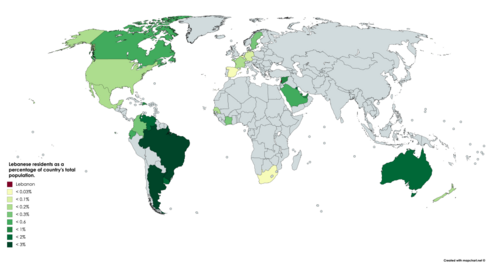
Demographics and Social Composition
Lebanese society is characterized by a diverse tapestry of religious and ethnic identities. This diversity is central to the country's social fabric and political structure.
Religious Diversity
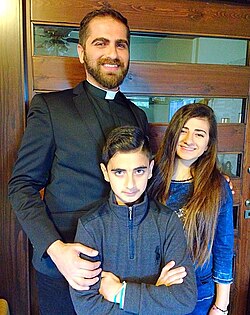
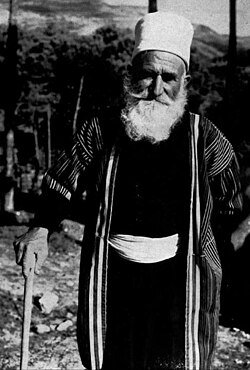
The population is divided among several major religious groups, including Christians (such as Maronites) and Muslims (including Sunni and Shia). The demographic balance has shifted over the decades, reflecting the complex internal and external pressures facing the nation.


Language and Communication
While Vernacular Lebanese Arabic is the primary spoken language, the country is highly multilingual. Due to historical ties and educational systems, French and English are widely spoken. In the diaspora, Lebanese people have seamlessly integrated into their host countries, becoming fluent in Spanish, Portuguese, and other local languages while often preserving their native Arabic at home.
Population Distribution Summary
The following table provides a snapshot of the estimated Lebanese population in various countries, highlighting the scale of the global diaspora.
| Country/Region | Estimated Population |
|---|---|
| Lebanon (Domestic) | 4,000,000 |
| Brazil | 1,000,000 – 7,000,000 |
| Argentina | 1,200,000 – 1,500,000 |
| Colombia | 125,000 – 3,200,000 |
| United States | 440,279 |
| France | 300,000 |
| Canada | 250,000 |
| Australia | 248,434 |
| Ivory Coast | 100,000 – 300,000 |
Frequently Asked Questions
How large is the Lebanese diaspora compared to the domestic population?
The domestic population of Lebanon is approximately 4 million, while the diaspora is estimated to be significantly larger, ranging from 4 million to as many as 14 million people worldwide.
Which country has the largest Lebanese population outside of Lebanon?
Brazil has the largest Lebanese community, with estimates ranging from 1 million to 7 million people.
What languages are spoken by Lebanese people?
In Lebanon, the primary spoken language is Vernacular Lebanese Arabic, along with Cypriot Maronite Arabic. In the diaspora, French, English, Spanish, and Portuguese are commonly spoken.
Which ethnic groups are most closely related to the Lebanese?
The Lebanese are closely related to other populations in the Levant, specifically Syrians, Palestinians, and Jordanians.
Where else in Africa is there a significant Lebanese presence?
Beyond the Ivory Coast, there are notable Lebanese communities in Senegal (approximately 50,000), Gabon, and the Democratic Republic of the Congo.