Lead-DBS: Open-Source Software for Deep Brain Stimulation Modeling
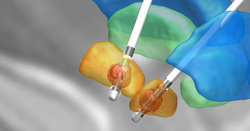
Deep Brain Stimulation (DBS) is a sophisticated neurosurgical procedure used to treat various neurological conditions. To optimize the efficacy of this treatment, clinicians and researchers require precise tools to visualize and model the placement of electrodes within the brain. Lead-DBS serves as a comprehensive open-source toolbox designed specifically for the reconstruction and modeling of these electrodes using pre- and postoperative MRI and CT imaging.
Key Facts
- Purpose: Reconstruction and modeling of Deep Brain Stimulation electrodes.
- Developer: Originally created by Andreas Horn at Charité Berlin; currently developed by a global community including Mass General Brigham.
- Availability: Open-source under the GNU General Public License (GPL).
- Compatibility: Cross-platform support for Windows, OS X, and Linux.
- Impact: Over 65,000 downloads and cited in more than 500 scientific publications.
Technical Architecture and Integration
Lead-DBS is designed for flexibility and high performance. It is available as a MATLAB toolbox or as a standalone binary. To ensure computational efficiency, the software integrates a miniforge Python environment and utilizes code modules compiled from Fortran and C.
The toolbox does not operate in isolation; it leverages several established open-source neuroimaging tools to enhance its capabilities. These include SPM, FSL, 3DSlicer, OSS-DBS, FreeSurfer, FieldTrip, and Advanced Normalization tools.
Evolution and Specialized Modules
Since its initial development in 2012 and public release in 2014, Lead-DBS has expanded from a basic reconstruction tool into a multifaceted suite. The project is supported by an active user base from prestigious institutions, including Harvard Medical School (Mass General Brigham), the University of Cologne, the University of Luxembourg, and the University of Melbourne.
To address diverse research and clinical needs, several specialized modules have been introduced:
- Lead Group: Designed for group analysis.
- Lead Connectome and Lead Mapper: Tools dedicated to connectome processing (the mapping of neural connections in the brain).
- Lead-OR: A module specifically for intraoperative use.
- OSS-DBS Interface: Provides a direct link to the OSS-DBS biophysical modeling toolbox.
The software's progression is documented through major version releases, with scientific articles detailing versions 2 and 3 published in 2018 and 2023, respectively.
Software Specifications Summary
| Feature | Details | ||
|---|---|---|---|
| Original Author | Andreas Horn | Developer | Mass General Brigham |
| Operating Systems | Windows, OS X, Linux | License | GPL |
| Core Languages | MATLAB, Python, Fortran, C | Website | www.lead-dbs.org |
| Funding Sources | German Research Foundation (Emmy Noether award), NIMH (R01 grant) | Type | Neuroimaging data analysis |
Frequently Asked Questions
What is the primary use of Lead-DBS?
Lead-DBS is used to reconstruct the position of Deep Brain Stimulation electrodes and model their effects based on MRI and CT imaging data.
Is Lead-DBS free to use?
Yes, it is an open-source project available for research use under the GNU General Public License (GPL).
Which operating systems are supported?
The software is cross-platform and can be run on Windows, OS X, and Linux.
Does Lead-DBS require MATLAB?
While it is available as a MATLAB toolbox, it is also provided as a standalone binary for users who do not have MATLAB.
How has the software been validated in the scientific community?
The software has been downloaded over 65,000 times and has been utilized in more than 500 scientific publications.