Late Bronze Age Collapse: The Fall of Ancient Civilizations
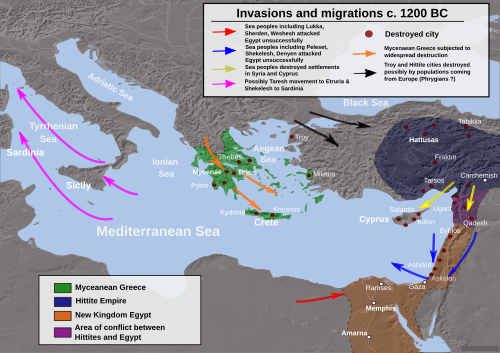
Between the late 13th and early 12th century BC, the Mediterranean basin experienced a period of profound societal upheaval known as the Late Bronze Age collapse. This era was marked by a sudden and often violent decline of several powerful civilizations across the Eastern Mediterranean and Near East, including those in Egypt, Anatolia, the Aegean, eastern Libya, and the Balkans.
The collapse dismantled the sophisticated palace economy—a centralized system of administration and redistribution—that had defined the region. In Mycenaean Greece and Anatolia, this disintegration led to a sharp material decline, transitioning these regions into the isolated village cultures of the Greek Dark Ages (c. 1200 BC to c. 800 BC), which eventually paved the way for the Archaic Age.
Key Facts
- Timeline: Occurred primarily during the late 13th to early 12th century BC.
- Major Casualties: The Hittite Empire collapsed entirely; Mycenaean palace cultures disintegrated.
- Survivors: The New Kingdom of Egypt and the Middle Assyrian Empire survived, though in weakened states.
- Technological Shift: The collapse preceded the transition from bronze to iron metallurgy, marking the start of the Iron Age.
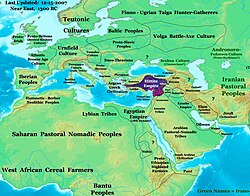
- Geographic Scope: Affected the Aegean, Anatolia, the Levant, Egypt, and the Balkans.
The Impact on Major Powers
The Hittites and the Aegean
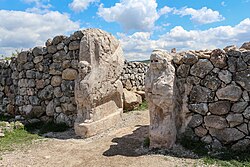
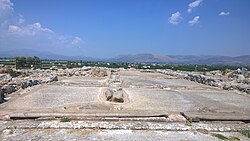
The Hittite Empire, which once spanned Anatolia and the Levant, vanished as a major power. Similarly, the grand palaces of the Aegean were destroyed, leaving behind ruins that would not be matched in scale for centuries.
Egypt and Mesopotamia
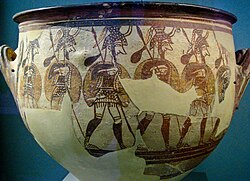
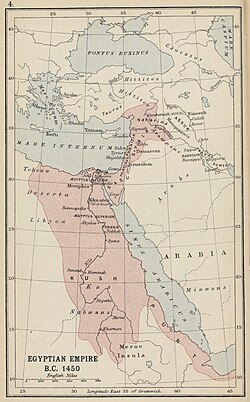
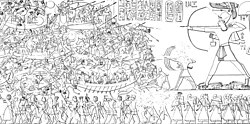
While Egypt's New Kingdom survived, it faced significant challenges. Egyptian records from the reign of Horemheb and Ramesses II highlight conflicts with wandering groups known as the Shasu. Later, the reign of Ramesses III was marked by battles against the Sea Peoples—mysterious seafaring raiders who contributed to the regional instability.
In Mesopotamia, the Middle Assyrian Empire remained remarkably resilient. Under leaders like Tiglath-Pileser I (r. 1114–1076 BC), Assyria repelled attacks from the Mushki and Arameans, maintaining control over vast territories from the Caucasus to the Arabian Peninsula.
Debating the Causes of Collapse
Historians and archaeologists have proposed various theories to explain why these interconnected societies fell. Many early theories focused on violent destruction, but modern scholarship suggests a more complex, multi-causal scenario.
Environmental and Natural Factors
- Climate Change: Evidence suggests a diversion of Atlantic storms led to severe droughts in the Eastern Mediterranean. Tree ring data from Anatolia indicates a critical dry period between 1198 and 1196 BC.
- Volcanic Activity: Some scholars point to the Hekla 3 eruption in Iceland (dated variously between 1159 and 929 BC), which may have caused a volcanic winter and subsequent famines.
- Disease: Pandemics are cited as potential catalysts for population decline and societal instability.
Human and Technological Factors
- Invasions: The Sea Peoples are often credited with the violent sacking of coastal cities, such as Ugarit.
- Military Evolution: Changes in strategy and technology may have led to the decline of chariot warfare, which had been the backbone of Bronze Age military power.
- Economic Shifts: The rise of ironworking disrupted the existing bronze-based economic networks.
Reevaluating the Scale of Destruction
Recent scholarship, including work by Jesse Millek, challenges the notion of a universal, sudden collapse. Analysis of 148 sites with recorded destruction events reveals that approximately 61% were either misdated or lacked sufficient evidence. In the southern Levant, many cities like Ashkelon and Ashdod show no signs of being burned around 1200 BC.
Furthermore, evidence suggests that international trade did not cease entirely. Trade in tin—essential for bronze—continued from distant sources like Afghanistan or Kazakhstan, and lead from Sardinia continued to reach the southern Levant during the early Iron Age.
| Region/Empire | Outcome | Key Characteristic |
|---|---|---|
| Mycenaean Greece | Collapse | Transition to Greek Dark Ages; loss of literacy. |
| Hittite Empire | Collapse | Total disintegration of central authority in Anatolia. |
| New Kingdom Egypt | Survived (Weakened) | Fought Sea Peoples; lost hegemony over the Levant. |
| Middle Assyrian Empire | Survived (Intact) | Repelled Mushki and Aramean attacks. |
| Phoenicians | Growth | Increased autonomy as larger empires waned. |
Frequently Asked Questions
Who were the Sea Peoples?
The Sea Peoples were a confederation of seafaring raiders who attacked the coasts of the Eastern Mediterranean during the late 13th and early 12th centuries BC, contributing to the collapse of several civilizations and fighting major battles with Egypt.
Did the entire Mediterranean collapse at once?
No. While the collapse was widespread, it was not uniform. Some empires, like the Middle Assyrian Empire, remained intact, and some cities in the southern Levant show little to no evidence of destruction during this period.
What was the "palace economy"?
The palace economy was a centralized economic system where the royal palace controlled the production, storage, and redistribution of goods and resources within the state.
How did the collapse lead to the Iron Age?
The disruption of traditional trade routes and the collapse of the bronze-dependent palace systems encouraged the development and adoption of ironworking, which used more locally available materials.
Was drought a primary cause of the collapse?
Many scholars believe so. Paleoclimate data, including tree rings and water level drops in the Dead Sea, suggest a persistent and severe drought that would have devastated agriculture and triggered societal instability.