Lanús: A Comprehensive History of the Buenos Aires District
Located in the heart of the Buenos Aires province, the Partido de Lanús is a region defined by its deep historical roots, ranging from indigenous settlements to its evolution into a modern urban center. Its journey from a colonial outpost to an autonomous district reflects the broader socio-political transformations of Argentina.
Indigenous Roots and Early Inhabitants
Long before the Spanish conquest, the land was home to diverse indigenous groups. The Pampas, nomadic people of the vast plains, relied on hunting and gathering, utilizing bows, arrows, and bolls for survival and warfare.
In contrast, the Guarani—specifically the "Guaraníes de las Islas" who inhabited the Plata River estuary—led a more sedentary life. These skilled potters and weavers navigated the waters in large canoes and defended themselves with macanas (wooden clubs), bows, and arrows. Archaeological evidence, particularly ceramics, has been found near the Puente de la Noria and the coast of the Plata River, confirming their presence in what is now the Partido de Avellaneda and surrounding areas.
The Colonial Era and Early Settlements
Historian S.J. Guillermo Furlong suggests that Lanús may have been the site of the oldest settlement in the future Viceroyalty of the Río de la Plata. The first founding of Buenos Aires occurred in 1536 near the Paso de Burgos, close to the current Uriburu Bridge, though this initial attempt was short-lived. The city was permanently established in 1580 by Juan de Garay.
To encourage permanent colonization, Juan de Garay distributed land under the condition that residents live on the property for five years. The territory of modern Lanús was originally divided among the Magdalena, La Matanza, and Riachuelo payments. Early landowners, such as Juan Torres de Vera y Aragón (owner of the Estancia del Adelantado), failed to meet the residency requirements, leading to the redistribution of land to settlers like Pedro de Jerez, Giovanna Gomez, and Juan Ruíz.
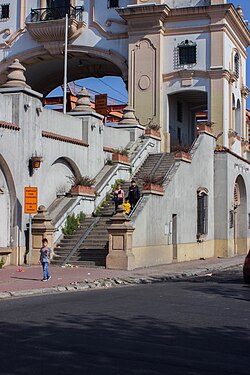
Growth During the Independence Era
By 1856, the district had grown to an estimated population of 5,099. While 2,444 were criollos (people of Spanish descent born in the Americas), the region was a melting pot of European immigrants, including 819 French, 528 Spanish, 496 Italians, 247 English, and 217 Germans.
The local economy was driven by farms and thirteen saladeros—establishments dedicated to the salting and processing of meat. The commercial landscape was vibrant, featuring 96 small general stores, 22 larger stores, 13 taverns, and various butchers and bakeries. Housing varied from 1,217 simple huts with zinc or thatched roofs to 19 two-story houses. Education and faith were supported by six schools and two chapels: Nuestra Señora del Rosario (the Italian chapel) in Barracas al Sur and Nuestra Señora del Tránsito in Lomas.
The Path to Autonomy and Modern Identity
For years, local residents sought independence from the Partido de Avellaneda. This movement was led by the "Unión Vecinal Autonomista," who adopted the number 111 as their symbol. Their efforts culminated on January 1, 1945, when the district officially became independent, with Juan Ramón Piñeiro serving as the first municipal commissioner.
The district's borders expanded on June 13, 1945, with the annexation of Remedios de Escalada, an area renowned for its railway workshops.
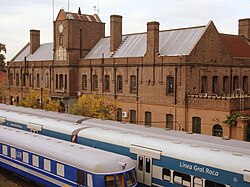
Originally named "4 de junio," the district was renamed "Lanús" on October 19, 1955, by the military government known as the "Revolución Libertadora."
Cultural and Social Infrastructure
Lanús has invested heavily in its intellectual and social welfare. The local press began with "La Comuna" in 1910, followed by the Juan Bautista Alberdi library in 1919 (now housing 22,000 volumes) and the municipal library in 1949 (housing 11,000 items).
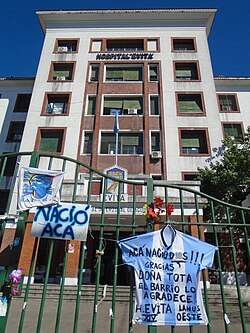
Healthcare is anchored by the Hospital Interzonal General de Agudos Evita, founded on August 30, 1952, alongside high-complexity private clinics such as Modelo and Estrada.
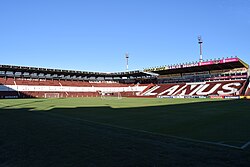
The district also honors its history and heroes, such as the "Plazoleta Héroes de Malvinas" in Gerli, inaugurated in 1986. In the realm of sports, the region is represented by the Club Atlético Lanús.
Political Leadership
Following the return to democracy in 1983, Manuel Quindimil served as mayor (having previously served from 1973 to 1976) until 2007, when he was succeeded by Darío Díaz Pérez. The current mayor of the district is Néstor Grindetti.
Key Facts
- Independence Date: January 1, 1945.
- Original Name: 4 de junio.
- Indigenous Heritage: Inhabited by the nomadic Pampas and sedentary Guarani.
- Economic Roots: Historically driven by saladeros (meat processing) and agriculture.
- Key Institutions: Hospital Evita and the Juan Bautista Alberdi library.
- Administrative Symbol: The number 111 was used by the autonomy movement.
| Period/Event | Key Detail | Significance |
|---|---|---|
| Pre-Colonial | Pampas and Guarani tribes | Established early human settlement |
| 1536 | First founding of Buenos Aires | Potential site of oldest colonial settlement |
| 1856 | Population of 5,099 | High European immigrant diversity |
| 1945 | Separation from Avellaneda | Achieved municipal autonomy |
| 1955 | Renamed to "Lanús" | Established current official name |
Frequently Asked Questions
Who were the original inhabitants of Lanús?
The region was inhabited by the nomadic Pampas, who hunted and gathered on the plains, and the sedentary Guarani, who were skilled in pottery, weaving, and navigation.
When did Lanús become an independent district?
Lanús officially separated from the Partido de Avellaneda on January 1, 1945, following a campaign by the Unión Vecinal Autonomista.
What was the district called before it was named Lanús?
Until October 19, 1955, the district was known as "4 de junio."
What was the primary economy of the region in the mid-19th century?
The economy was primarily based on farming and the operation of thirteen saladeros, which were facilities used for salting and processing meat.
Which famous healthcare institution is located in Lanús?
The Hospital Interzonal General de Agudos Evita, founded in 1952, is a prominent healthcare provider in the district and is notably the birthplace of Diego Maradona.