Landlocked Countries: Geography, Economics, and Global Impact
A landlocked country is a sovereign state that possesses no direct coastline on the world ocean. This geographic characteristic is more than just a map detail; it fundamentally shapes a nation's economic trajectory, political relations, and strategic priorities. As of 2026, there are 44 landlocked countries globally, along with three de facto states—entities that function as independent states but lack widespread international recognition—namely South Ossetia, Kosovo, and Transnistria.
The scale and distribution of these nations vary wildly. Kazakhstan holds the title of the world's largest landlocked country by area, while Ethiopia is the most populous. For those seeking the most isolated interior, Kyrgyzstan is the farthest landlocked country from any ocean.
![Two doubly landlocked countries[a] 42 singly landlocked countries](/images/e6/c2/e6c29db556e67c2adca221fb341c2070694b1ddfee6328ed5fb61cbf7f11c7ad.webp)
Key Facts
- Total Count: 44 recognized landlocked countries and 3 de facto states.
- Doubly Landlocked: Only two countries, Liechtenstein and Uzbekistan, are surrounded entirely by other landlocked nations.
- Economic Status: 32 of the 44 landlocked countries are classified as Landlocked Developing Countries (LLDCs) by the United Nations.
- Human Development: Nine of the twelve countries with the lowest Human Development Index (HDI) rankings are landlocked.
- Regional Distribution: Africa and Europe contain the highest numbers of landlocked nations.
The Economic and Political Burden of Isolation
Generally, lacking access to international waters creates significant political and economic disadvantages. Ocean access typically facilitates cheaper and more efficient trade; without it, nations must rely on the infrastructure and goodwill of their neighbors to move goods to global markets.
The severity of these disadvantages often depends on several factors, including the level of national development, the freedom of trade in neighboring states, and shared languages. For example, several European nations—such as Switzerland, Austria, Luxembourg, and Andorra—remain highly affluent despite being landlocked. Many of these nations, with the exception of Luxembourg (a NATO founding member), maintain a policy of political neutrality.
Conversely, for many LLDCs in Africa, Asia, and South America, the lack of sea access aggravates poverty and inequality. To combat this, international efforts like the United Nations Sustainable Development Goal 10 aim to substantially reduce these inequalities by 2030.
Historical Shifts and Territorial Changes
The number of landlocked countries is not static. In 1990, there were only 30. The landscape shifted dramatically following the dissolution of the Soviet Union, Czechoslovakia, and Yugoslavia, as well as independence movements in South Sudan and Eritrea. These events created 15 new landlocked countries and five de facto states.
More recently, the geopolitical map changed again in early 2024 when the Government of Artsakh was dissolved following an Azerbaijani offensive, ending its status as a landlocked de facto state and reintegrating the Nagorno-Karabakh region into Azerbaijan.
Strategies for Overcoming Landlocked Status
Throughout history, nations have employed various strategies to mitigate the constraints of being landlocked:
Acquiring Territory and Trade Agreements
Some nations have fought wars or negotiated treaties to acquire land that reaches the sea. Others establish formal trade agreements to ensure the free transport of goods through neighboring territories.
Political Repercussions and Conflict
The struggle for sea access often leads to long-term political tension. For instance, Ethiopia became landlocked following the independence of Eritrea after a 30-year war. Similarly, Bolivia's loss of its coastline to Chile during the War of the Pacific (1879–1884) remains a central political issue today.
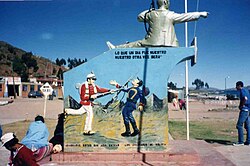
Bolivia continues to commemorate "Dia del Mar" (Day of the Sea) to remember the loss of its coastal territory, which included the city of Antofagasta and lucrative copper deposits. While treaties from 1884 and 1904 provide Bolivia with special transit treatment through Chilean ports, the lack of sovereign access continues to fuel domestic unrest, particularly regarding the routing of gas pipelines.
Degrees of Landlocked Status
Not all landlocked countries are situated the same way. Geographers categorize them by their degree of isolation:
- Enclaved Countries: These are landlocked by a single country. Examples include Lesotho (surrounded by South Africa) and San Marino and Vatican City (both surrounded by Italy).
- Semi-Enclaved Countries: These are surrounded by only two mutually bordering neighbors. Examples include Andorra (France and Spain), Mongolia (China and Russia), and Bhutan (China and India).
- Doubly Landlocked: This rare status occurs when a country is surrounded only by other landlocked countries. Only Liechtenstein and Uzbekistan fit this description today.
Summary of Landlocked Nations
| Country | UN Region | Area (km²) | Population | Special Status |
|---|---|---|---|---|
| Kazakhstan | Asia | 2,724,900 | 19,644,100 | Largest by area |
| Ethiopia | Africa | 1,104,300 | 113,656,596 | Most populous |
| Uzbekistan | Asia | 449,100 | 36,001,262 | Doubly landlocked |
| Liechtenstein | Europe | 160 | 35,789 | Doubly landlocked |
| Bolivia | Americas | 1,098,581 | 12,054,379 | Semi-enclaved |
Frequently Asked Questions
What is a doubly landlocked country?
A doubly landlocked country is a state that is completely surrounded by other countries, all of which are themselves landlocked. Currently, only Liechtenstein and Uzbekistan hold this status.
Why is being landlocked considered an economic disadvantage?
It removes direct access to international shipping lanes, forcing the country to rely on neighbors for trade. This often increases transport costs, creates dependency on foreign political stability, and can hinder overall economic growth.
Which continent has the most landlocked countries?
According to the UN geoscheme, Africa has the most with 16. However, if transcontinental countries like Kazakhstan and those in the South Caucasus are counted as European, Europe's count rises to 20.
How do landlocked countries maintain navies?
Some landlocked countries maintain fluvial navies that operate on rivers and lakes. For example, Bolivia operates a navy on Lake Titicaca and various rivers.
What are LLDCs?
LLDCs stands for Landlocked Developing Countries. This is a United Nations classification for developing nations that lack sea access, highlighting their need for special international support to reduce trade inequalities.