Lalo Schifrin: The Mastermind Behind Cinema's Most Iconic Themes
Few composers have left as indelible a mark on the auditory landscape of the 20th century as Lalo Schifrin. An Argentine-American virtuoso, Schifrin was a pianist, composer, arranger, and conductor whose work bridged the gap between the smoky jazz clubs of Paris and the high-stakes tension of Hollywood blockbusters. By blending traditional orchestration with jazz and Latin American musical elements, he created a signature sound that defined the energy of the action and suspense genres.
Key Facts
- Full Name: Boris Claudio Schifrin.
- Lifespan: June 21, 1932 – June 26, 2025.
- Most Famous Work: The theme for Mission: Impossible.
- Notable Collaborations: Extensive work with Clint Eastwood on the Dirty Harry series.
- Industry Contribution: Composed the Paramount Pictures fanfare used from 1976 to 2004.
- Education: Studied at the University of Buenos Aires and the Conservatoire de Paris.
Early Life and Musical Foundations
Born in Buenos Aires, Argentina, Boris Claudio Schifrin initially pursued studies in sociology and law at the University of Buenos Aires. However, his passion for music soon took precedence. At age 20, he earned a scholarship to the Conservatoire de Paris, where he studied under renowned figures such as Olivier Messiaen and Charles Koechlin. During this formative period, Schifrin expanded his musical palette by studying African drumming and performing jazz in Parisian clubs by night.
In 1955, Schifrin's talent gained international recognition when he played piano with the legendary bandoneon player Ástor Piazzolla, representing Argentina at the International Jazz Festival in Paris.
The Jazz Era: From Buenos Aires to New York
Upon returning to Argentina, Schifrin led a 16-piece jazz big band that became a staple of a popular weekly variety show on Buenos Aires television. His transition to the global stage began in 1956 after meeting jazz legend Dizzy Gillespie. Schifrin wrote Gillespiana, an extended work for Gillespie's big band, which was recorded in 1960.
By 1960, Schifrin had moved to New York City to serve as the pianist and arranger for Gillespie's quintet. This period of intense collaboration resulted in the 1962 recording The New Continent and a 1963 collaboration with Duke Ellington's alto saxophonist, Johnny Hodges, on the album Buenos Aires Blues.
Defining the Sound of Hollywood
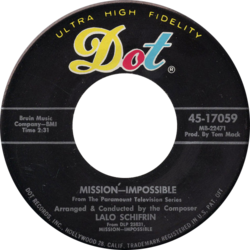
Schifrin's transition into film and television scoring brought him worldwide fame. He became a master of the "tension" score, most notably with the 1966 theme for Mission: Impossible, a piece of music that remains one of the most recognized melodies in history.
His versatility allowed him to score a diverse array of films, from the gritty realism of Cool Hand Luke (1967) and Bullitt (1968) to the high-octane martial arts action of Enter the Dragon (1973). He also developed a long-standing professional relationship with Clint Eastwood, scoring several films in the Dirty Harry series.
The Exorcist Controversy
Not every project was a seamless success. Schifrin's experience with the 1973 film The Exorcist was particularly fraught. He composed heavy, challenging music for the initial trailer that reportedly frightened audiences. Due to a communication breakdown between director William Friedkin and studio executives regarding the need to "tone down" the score, Schifrin's work was ultimately rejected. He later described this as one of the most unpleasant experiences of his professional life, though he eventually reused the compositions in other projects.
Later Career and Legacy
In his later years, Schifrin continued to innovate across genres. In the 1990s, he provided arrangements for The Three Tenors concerts. He returned to his roots in 1998 with the film Tango, fusing traditional tango with jazz elements. That same year, he founded Aleph Records.
Schifrin's influence extended into modern pop culture; his track "Danube Incident" from Mission: Impossible has been widely sampled by hip-hop and trip-hop artists, including Portishead and Heltah Skeltah. His versatility was further proven by his 2004 contribution to the video game Tom Clancy's Splinter Cell: Pandora Tomorrow and a 2003 classical commission, Symphonic Impressions of Oman.
| Category | Key Works / Achievements |
|---|---|
| Iconic Themes | Mission: Impossible, T.H.E. Cat, Mannix, Paramount Pictures Fanfare |
| Major Film Scores | Cool Hand Luke, Bullitt, Enter the Dragon, The Amityville Horror, Rush Hour Trilogy |
| Jazz Contributions | Gillespiana, The New Continent, Buenos Aires Blues |
| Major Awards | Academy Honorary Award (2018), multiple Grammy Awards, Latin Grammy (2010) |
Frequently Asked Questions
What is Lalo Schifrin's most famous composition?
He is most widely recognized for composing the theme to the 1966 television series Mission: Impossible.
Did Lalo Schifrin win any Academy Awards?
While he received numerous nominations for scores like Cool Hand Luke and The Amityville Horror, he was honored with an Academy Honorary Award in 2018.
How did jazz influence his film scores?
Schifrin integrated jazz and Latin American musical elements into traditional orchestral arrangements, creating a modern, rhythmic sound that became a hallmark of 1960s and 70s cinema.
What was his relationship with Dizzy Gillespie?
Schifrin began as a composer for Gillespie's big band (writing Gillespiana) and later moved to New York to serve as the pianist and arranger for Gillespie's quintet.
Which famous movie studio fanfare did he write?
Schifrin composed the Paramount Pictures fanfare that was used by the studio from 1976 until 2004.