Astor Piazzolla: The Visionary Architect of Nuevo Tango
Astor Pantaleón Piazzolla was more than just a musician; he was a revolutionary who fundamentally altered the landscape of Argentine music. As a virtuoso bandoneon player—a type of concertina common in tango—composer, and arranger, Piazzolla bridged the gap between the dance halls of Buenos Aires and the prestigious concert halls of the world. By fusing traditional tango with the complexities of jazz and classical music, he created a sophisticated new genre known as nuevo tango.
Recognized by critics as the world's foremost composer of tango music, Piazzolla's career spanned nearly six decades, leaving behind a legacy of approximately 3,000 compositions that continue to influence musicians globally.
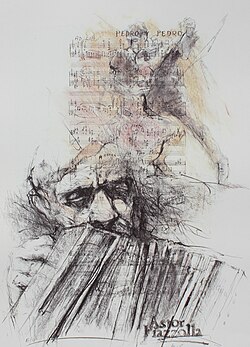
Key Facts
- Full Name: Astor Pantaleón Piazzolla (1921–1992).
- Primary Instrument: Bandoneon.
- Major Contribution: Developed nuevo tango, blending tango with jazz and classical elements.
- Notable Works: "Libertango," "Adiós Nonino," and "Balada para un loco."
- Collaborations: Worked with jazz legend Gerry Mulligan and the Kronos Quartet.
- Film Legacy: Composed scores for numerous films, including Sur and Enrico IV.
Early Life and Formative Years
Born in Mar del Plata, Argentina, Piazzolla spent a significant portion of his childhood in New York City's Little Italy. It was here that his musical journey began; by 1932, he had already composed his first tango, "La Catinga." His early education was eclectic, studying with Hungarian pianist Béla Wilda, who introduced him to the works of Bach.
A pivotal moment occurred in 1934 when Piazzolla met the legendary Carlos Gardel. Although he appeared as a paper boy in Gardel's film El día que me quieras and was invited to join Gardel's tour, his father forbade him from going. This decision proved life-saving, as Gardel and his entire orchestra perished in a plane crash during that 1935 tour.
The Ascent of a Virtuoso
In 1938, Piazzolla moved to Buenos Aires, eventually joining the prestigious orchestra of Aníbal Troilo. While serving as a bandoneonist and arranger for Troilo, Piazzolla sought to deepen his technical knowledge. He studied orchestration under the eminent Argentine composer Alberto Ginastera and took piano lessons with Raúl Spivak.
During this period, Piazzolla balanced a grueling schedule, attending Teatro Colón orchestra rehearsals in the mornings and performing in tango clubs at night. This duality of classical rigor and street-level passion became the hallmark of his style.
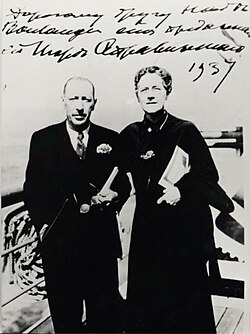
Experimentation and the Birth of Nuevo Tango
By 1946, Piazzolla formed his own Orquesta Típica (Traditional Orchestra), which served as a laboratory for his orchestral experiments. However, by 1950, he nearly abandoned tango entirely to study orchestra direction with Hermann Scherchen and immerse himself in jazz and the works of Bartók and Stravinsky.
This period of searching led to the development of his unique voice. Between 1950 and 1954, he composed several works that signaled a departure from tradition, including Tanguango and Contrabajeando.
Global Influence and Later Career
Piazzolla's return to Paris in 1970 marked a surge in productivity. He collaborated with Horacio Ferrer on the oratorio El pueblo joven and premiered Cuatro Estaciones Porteñas in Buenos Aires.
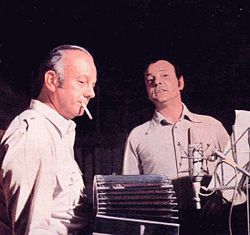
The 1970s and 80s saw Piazzolla expanding his reach through international recordings and collaborations. In 1974, he recorded the iconic album Libertango in Milan and collaborated with American saxophonist Gerry Mulligan on the album Summit.
![Astor Piazzolla with Gerry Mulligan at the Summit recording, Milan (Italy) 1974. The image includes the producer Aldo Pagani [it], first from the left, and some performers, including Pino Presti, second from right, and Tullio De Piscopo, second from left](/images/eb/fa/ebfa04a3547ba889cc000cbd26e30321b3ff0e6c455c6fc4495ae177c4065588.jpg)
Throughout the 1980s, he toured the world, performing at the Montreal International Jazz Festival and in various European cities. He continued to push boundaries, writing Le Grand Tango for cellist Mstislav Rostropovich and recording Five Tango Sensations with the Kronos Quartet shortly before his death.
Musical Legacy and Ensembles
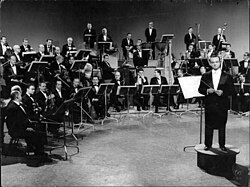
Piazzolla's career was characterized by a constant evolution of the ensembles he led. From the traditional Orquesta Típica to the experimental Conjunto Electrónico and the refined New Tango Sextet, he used different groupings to explore the textures of his music.
His influence extended into popular culture; for example, singer Grace Jones incorporated "Libertango" into her hit "I've Seen That Face Before" in 1981. His filmography is equally vast, with scores for over 50 films, ranging from early Argentine productions to later international works like 12 Monkeys (posthumous use).
| Period | Focus/Ensemble | Key Influence/Achievement |
|---|---|---|
| 1930s-1940s | Troilo Orchestra / Orquesta Típica | Classical studies with Ginastera; early tango mastery. |
| 1950s | Solo Study / Octeto Buenos Aires | Integration of jazz and classical structures. |
| 1960s-1970s | First Quintet / Conjunto 9 | Establishment of nuevo tango; global recognition. |
| 1980s-1992 | Second Quintet / New Tango Sextet | International tours; collaborations with Kronos Quartet. |
Frequently Asked Questions
What is "nuevo tango"?
Nuevo tango is a style of music developed by Astor Piazzolla that evolved from traditional Argentine tango. It incorporates elements of jazz and classical music, shifting the genre from music primarily intended for dancing to music intended for listening in a concert setting.
What instrument did Astor Piazzolla play?
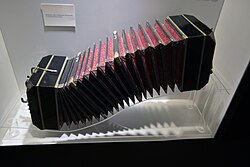
Piazzolla was a virtuoso of the bandoneon, a bellows-driven instrument similar to an accordion, which is central to the sound of traditional and nuevo tango.
How did classical music influence his work?
Piazzolla studied orchestration with Alberto Ginastera and was deeply influenced by composers such as Bach, Stravinsky, and Bartók. This training allowed him to apply complex harmonic structures and formal arrangements to the tango genre.
What are some of his most famous compositions?
Some of his most enduring works include "Libertango," "Adiós Nonino" (dedicated to his father), and "Balada para un loco." He also wrote significant orchestral works like the Concierto para bandoneón.
Did he collaborate with other genres?
Yes, Piazzolla frequently crossed genre lines, most notably collaborating with jazz saxophonist Gerry Mulligan and the contemporary classical ensemble Kronos Quartet.