Kyle of Lochalsh Line: A Journey Through the Scottish Highlands
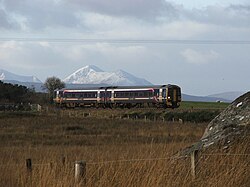
The Kyle of Lochalsh line is one of Scotland's most scenic railway routes, carving a path through the rugged landscapes of the Highlands. Spanning approximately 63 miles (102.7 km), this operational line connects the town of Dingwall to the coastal terminus at Kyle of Lochalsh, providing a vital transport link and a breathtaking experience for travelers venturing toward the Isle of Skye.
Managed by Network Rail and operated by ScotRail, the line is characterized by its rural setting, single-track layout, and stunning vistas of lochs and mountains. From the rolling hills of Easter Ross to the dramatic coastlines of Wester Ross, the journey is a testament to Victorian engineering and local resilience.
Key Facts
- Total Length: 63 miles 64 chains (102.7 km).
- Termini: Dingwall and Kyle of Lochalsh.
- Rolling Stock: Class 158 "Express Sprinter" diesel multiple units.
- Infrastructure: Primarily single-track with four passing loops (Dingwall, Garve, Achnasheen, and Strathcarron).
- Operating Speed: 40 mph (65 km/h).
- Gauge: Standard gauge (1,435 mm).
Route Overview
Dingwall to Achnasheen: Easter Ross
The journey begins at Dingwall, where the line briefly follows the A834 road before curving north across the River Peffery. Historically, a branch line served Strathpeffer from this area, though it closed completely by 1951. The main line bypasses Strathpeffer to the north, where the now-closed Achterneed station once stood.
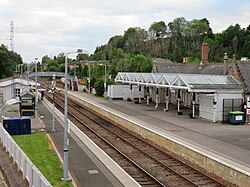
As the train moves west, it reaches Garve and continues toward Loch Luichart, the source of the River Conon. Lochluichart station is a notable point of interest; it was relocated in 1954 to accommodate a hydroelectric scheme that raised the loch's water levels.
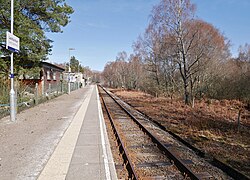
The line continues past Loch a' Chuilinn and Loch Achanalt, eventually arriving at Achnasheen. This village was once envisioned as a junction for the proposed Loch Maree and Aultbea Railway, though that project never received government approval.
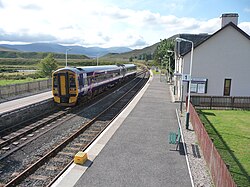
Achnasheen to Kyle of Lochalsh: Wester Ross
Leaving Achnasheen, the railway turns southwest, paralleling the A890 road. After passing the site of the former Glencarron station, the line reaches Achnashellach, marking the longest gap between any two consecutive open stations on the route.
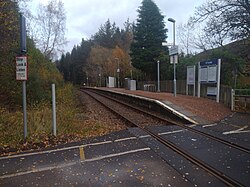
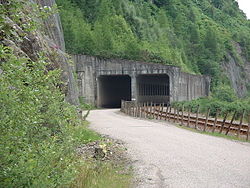
The route then follows the River Carron to Strathcarron station, where the river meets the sea inlet of Loch Carron. From here, the railway hugs the southern coastline of the loch. Near Attadale station, the line passes through a unique 270-yard (250 m) avalanche shelter—a tunnel-like structure built in 1978 to protect the track and the A890 road from falling rocks.
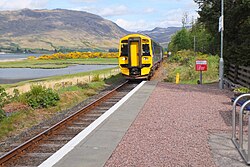
Further west lies Stromeferry, once a key ferry port. The line then reaches Duncraig, a station originally built as a private halt for Duncraig Castle before opening to the public in 1949. The shortest distance between any two stations occurs between Duncraig and Plockton.
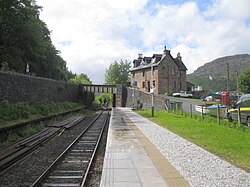
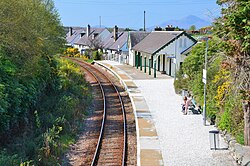
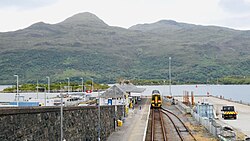
The journey concludes at the terminus in Kyle of Lochalsh, offering passengers a direct gateway to the Isle of Skye.
Infrastructure and Technical Details
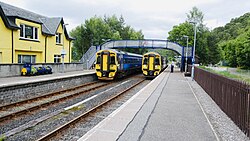
The line is entirely unelectrified and relies on diesel power. To manage traffic on the single-track system, four double-track passing loops are strategically placed at Dingwall, Garve, Achnasheen, and Strathcarron, allowing trains to pass one another.
| Feature | Detail |
|---|---|
| Total Distance | 102.7 km (63 mi 64 ch) |
| Track Type | Single-track with passing loops |
| Operator | ScotRail |
| Primary Rolling Stock | Class 158 Diesel Multiple Units |
| Number of Stations | 13 |
History and Survival
The route was constructed in two phases: the Dingwall and Skye Railway (opened August 19, 1870) and the Kyle of Lochalsh Extension (opened November 2, 1897). The line has faced several challenges over the decades, including the closure of the Strathpeffer Branch in 1951.
In 1970, British Rail proposed closing the line due to high operating costs and the planned creation of a new ferry terminal at Ullapool. However, a determined local campaign successfully fought the decision, ensuring the line remained open for the community and tourists.
The line also demonstrated resilience in 1989 when the bridge over the River Ness in Inverness was washed away. Temporary measures, including bringing Class 156 "Sprinter" trains over by road and establishing a temporary yard at Muir of Ord, allowed the line to reopen by May 1990.
Current Services
As of April 2022, the line maintains a consistent schedule. From Monday to Saturday, four trains run eastbound toward Inverness and four run westbound toward Kyle of Lochalsh. Sunday services are more limited, with one train each way, increasing to two during the summer peak.
Frequently Asked Questions
Which trains operate on the Kyle of Lochalsh line?
All services are currently operated by ScotRail using Class 158/7 "Express Sprinter" diesel multiple units.
Is the line single or double track?
The line is almost entirely single-track, but it features four double-track passing loops at Dingwall, Garve, Achnasheen, and Strathcarron to allow trains to pass.
What is the purpose of the avalanche shelter near Attadale?
Built in 1978, the 270-yard tunnel-like structure protects both the railway line and the A890 road from falling rocks.
How many stations are on the line?
There are 13 stations along the route between Dingwall and Kyle of Lochalsh.
Was the line ever threatened with closure?
Yes, in 1970 British Rail sought to close the line, but a spirited local campaign successfully reversed the decision.