Kurdish Language: History, Dialects, and Global Status
The Kurdish language (Kurdî) is a rich and diverse linguistic tradition spoken by approximately 29 million people worldwide. As a member of the Indo-European family, specifically within the Western Northwestern Iranian branch, it serves as a primary marker of identity for the Kurdish people across a vast geographic region known as Kurdistan, as well as in the Caucasus, Anatolia, Khorasan, and various global diaspora communities.
Spanning borders across Armenia, Azerbaijan, Iran, Iraq, Syria, and Turkey, Kurdish is not a single monolithic tongue but a collection of related dialects. Its journey from ancient oral traditions to modern official status reflects the complex political and cultural history of the Middle East.
Key Facts
- Native Speakers: Approximately 29 million (2017–2024).
- Language Family: Indo-European > Indo-Iranian > Iranian > Western > Northwestern.
- Primary Dialects: Northern Kurdish (Kurmanji), Central Kurdish (Sorani), and Southern Kurdish (Xwarîn, Palewani), along with Laki.
- Official Status: Official language in Iraq (Kurdistan Region); recognized minority language in Armenia and Syria.
- Writing Systems: Primarily the Latin-based Hawar alphabet and the Perso-Arabic Sorani alphabet.
Linguistic Classification and Origin
The origins of the Kurdish language are rooted in the Iranian branch of the Indo-European family. Scholars have worked to map the ethnic core where contemporary Kurdish dialects formed. One of the most prominent theories, proposed by D.N. Mackenzie in the 1960s, suggests that Kurdish, Persian, and Baluchi once shared closer contact, based on common phonetic isoglosses—linguistic features that mark the boundary between different dialects or languages.
Major Dialects and Varieties
Kurdish is characterized by several distinct varieties that vary by region. While they share a common root, these dialects can differ significantly in phonology and grammar.
- Northern Kurdish (Kurmanji): The most widely spoken variety, prevalent in Turkey and Syria.
- Central Kurdish (Sorani): Predominant in Iraq and Iran.
- Southern Kurdish (Xwarîn, Palewani) and Laki: Spoken primarily in southern regions.
- Zazaki and Gorani: Other related Iranian languages spoken by Kurdish populations.
Writing Systems and Literacy
Because the Kurdish-speaking population is spread across different nations, several writing systems have been employed over time:
- Hawar Alphabet: A Latin-based script used mostly in Turkey and Syria.
- Sorani Alphabet: A Perso-Arabic script used primarily in Iraq and Iran.
- Cyrillic and Armenian Alphabets: Historically used in the former Soviet Union and Soviet Armenia (between 1921 and 1929).
Historical Development and Literature
The written history of Kurdish includes a blend of religious and poetic texts. One of the earliest religious works is the Yazidi Black Book, authored around the 13th century by Hassan bin Adi. It details the Yazidi faith's account of creation and the origin of humanity.
The first formal "text" in Kurdish is considered to be a short Christian prayer from the 15th century, written using Armenian characters. Between the 15th and 17th centuries, a literary language flourished through the works of classical poets such as Ahmad Khani, Ali Hariri, Malaye Jaziri, and Faqi Tayran.
In 1787, an Italian priest named Maurizio Garzoni published Grammatica e Vocabolario della Lingua Kurda in Rome. This was the first major acknowledgment of Kurdish as a distinctive language, earning Garzoni the title "Father of Kurdology" among later scholars.
Current Status and Legal Challenges
The use of the Kurdish language has faced significant political hurdles, particularly in Turkey. Following the 1980 coup d'état, the language was illegal in Turkey until 1991. Even after the ban was lifted, severe restrictions remained on education and broadcast media until the early 2000s.
Progress began in March 2006 when private television channels were allowed to air Kurdish programming, though initially limited to 45 minutes a day. In 2009, the state-run TRT launched a 24-hour Kurdish station. By 2010, some municipalities began using Kurdish on road signs, water bills, and marriage certificates, though many officials faced legal trials for doing so.
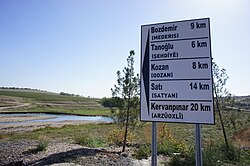
Further milestones include the legalization of the letters X, W, and Q in Turkish names in 2013 and the introduction of Kurdish as an elective subject in public schools in 2012. Outside the Middle East, the language remains strong in Central Asia; for example, 96.21% of Kurds in Kyrgyzstan and 88.7% in Kazakhstan speak Kurdish as their native tongue.
Summary of Kurdish Language Characteristics
| Feature | Details |
|---|---|
| Language Family | Indo-European (Northwestern Iranian) |
| Estimated Speakers | 29 Million |
| Primary Scripts | Latin (Hawar), Perso-Arabic (Sorani) |
| Key Dialects | Kurmanji, Sorani, Xwarîn, Laki |
| Official Status | Official in Iraqi Kurdistan; Minority status in Armenia/Syria |
Frequently Asked Questions
What are the main dialects of Kurdish?
The primary dialects are Northern Kurdish (Kurmanji), Central Kurdish (Sorani), and Southern Kurdish (Xwarîn and Palewani), along with Laki. Zazaki and Gorani are also spoken by Kurdish populations.
Which writing systems are used for Kurdish?
Kurdish is written using the Latin-based Hawar alphabet (common in Turkey and Syria) and the Perso-Arabic Sorani alphabet (common in Iraq and Iran). Historically, Cyrillic and Armenian scripts were also used in Soviet territories.
Is Kurdish an official language?
Kurdish is an official language in the Kurdistan Region of Iraq. It is also recognized as a minority language in Armenia and Syria.
Who is considered the "Father of Kurdology"?
Maurizio Garzoni, an Italian priest, is known as the Father of Kurdology for publishing the first Kurdish grammar and vocabulary in 1787.
What is the Yazidi Black Book?
The Yazidi Black Book is one of the earliest Kurdish religious texts, authored in the 13th century. It contains the sacred accounts of the creation of the world and the origin of man according to the Yazidi faith.