Kublai KhanYuan DynastyMongol EmpireGenghis Khan grandsonGreat Khan

Kublai Khan: The Founder of the Yuan Dynasty and Architect of a Global Empire

Kublai Khan: The Founder of the Yuan Dynasty and Architect of a Global Empire Kublai Khan was a transformative figure in world history, serving as the Khagan (Great Khan) of the Mongol Em...

Kublai Khan: The Founder of the Yuan Dynasty and Architect of a Global Empire

Kublai Khan was a transformative figure in world history, serving as the Khagan (Great Khan) of the Mongol Empire and the founder of the Mongol-led Yuan dynasty in China. A grandson of the legendary Genghis Khan, Kublai's reign marked a pivotal shift in the Mongol Empire, transitioning from a nomadic confederation to a sophisticated, sedentary imperial power that bridged the gap between East and West.
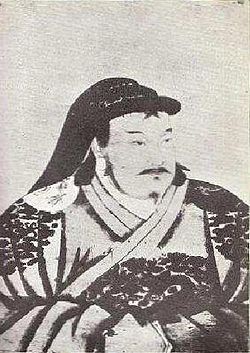
Portrait of young Kublai by Araniko, a Nepali artist in Kublai's court

Born on September 23, 1215, Kublai was the second son of Tolui and Sorghaghtani Beki. His rise to power was not without conflict; after the death of his brother Möngke Khan, Kublai engaged in the Toluid Civil War against his brother Ariq Böke. By 1264, Kublai emerged victorious, though this struggle signaled the beginning of the division of the vast Mongol Empire into distinct administrative regions.

Key Facts
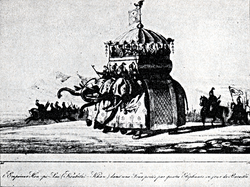
"The Emperor Kublai Khan in a tower carried by four elephants on the day of the battle". French engraving, 18th century.
  • Title: Khagan of the Mongol Empire and Emperor of the Yuan Dynasty.
  • Dynasty Founded: Yuan Dynasty (proclaimed "Great Yuan" in 1271).
  • Reign: 1260–1294 (as Khagan); 1271–1294 (as Emperor).
  • Lineage: Grandson of Genghis Khan; son of Tolui.
  • Capital: Dadu (modern-day Beijing).
  • Religion: Buddhism.

The Rise of the Yuan Dynasty
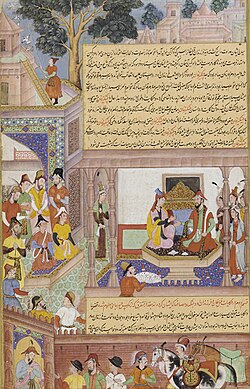
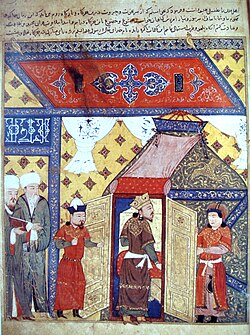
Kublai Khan was chosen by his many supporters to become the next Great Khan at the Grand Kurultai in the year 1260. Kublai Khan and His Empress Enthroned, from a Jami al-Twarikh (or Chingiznama). Mughal dynasty, Reign of Akbar, 1596.

In 1271, Kublai formally proclaimed the establishment of the Yuan dynasty. This move was significant as it integrated Mongol rule with Chinese administrative traditions. He established his capital at Dadu, which would eventually become Beijing. His governance was characterized by a complex blend of Mongol military might and Chinese bureaucratic structures.
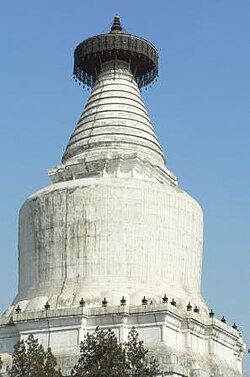
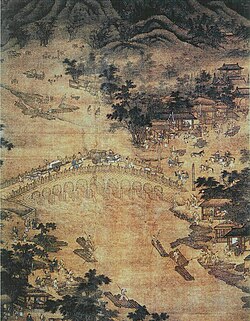
The White Stupa of Dadu (or Khanbaliq; now Beijing)
Laborers transporting construction materials to Khanbaliq

Military Conquests and Expansion

Kublai's military ambitions were vast. He successfully oversaw the conquest of the Southern Song dynasty, a campaign that utilized advanced technology. Notably, he employed siege engineers from the Ilkhanate to deploy massive machines, such as the "Muslim trebuchet," to breach fortified cities like Xiangyang.
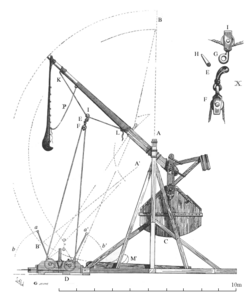
The "Muslim trebuchet" (or Huihui Pao) used to breach the walls of Fancheng and Xiangyang

Beyond China, Kublai attempted to expand his influence through naval expeditions and land campaigns. These included attempts to subjugate the Korean Peninsula (Goryeo), parts of Southeast Asia, and even invasions of Japan. While some campaigns, such as those against Japan, faced significant setbacks, his influence reached as far as the Thai kingdoms of Sukhothai and Chiang Mai, which became vassal states.
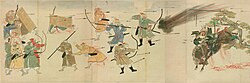
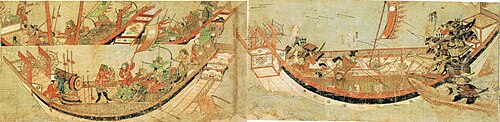
The Japanese samurai Suenaga facing Mongol arrows and bombs. Mōko Shūrai Ekotoba (蒙古襲来絵詞), c. 1293.
Japanese samurai boarding Yuan ships in 1281

Global Relations and Cultural Exchange

Kublai Khan in the Catalan Atlas (1375). The caption reads:"The most powerful prince of the Tartars is named Holubeim [Kubilay Khan], which means Great Khan. This emperor is richer than any other emperor in the world. This emperor is protected by twelve thousand horsemen with their four captains that stay at the court three months of the year."[33]

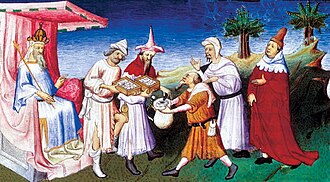
The era of Kublai Khan was a golden age for international connectivity. The Pax Mongolica (Mongol Peace) facilitated trade and communication across Eurasia. This period saw the famous travels of Marco Polo, who served at the court of Kublai Khan and provided Europe with detailed accounts of the wealth and sophistication of the East.
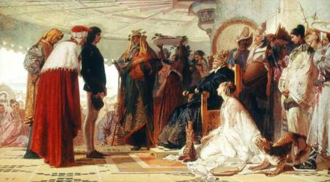
Niccolò, Maffeo, and Marco Polo at the court of Kublai Khan; painting by Tranquillo Cremona, 1863
Kublai gives financial support to the Polo family.

Diplomatic ties extended to Europe and the Middle East. Ambassadors like Rabban Bar Sauma traveled from Dadu to European capitals, including Rome and Paris, to engage with Western rulers. This era of exchange was not limited to diplomacy; it included the movement of technology, such as gunpowder and advanced maritime knowledge, as evidenced by artifacts like the Gangnido ship.
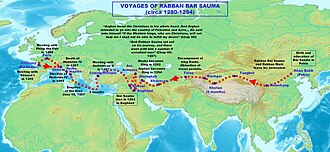
Rabban Bar Sauma, ambassador of Kublai Khan and Ilkhan Arghun, traveled from Dadu to Rome, Tuscany, Genoa, Paris, and Bordeaux to meet with European rulers in 1287–1288.
The Gangnido reflects the Chinese geographical knowledge during the Mongol Empire about countries in the West.[99]

Scientific and Economic Developments

Kublai's reign saw significant advancements in science and administration. The introduction of paper currency was a major economic development, though the costs of continuous warfare eventually led to inflation. The empire also benefited from a diverse workforce, including engineers, astronomers, and artists from various cultures.
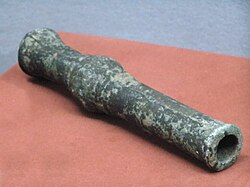
A Yuan dynasty hand cannon
Summary of Kublai Khan's Reign
Category Details
Primary Titles Khagan, Emperor Shizu
Major Conquests Southern Song Dynasty, Goryeo (vassalage)
Key Innovations Paper currency, advanced siege weaponry
Notable Visitors Marco Polo, Rabban Bar Sauma
Capital City Dadu (Beijing)

Legacy and Death

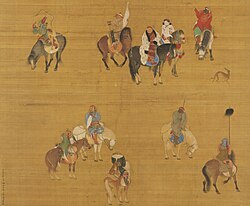
Painting of Kublai Khan on a hunting expedition, by Han Chinese court artist Liu Guandao, c. 1280

Kublai Khan died on February 18, 1294, at the age of 78 in Dadu. His legacy is a dual one: he is remembered as a conqueror who expanded the Mongol reach, but also as a sophisticated ruler who fostered a period of immense cultural and economic exchange. The Yuan dynasty he founded continued to shape the history of China for decades after his passing.
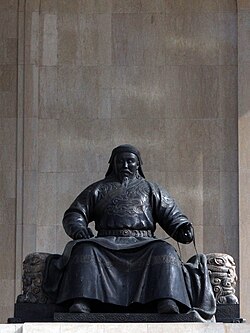
Statue of Kublai Khan in Sükhbaatar Square, Ulaanbaatar. Together with Ögedei Khan's, and the much larger Genghis Khan's statues, it forms a statue complex dedicated to the Mongol Empire.

Frequently Asked Questions

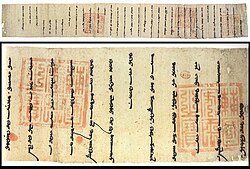
Extract of the letter of Arghun to Philip IV of France, in the Mongolian script, dated 1289. French National Archives.
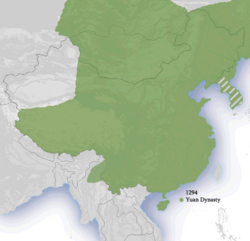
The Yuan dynasty of China, c. 1294
Chinese opera flourished during Yuan China.
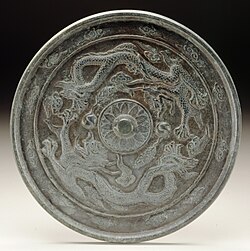
Two dragons chasing a flaming pearl was a symbol associated with Goryeo.
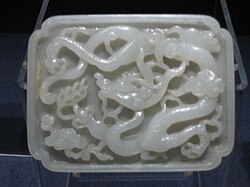
A Yuan dynasty jade belt plaque featuring carved designs of the Azure Dragon, highly regarded as a symbol of Yuan China's maritime strength
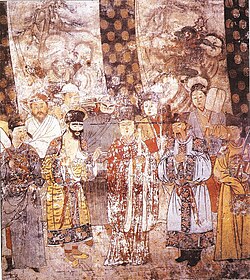
In Ilkhanate Persia, Ghazan converted to Islam and recognized Kublai Khan as his suzerain.
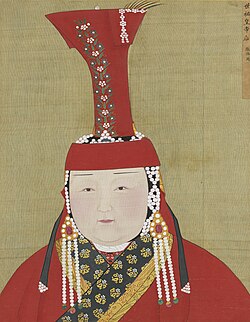
Portrait of Chabi, a Buddhist who was the Khatun of Kublai and Empress of the Mongol Empire, by a Nepali artist Araniko
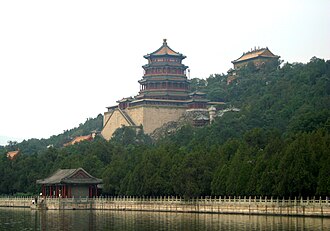
Longevity Hill in Beijing, where Kublai Khan wrote his poem

Who was Kublai Khan's predecessor?

Kublai Khan succeeded his older brother, Möngke Khan, as Khagan in 1260.

What was the significance of the Yuan dynasty?

The Yuan dynasty was the first time in history that all of China was ruled by a non-Han people, specifically the Mongols, under a centralized imperial system.

How did Kublai Khan interact with Europe?

Through travelers like Marco Polo and diplomats like Rabban Bar Sauma, Kublai Khan established indirect and direct connections with European powers, facilitating trade and information exchange.

What caused inflation during his reign?

The massive costs associated with continuous military campaigns, including the invasions of Japan and the wars against the Southern Song, led to an expansion of paper currency that caused inflation.

What was the role of the "Muslim trebuchet"?

The "Muslim trebuchet" (Huihui Pao) was a powerful siege engine brought by engineers from the Ilkhanate to help Kublai's forces breach the formidable walls of Song Chinese fortresses.

References

  1. The defeat of the Song dynasty at the Battle of Yamen on 19 March 1279 is considered the start of Kublai Khan's rule over the whole of China proper.
  2. /ˈkbl ˈkɑːn/
  3. Also known as Qubilai or Kübilai; Mongolian: Хубилай, romanized: Khubilai; Mongolian script: ᠬᠤᠪᠢᠯᠠᠢ, Mongolian pronunciation: [xubiɮæ], Russian Buryat pronunciation: [xubilæ], Oirat: Хүвлә, romanized: Xüvlə, Oirat pronunciation: [xyv(ə)læ]; Chinese: 忽必烈; pinyin: Hūbìliè
  4. As per modern historiographical norm, the "Yuan dynasty" in this article refers exclusively to the realm based in Dadu (present-day Beijing). However, the Han-style dynastic name "Great Yuan" (大元) as proclaimed by Kublai in 1271, as well as the claim to Chinese political orthodoxy were meant to be applied to the entire Mongol Empire.[1][2][3] In spite of this, "Yuan dynasty" is rarely used in the broad sense of the definition by modern scholars due to the de facto disintegrated nature of the Mongol Empire.
  5. Robinson, David (2019). In the Shadow of the Mongol Empire: Ming China and Eurasia. Cambridge University Press. p. 50. ISBN 9781108482448. Retrieved 18 March 2022.