Kingdom of Spain and the Indies: The Bourbon Era of Enlightenment and Decline
The transition from the 17th to the 18th century marked a seismic shift in the trajectory of the Spanish Empire. With the death of the childless Charles II in 1700, the Habsburg dynasty ended, triggering a massive European conflict known as the War of the Spanish Succession. This struggle eventually placed the French House of Bourbon on the Spanish throne, ushering in a century of administrative reform, intellectual awakening, and eventual geopolitical instability.
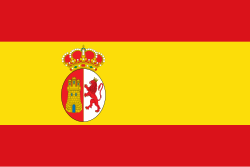
Known as the Kingdom of Spain and the Indies (or the Kingdom of the Spains), this era saw the empire attempt to modernize its governance through the lens of the Enlightenment—a philosophical movement emphasizing reason, science, and individualism. While the Bourbons initially restored Spanish prestige and expanded colonial efficiency, the period concluded in turmoil as Napoleon Bonaparte's invasion sparked the Peninsular War and the subsequent collapse of Spanish authority in the Americas.
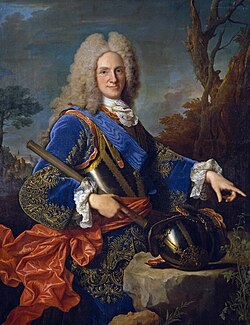
Key Facts
- Dynastic Shift: The Bourbon dynasty replaced the Habsburgs after the War of the Spanish Succession (1701–1714).
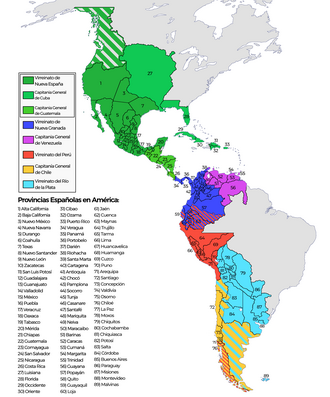
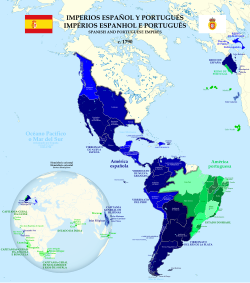
- Territorial Reach: The empire included the Iberian Peninsula, the Spanish Antilles, the Philippines, and vast territories in continental Spanish America.
- Core Philosophy: The era was defined by Enlightened despotism, where absolute monarchs implemented top-down reforms to modernize the state.
- Major Conflict: The Battle of Trafalgar (1805) effectively ended Spanish naval dominance.
- End of Era: The period concluded with the Napoleonic invasion of 1808 and the subsequent wars of independence in the Indies.
The Rise of the Bourbons: Philip V
The ascent of Philip V, a French prince, was not without struggle. The War of the Spanish Succession pitted Bourbon France against Habsburg Austria and its allies. While France emerged victorious, the Treaty of Utrecht imposed strict conditions: the French and Spanish crowns could never be formally united, and Philip V had to renounce his claims to the French throne.
Under Philip V, Spain suffered significant territorial losses in Europe, including the Spanish Netherlands and possessions in Italy (Milan, Sicily, Naples, and Sardinia), while Britain seized Gibraltar and Menorca. However, Philip later focused on a cautious foreign policy, utilizing the Pacte de Famille (Family Pact) with Louis XV of France to regain influence in Italy.
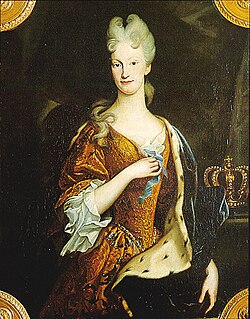
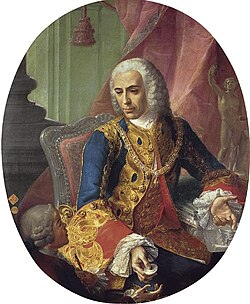
Toward the end of his reign, Philip delegated power to ministers like the Marquess of Ensenada. Ensenada sought to professionalize the administration of the overseas empire after reports revealed deep tensions between peninsulares (Spanish-born officials) and criollos (Spanish descent born in the Americas).
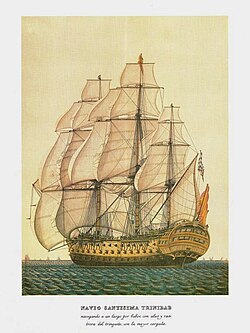
Stability and Transition: Ferdinand VI
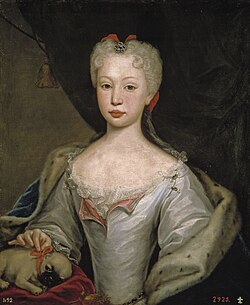
The reign of Ferdinand VI (1746–1759) was characterized by a more reserved approach to international conflict. His court was divided between pro-British and pro-French factions, with figures like Jose de Carvajal y Láncaster leading the pro-British sentiment. Despite a period of relative peace, Ferdinand's reign ended in tragedy; devastated by the death of his wife, Barbara de Braganza, he fell into a deep depression and died shortly after.
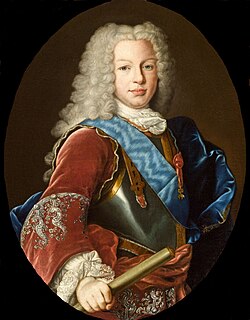
The Zenith of Reform: Charles III
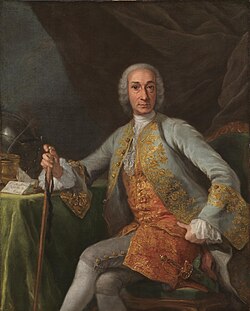
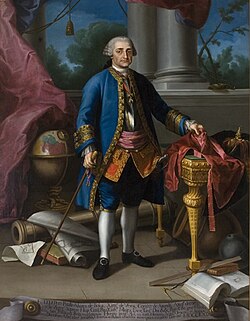
Charles III is often regarded as the quintessential enlightened despot. Having previously ruled Naples and Sicily, he brought a cadre of Italian reformers to Madrid to modernize the Spanish bureaucracy. The most prominent among them was the Marquess of Esquilache, who spearheaded efforts to liberalize the economy.
![Portrait of Charles III as a huntsman by Francisco Goya, 1786–1788. He was beloved of his subjects who "admired his simple life and his religious spirit.[9]](/images/ce/04/ce04aa2b7a170ec4a6b9d780d3c985b01c37b47f680c055fa719ca9d4df2ba48.jpg)
Economic and Social Modernization
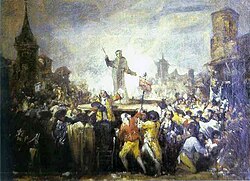
Charles III championed free trade and reduced long-standing tariff barriers. However, these reforms were not always welcomed. In 1766, the liberalization of the grain trade led to a sharp rise in prices, triggering the Esquilache Riots.
Administrative and Educational Overhaul
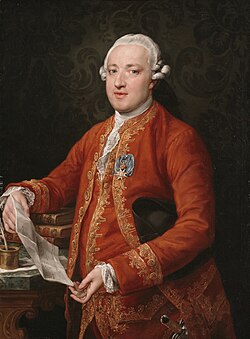
Under the leadership of the Count of Floridablanca, Spain established its first national bank, the National Bank of San Carlos, in 1782, and created a formal cabinet system of government. Floridablanca also worked to repair the education system following the expulsion of the Jesuits and opened trade between Spain and its New World colonies to foreign merchants.
Global Ambitions and the American Revolution
Despite a general preference for cordial relations with Britain, Charles III seized the opportunity to weaken his rival by supporting the American rebels. Spain entered the American Revolutionary War in 1779, successfully retaking Florida and the Bahamas by the Treaty of Paris (1783).
Decline and the Napoleonic Collapse: Charles IV and Ferdinand VII
The stability of the previous decades eroded under Charles IV. Power shifted toward the favorite, Manuel de Godoy, who navigated a volatile relationship with Revolutionary France. After an initial conflict (the War of the Pyrenees), Spain allied with Napoleon via the Treaty of San Ildefonso in 1796.
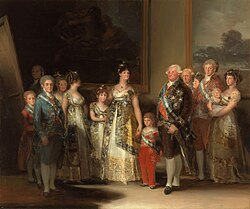
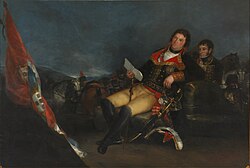
This alliance proved disastrous. The British blockaded Spanish ports and decimated the Spanish navy at the Battle of Trafalgar in 1805, ensuring British naval supremacy for a generation.
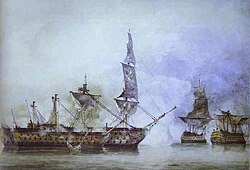
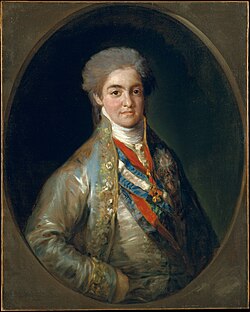
The end came in 1808 during the Tumult of Aranjuez. Internal strife between Charles IV and his son, Ferdinand VII, allowed Napoleon to intervene. Napoleon forced both to abdicate and installed his brother, Joseph Bonaparte, on the throne. This betrayal sparked the Peninsular War, a brutal conflict that shattered the empire's stability and catalyzed the independence movements across Spanish America.
Summary of the Bourbon Era
| Period/Monarch | Key Focus | Major Outcome |
|---|---|---|
| Philip V (1700–1746) | Dynastic transition & consolidation | Establishment of Bourbon dynasty; loss of Italian/Netherlands territories. |
| Ferdinand VI (1746–1759) | Neutrality & stability | Internal peace and diplomatic balancing. |
| Charles III (1759–1788) | Enlightened Reform | National Bank created; free trade expanded; recovery of Florida. |
| Charles IV (1788–1808) | Political instability | Defeat at Trafalgar; alliance with Napoleon. |
| Ferdinand VII (1808) | Napoleonic Upheaval | Abdication; start of Peninsular War and American independence. |
Frequently Asked Questions
What was the War of the Spanish Succession?
It was a European conflict (1701–1714) fought to determine the successor to the childless Charles II. It resulted in the French Bourbon prince, Philip V, becoming King of Spain, provided he renounced his claim to the French throne.
Who were the criollos and why were they important?
Criollos were people of Spanish descent born in the Americas. They often felt marginalized by the peninsulares (Spanish-born officials), and this tension was a key driver in the eventual independence movements of the 19th century.
What was the significance of the Battle of Trafalgar?
Fought in 1805, this naval engagement saw the British fleet under Admiral Lord Nelson defeat the combined French and Spanish navies. It destroyed Spanish naval power and secured British dominance of the seas.
How did the Enlightenment affect Spain?
The Enlightenment led to "Enlightened despotism," where monarchs like Charles III implemented top-down reforms to modernize the economy, education, and bureaucracy, including the creation of the National Bank of San Carlos.
Why did the Spanish Empire collapse in the Americas?
The invasion of Spain by Napoleon in 1808 created a power vacuum. The resulting turmoil in the Iberian Peninsula encouraged patriot governments in the Indies to seek independence, leading to the Spanish American wars of independence.