Kingdom of Araucanía and Patagonia: The Strange Tale of a French King in South America
History is often filled with eccentric figures, but few are as peculiar as Orélie-Antoine de Tounens, a French lawyer who traveled to South America in the 19th century to establish his own sovereign state. The Kingdom of Araucanía and Patagonia, also known as the Kingdom of New France, stands as one of history's most curious examples of an unrecognized state, born from a mixture of romanticism, indigenous political struggle, and personal ambition.
The Rise of a Self-Proclaimed Monarch
The story began in 1858 when Antoine de Tounens, a lawyer from Périgueux, France, became enamored with the epic poem La Araucana by Alonso de Ercilla. Inspired by the resistance of the Mapuche people, Tounens traveled to Chile, landing at the port of Coquimbo. Upon moving south to the Biobío region, he encountered several lonkos (Mapuche tribal leaders).
Tounens promised the Mapuche leaders firearms and the diplomatic support of France to help them maintain their independence from the Chilean and Argentine governments. Believing that a European figurehead might better serve their cause, the Mapuche elected him as their Great Toqui (Supreme Chieftain). On November 17 and 20, 1860, Tounens issued two ordinances declaring that the regions of Araucanía and eastern Patagonia were independent of any other state. He proclaimed himself King Orélie-Antoine I, established Perquenco as his capital, and minted currency under the name of Nouvelle France.
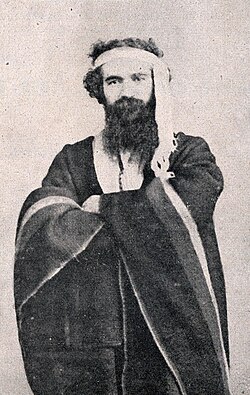
Fall and Exile
The existence of this self-proclaimed kingdom was short-lived. The Chilean government viewed the movement as a threat, leading to the Occupation of Araucanía. On January 5, 1862, under the orders of President José Joaquín Pérez and commander Cornelio Saavedra Rodríguez, Tounens was arrested. He was imprisoned in Santiago, where a court declared him insane on September 2, 1862, and expelled him to France later that October.
Tounens refused to abandon his claim. He attempted to return to his kingdom three separate times, but each attempt ended in capture and deportation by the Chilean state. These repeated imprisonments severely damaged his health, and he eventually died in poverty in Tourtoirac, France, on September 17, 1878.
The Court in Exile and Modern Pretenders
Despite the lack of international recognition, the "kingdom" did not vanish with Tounens. Before his death, he designated Gustave Achilles Laviarde, a French champagne salesman, as his heir. Laviarde assumed the throne as Achille I, beginning a lineage of pretenders to the throne who have operated as a court in exile in France.
While many historians view the kingdom as a "semi-comic episode" or a bourgeois obsession, some see it through a different lens. Mapuche writer Pedro Cayuqueo has speculated that the kingdom represented a lost opportunity for the Mapuche to gain rights similar to those of the Kanak people in New Caledonia. Today, the symbolic monarchy continues, with the title passing through a Regency Council to the current Prince, Antoine V.
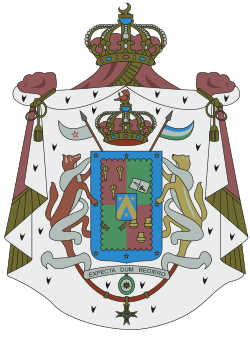
Key Facts
- Founder: Orélie-Antoine de Tounens, a French lawyer.
- Established: November 1860.
- Claimed Territory: Araucanía and eastern Patagonia (modern-day Chile and Argentina).
- Capital: Perquenco (claimed).
- Official Language: Mapudungun.
- Government Type: Elective Monarchy.
- Status: Unrecognized State.
Kingdom Summary
| Attribute | Details |
|---|---|
| Motto | Independencia y libertad |
| Anthem | Himno a Orélie Antoine I |
| Currency | Araucanía and Patagonia peso (since 1874) |
| First Monarch | Orélie-Antoine I (1860–1862) |
| Current Pretender | Prince Antoine V |
Frequently Asked Questions
Was the Kingdom of Araucanía and Patagonia ever officially recognized?
No, it was an unrecognized state. While it had the support of some Mapuche leaders and established its own ordinances, it was never recognized by any sovereign nation or international body.
Why did the Mapuche leaders support a French lawyer?
The Mapuche lonkos believed that having a European monarch acting on their behalf could provide them with the necessary diplomatic leverage and military resources (such as guns) to maintain independence from Chile and Argentina.
What happened to Orélie-Antoine I after his arrest?
He was imprisoned in Chile, declared insane by the court of Santiago, and deported to France. He attempted to return to South America three more times, but was captured and deported each time, eventually dying in France in 1878.
Who currently claims the throne?
The throne is currently claimed by Prince Antoine V, following a line of eight consecutive sovereigns appointed by a Regency Council in France.
How is the kingdom represented in modern culture?
The story has inspired several television series (such as Le Roi de Patagonie and Rey), a novel by Jean Raspail, and has appeared as a simulated event in strategy games like Victoria 3 and Hearts of Iron IV.